It’s hard for us to imagine the impact of the Great Depression on our ancestors’ communities. In Sedalia, Missouri, the Depression caused job losses, which caused housing and food emergencies.
Things were made worse by a multi-year drought that affected farmers and the food supply.
It’s just as hard to imagine the scope of the New Deal relief efforts in those communities. “Relief” wasn’t some abstract concept in faraway cities. It included food, money, and jobs for people in Sedalia and Pettis County.
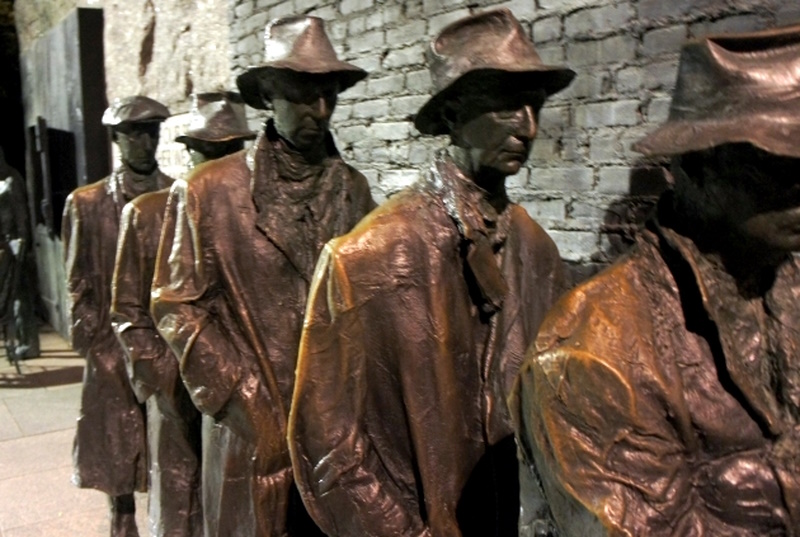
The Depression in Pettis County
In October 1934, there were 1,600 families on relief in Pettis County, Missouri. Those families consisted of about 8,000 people. That was almost 25% of the county’s total population of 34,000.
The relief efforts were staggering. Between October 1932 and October 1934, $500,000 in federal aid had been spent for work relief and direct relief. In addition enormous quantities of commodities had been distributed.
“To quote a few figures, 32,602 lbs. of salt pork, 8,600 lbs. of butter, 16,000 cans of beef, 75,000 lbs. of flour, 48,000 lbs. of smoked pork, 33,000 lbs. of fresh beef, and 12,000 lbs. of lard have been distributed through your local relief agencies to the destitute unemployed.”
Proctor Carter, assistant state relief administrator – The Sedalia Democrat – November 25, 1934
A meat cannery
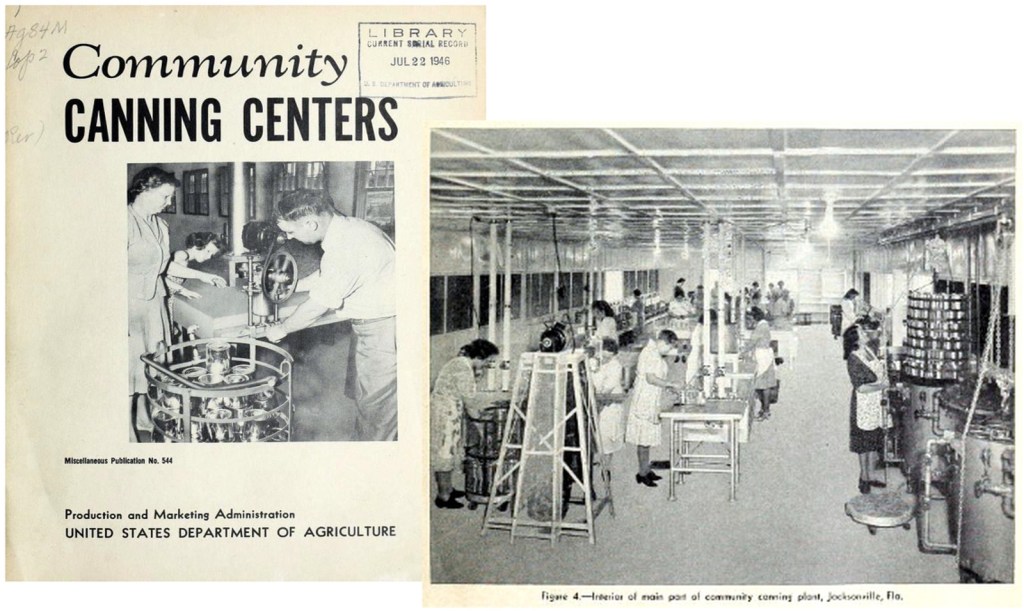
Proctor Carter’s statistics were part of a conversation with Sedalia and Pettis County leaders to implement more relief efforts. One major project was to start a meat canning factory, which would be supported by a cattle buying program.
Local leaders were all in. They would provide the main floor of city hall for the cannery. Any city offices on the first floor would move to the upper floors.
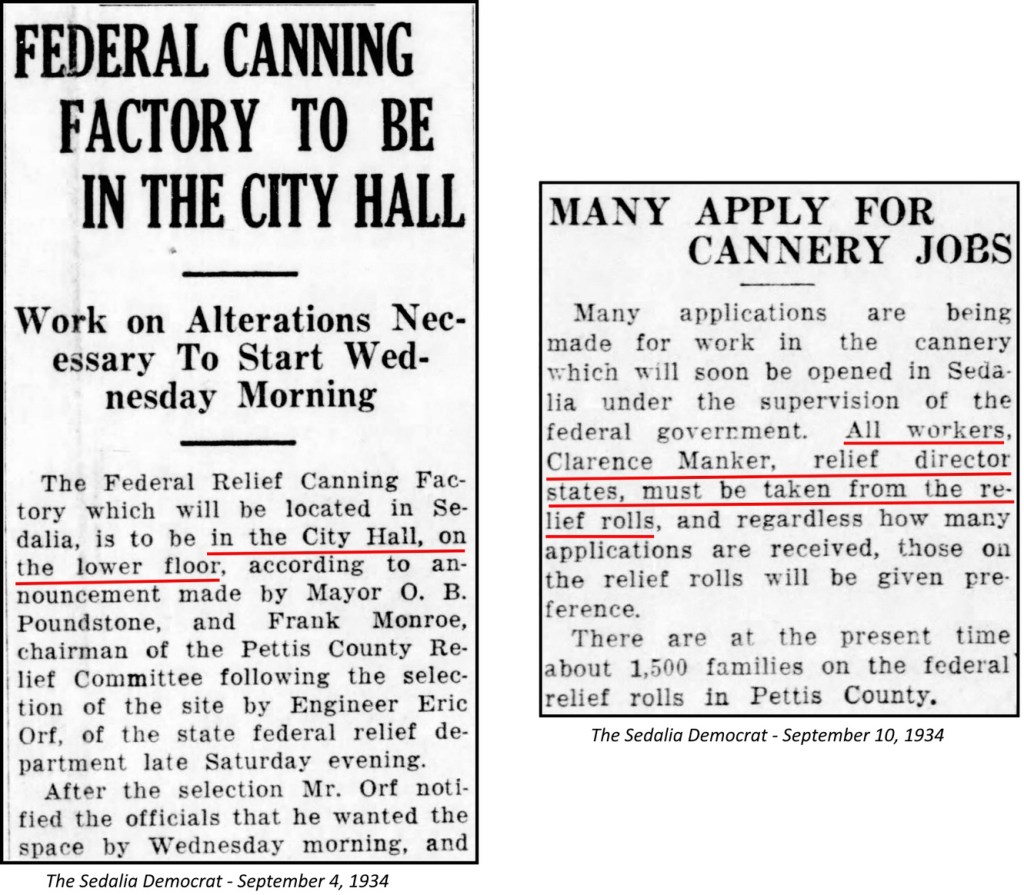
The cannery would provide over 600 jobs to those on relief rolls, thereby reducing the amount of financial relief needed. It would also provide a greater supply of canned meat for continued commodity distribution.
A job for Tom Gallagher
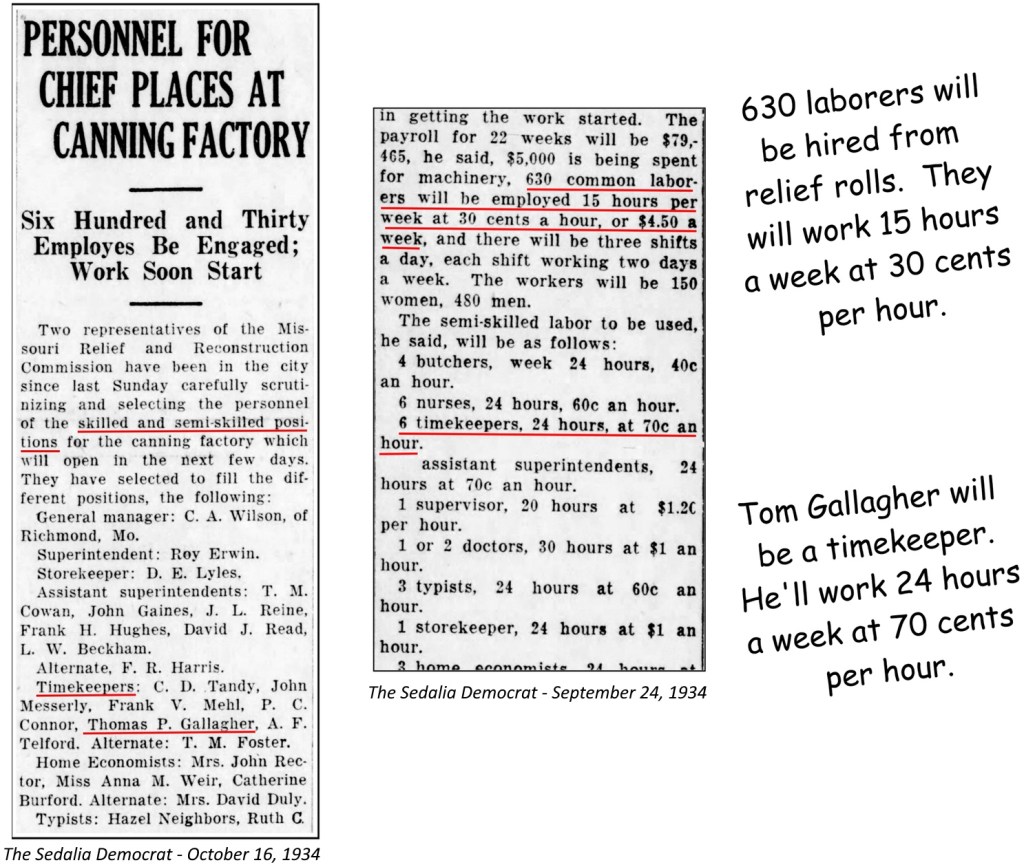
Jobs applications poured in. One of those applicants was Tom Gallagher, applying for a skilled or semi-skilled position.
Tom was hired as one of six timekeepers. Timekeepers would work 24 hours per week at 70 cents per hour. Their weekly wage would total $16.80. Cannery laborers would work 15 hours per week at 30 cents, for a total $4.50 per week.
It didn’t last long
The cannery program was set up for 22 weeks, but officials hoped for extensions of one or two years. Persistent meat shortages shut the cannery down numerous times. By May 1935, it was refurbished as a syrup refinery using local sorghum grain with 25 employees.
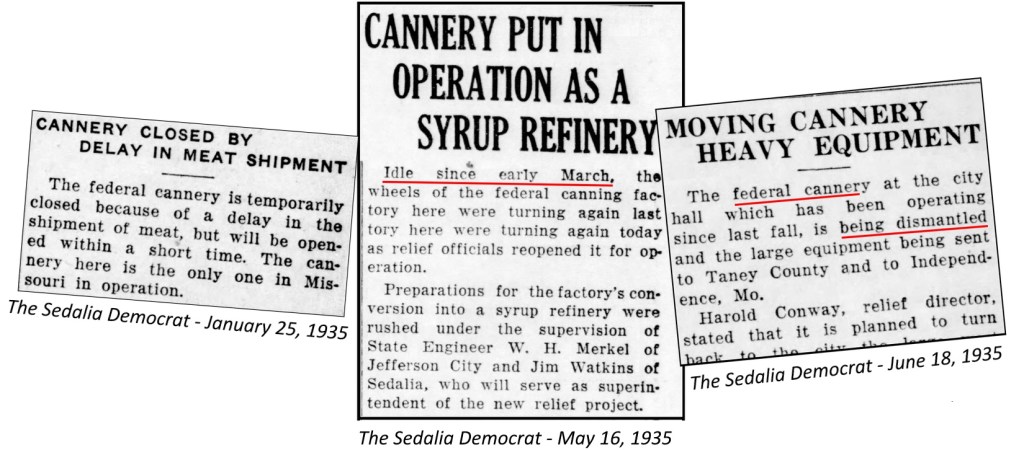
By summer 1935, the cannery was closed and dismantled.
What about Sedalia Distributing?
Wait a minute. Why was Tom Gallagher applying for work at the cannery?
What happened to Sedalia Distributing? What about Blatz Beer? Weren’t Tom and Henry Gallagher and W.J. Riley and Will Riley Jr in business together?
Sedalia Distributing had been formed in March 1933. We saw that Tom Gallagher had reported increasing shipments of Blatz Beer to Sedalia in fall 1933.
What happened? I don’t know. The last evidence in The Sedalia Democrat is a lawsuit by Jack Bartlett claiming that a beer truck owned by Sedalia Distributing hit him while he was walking north on Highway 65 on the evening of January 13, 1934. I think the suit was dismissed, and Jack was later arrested for drunkenness and sent to jail.
But that doesn’t tell us what happened to Sedalia Distributing. I’m sorry I can’t supply an answer. The newspaper is usually so full of stories, but on this topic it is silent. It makes me think that the business wasn’t making it, and the Gallaghers and Rileys just let it fizzle.
If any of you know otherwise, please enlighten us.
So what was everyone doing?
OK, we know what Tom Gallagher was doing. If there was no Sedalia Distributing, what were the others up to?
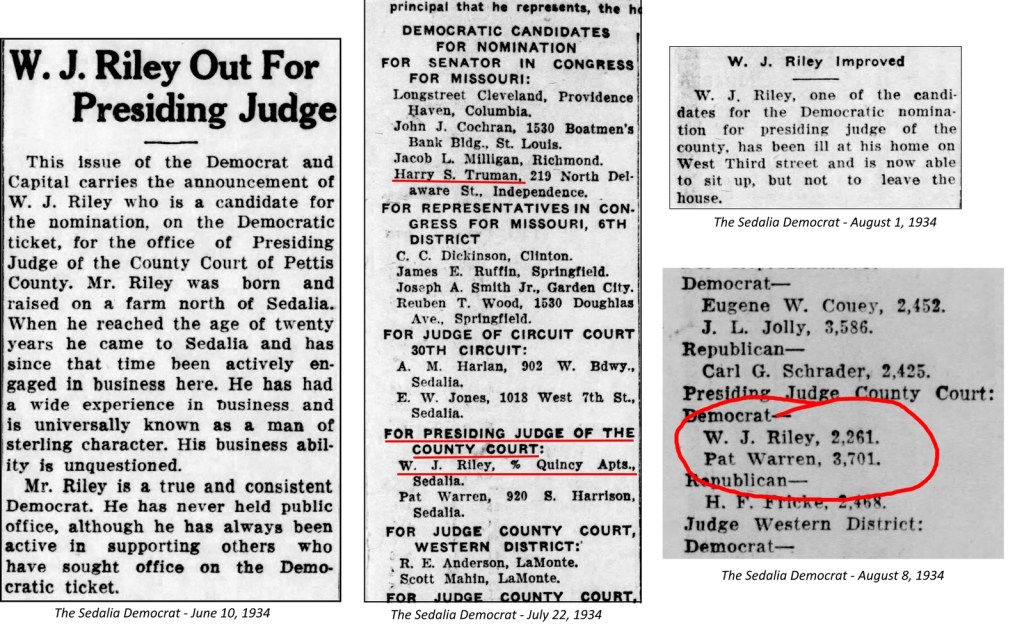
W.J. Riley for Presiding Judge
Will Riley had always been involved in local politics. Now, in 1934, he ran for Presiding Judge. Unfortunately, he was ill for much of the campaign season. Will had suffered many bouts of illness in recent years.
Will wasn’t successful in the primary election.
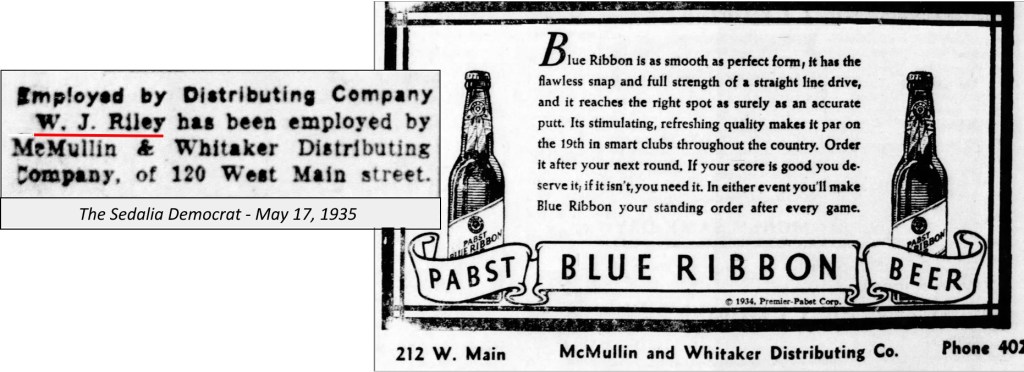
Will Riley, no longer in the insurance business, and after the demise of Sedalia Distributing, took a job with McMullin and Whitaker Distributing. They were the distributor for Pabst Blue Ribbon.
Tom and Mary Agnes
Jobs were difficult to find. After the cannery closed, Tom was looking again.
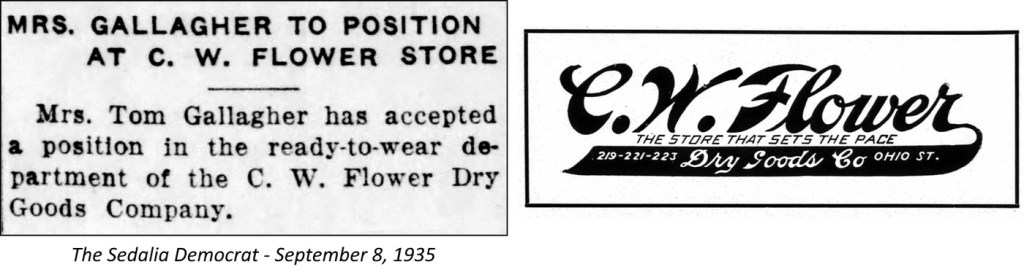
Mary Agnes Gallagher took a job at Flower Dry Goods Store as a saleslady.
And another move
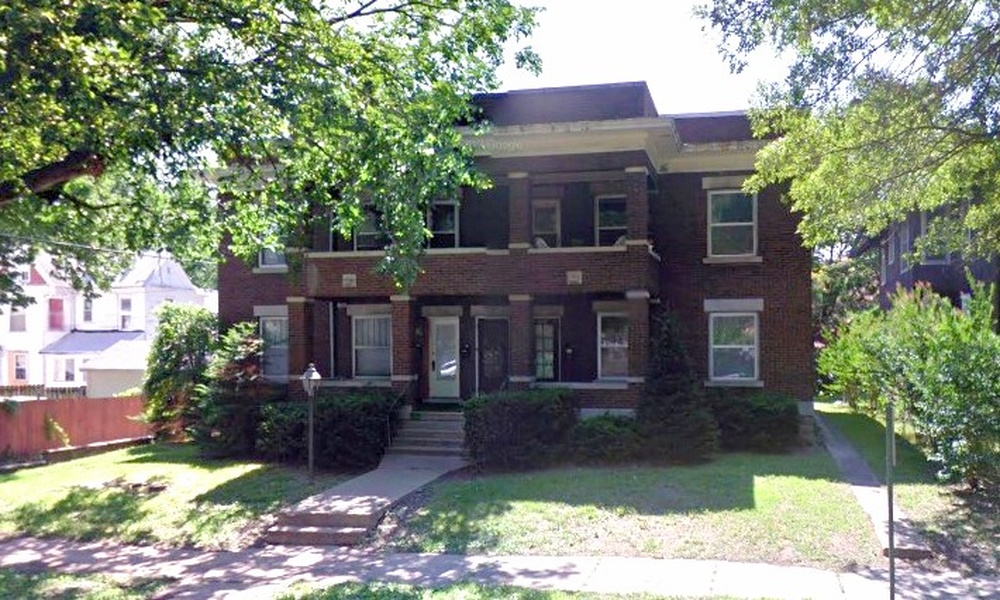
As they had almost every year since 1929, the Rileys and Gallaghers moved again. This time, the move was to separate addresses.
Will and Josie Riley moved into a Hurley apartment building at 606 1/2 South Grand.
Tom and Mary Agnes Gallagher and children rented a house at 1110 West Third Street.
A wedding
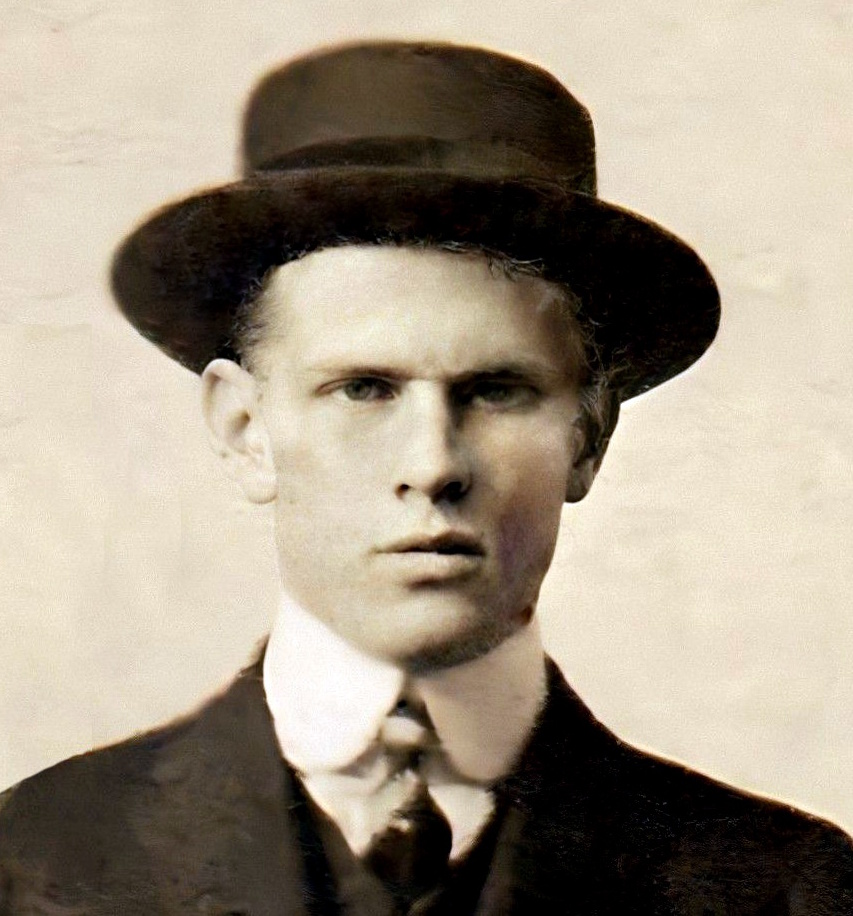
Will Riley Jr. married Maurine Walker October 23, 1934.
Maurine was born in Parsons, Kansas in 1898, and had moved with her family to Jefferson City, Missouri. She owned a beauty shop. Will was born in 1898 to William J and Josie Riley. He was living in Jefferson City, working as an accountant to Wallace Crossley, state relief director.
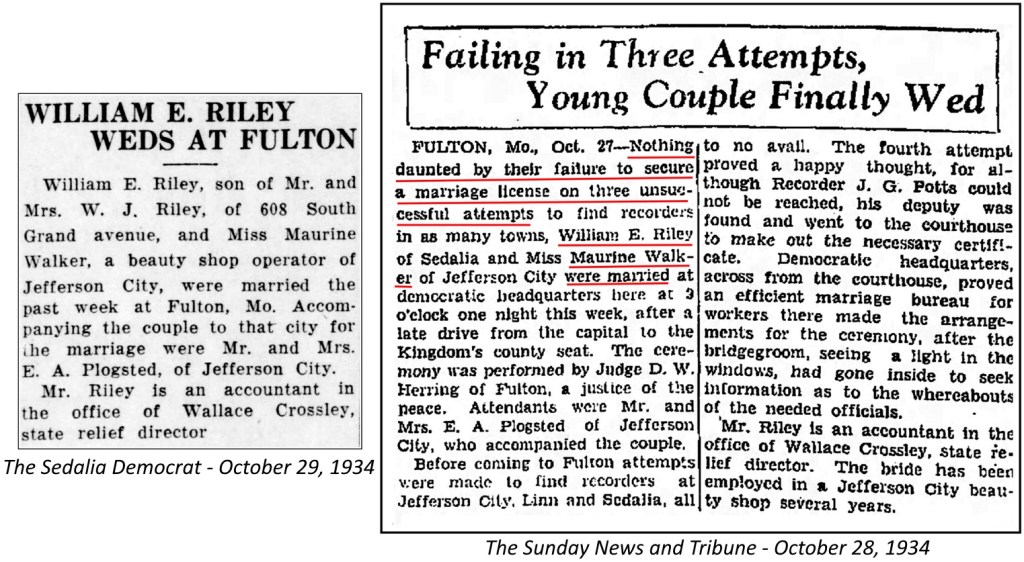
Will and Maurine had made unsuccessful attempts in three counties to locate a Justice of the Peace. Finally, on their fourth try that evening, they found a justice in Fulton, Missouri, seat of Callaway County. It’s 25 miles northeast of Jefferson City.
Maurine spotted a light on in the Democratic headquarters across the street from the courthouse, who kindly opened the office for the ceremony. The justice made out the paperwork, and the couple was married in the democratic headquarter offices at 9 pm.
Christmas, as always
As they did every year, the Rileys and Hurleys and Gallaghers enjoyed a Christmas gathering.
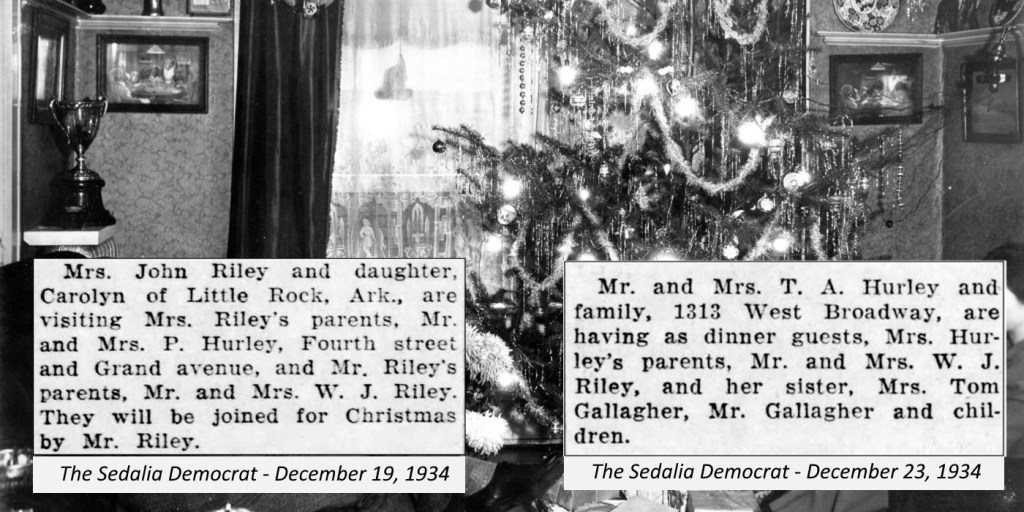
It was time to set the year’s troubles aside, time to enjoy family and friends. It was time to toast the new year and hope for better times.
Sources
- Newspaper articles – The Junction City Daily Union – various dates – newspapers.com
- Newspaper articles – The Junction City Republic – various dates – newspapers.com
- Newspaper articles – The Sedalia Democrat – various dates – newspapers.com
- Newspaper articles – The Junction City Daily Union – various dates – The Community History Archive of the Dorothy Bramlage Public Library – Junction City, Kansas – https://jclib.advantage-preservation.com/
- Image – Bronze status of men in line during Depression – Franklin D Roosevelt Memorial, Washington, DC – photo by Mark Jarvis – 2012
- Images – Community canning centers – How Did We Can? The Evolution of Home Canning Practices – USDA National Agricultural Library – https://www.nal.usda.gov/exhibits/ipd/canning/exhibits/show/equipment/item/41 https://www.nal.usda.gov/exhibits/ipd/canning/files/original/4f74b83046946ac0dce58078d77c0584.PNG
- Image – 606 South Grand, Sedalia, Missouri – Google Maps
- Image – William E Riley – Spencer Family Photos – Jane Spencer collection
- Image – L.D. Taylor and Katherine Federici sitting in Granville Mansion living room at Christmas – City of Vancouver Archives – https://searcharchives.vancouver.ca/l-d-taylor-and-katherine-federici-sitting-in-granville-mansion-living-room-at-christmas-2
- Music – There Ain’t No Sweet Man – Hal Frazer and his Georgians – A Bag Of Sleepers 2 Hot Licks 1927-1930 (Arcadia 2004) – by Satyr-78rpm – https://ia804504.us.archive.org/33/items/04-a-bag-of-sleepers-vol-2-hot-licks-1927-1930-arcadia-2004_20210629_1439/04-A%20bag%20of%20sleepers%20vol%202%20Hot%20licks%201927-1930%20Arcadia%202004.mp3
 Family Nibbles
