By 1936, measures of the economy were back to their 1928 pre-Depression levels, except for unemployment.
Unemployment crept downward below 22% by year-end 1934, and still lower to 20% by December 1935. In 1936, it continued the downward trend to 17%. The New Deal programs were helping, and some segments of the economy were recovering.

I saw and approached the hungry and desperate mother, as if drawn by a magnet. I do not remember how I explained my presence or my camera to her, but I do remember she asked me no questions. I made five exposures, working closer and closer from the same direction. I did not ask her name or her history. She told me her age, that she was thirty-two. She said that they had been living on frozen vegetables from the surrounding fields, and birds that the children killed. She had just sold the tires from her car to buy food. There she sat in that lean- to tent with her children huddled around her, and seemed to know that my pictures might help her, and so she helped me. There was a sort of equality about it. (From: Lange’s “The Assignment I’ll Never Forget: Migrant Mother,” Popular Photography, Feb. 1960).
Dorothea Lange, Photographer
A contrast in jobs
17% unemployment was better than 25%, but still very high. Some of those with new jobs were underemployed. Those who never lost their jobs fared better.
The Gallagher brothers represented all three cases:
- Tom had found short-term jobs amid periods of unemployment
- Henry had been mostly unemployed since 1933, partly for health reasons
- Jim had been fully employed, and was getting another promotion
Tom Gallagher to WPA
Beginning in 1935, the Works Progress Administration (WPA) had replaced previous relief programs. In February 1936, a WPA warehouse was set in Sedalia up to handle distribution of food and clothing for fourteen counties.
Tom Gallagher was hired as the manager.

Henry Gallagher wasn’t working
Henry had resigned from Cole Brothers in 1933 when he and Tom and Will Riley formed Sedalia Distributing Company at the repeal of Prohibition. Sedalia Distributing didn’t last, but Henry didn’t go back to work for Cole’s.
Henry had moved back to Junction City, and his mother Ellen lived with him at 333 West Second Street. They traveled to visit relatives and friends, and spent a month or two in Texas visiting Jim’s family each winter.

Jim Gallagher promoted
Jim Gallagher had worked as a maintenance engineer for the MKT Railroad for 20 years. He’d worked his way up the ladder, and transferred to towns and cities all across the Katy rail network.

In October 1936, Jim was promoted to Superintendent of the North Texas district. He was responsible for all trackage, facilities, and operations in North Texas.
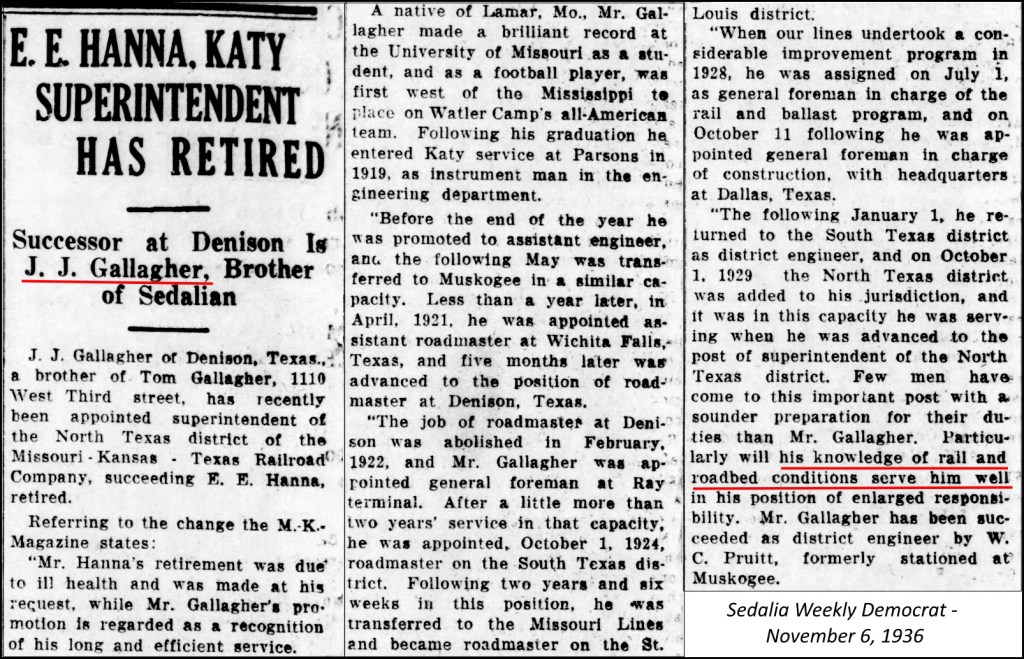
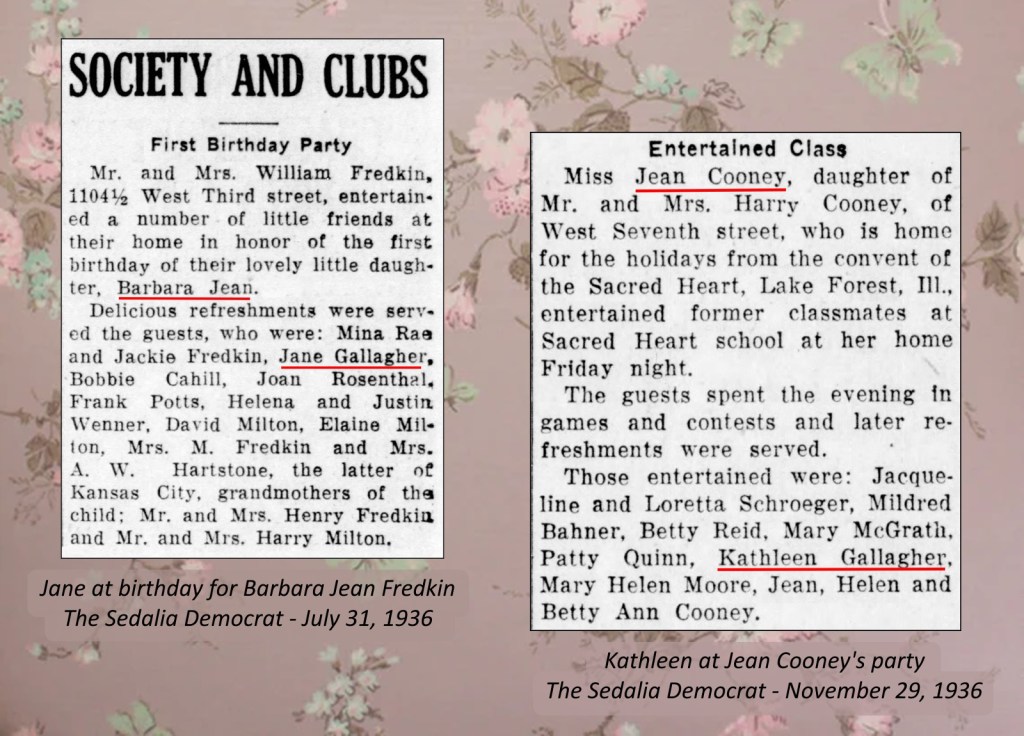
Kathleen, Buddy, and Jane
Many of our recent stories have been about the economy, jobs, and the hardships of the Depression. But by 1936, some aspects of life were returning to pre-Depression norms.
For the Gallagher children, there were birthday parties, girl scouts, games, and refreshments. Kathleen was age 13, Buddy was 10, and Jane 4.


1936 Elections
In the 1936 Presidential election, Franklin Roosevelt’s opponent was Alf Landon, a popular Republican governor from Kansas. As governor, Landon had accepted the New Deal, while also trying to balance the budget in the state of Kansas.
The election took place as the Great Depression entered its eighth year. Roosevelt was still working to push the provisions of his New Deal economic policy through Congress and the courts. However, the New Deal policies he had already enacted, such as Social Security and unemployment benefits, had proven to be highly popular with most Americans.
1936 United States presidential election – Wikipedia
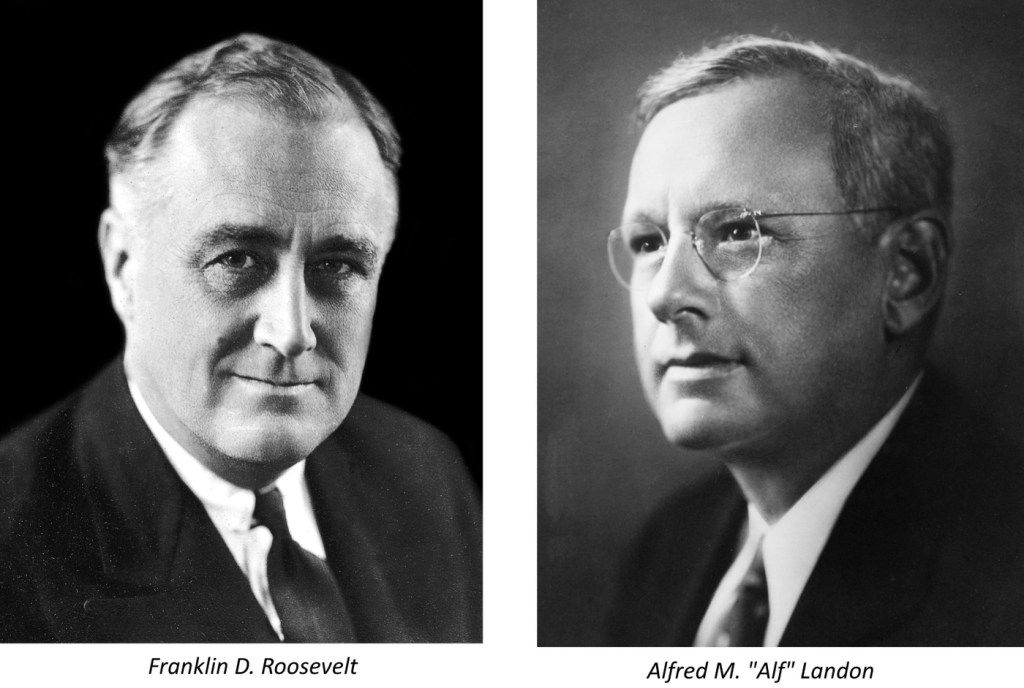
Franklin Roosevelt was re-elected President by a landslide.

Will Riley was a Democrat and a poet
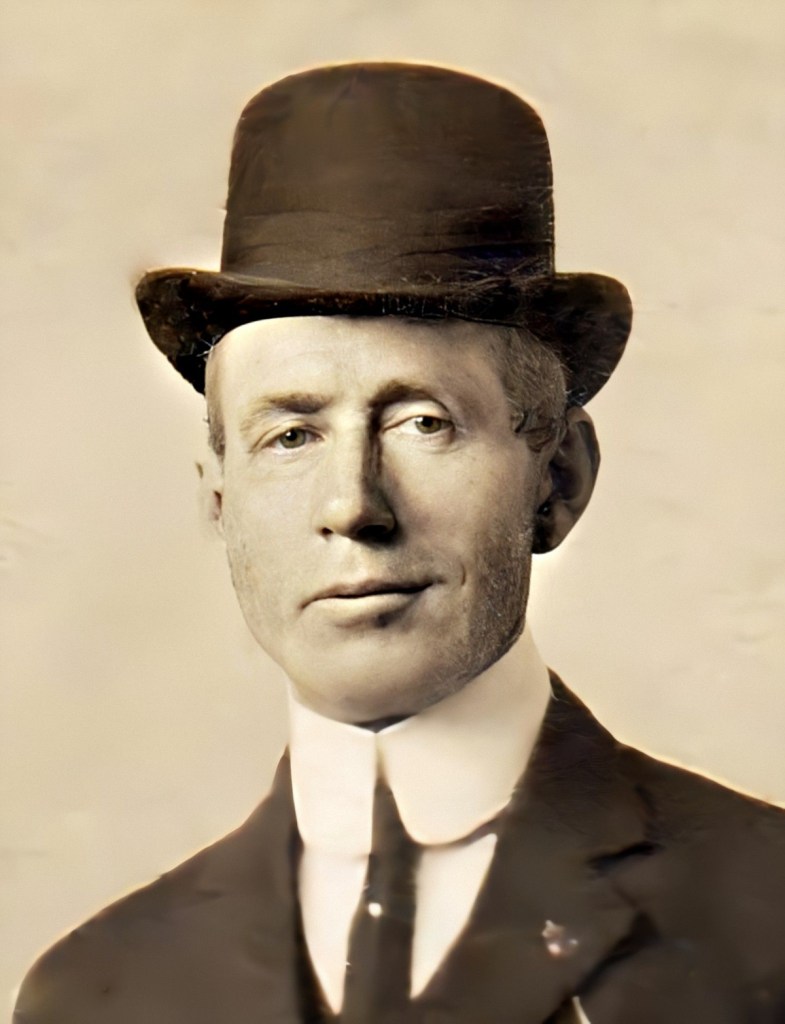
Will Riley voted for Roosevelt. He was a staunch Democrat.
We’ve seen Will’s active role in Missouri and Sedalia politics. He served on the Sedalia Park Board. He ran unsuccessfully for County Assessor and Presiding Judge.
We’ve also seen that Will loved the theater, and was on the stage for many local play productions.
Will Riley was also a poet. He wrote poems and sonnets in notes to friends.
Missouri politics
The 1936 Missouri gubernatorial race was especially heated. Democrat Lloyd Crow Stark ran against Republican Jesse Barrett and candidates from several other parties.
Will Riley penned a verse about the candidates – “The Early Bird.” No doubt who he endorsed.
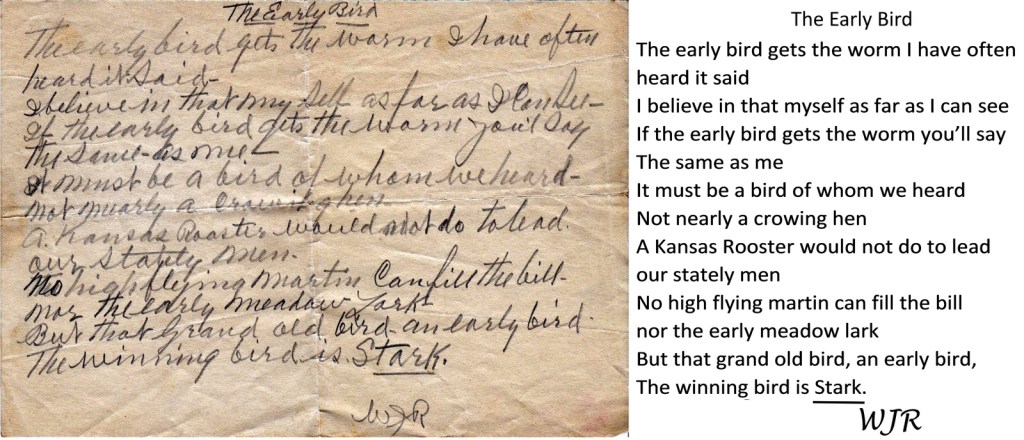
Stark won the election, and served one term as Missouri governor. He became a fierce opponent of Tom Pendergast, who controlled Missouri politics.

The falling out between Stark and the Kansas City boss Tom Pendergast following the 1936 election is widely believed to have been the turning point in Pendergast’s fall from power. Pendergast had held so much sway in Missouri in the 1930s that the governor’s mansion was dubbed “Uncle Tom’s Cabin.”
Stark sought and received Pendergast’s support. Pendergast’s minions were more corrupt and obvious than usual during the 1936 election. That prompted numerous investigations, and Stark turned overtly against Pendergast, who was eventually convicted of income tax evasion.
Lloyd C. Stark – Wikipedia
The Outlook
The economy had been steadily improving, but would suffer a downturn during the next two years.
Our families, Gallaghers and Rileys, would encounter life-changing events in the next two years. That was the norm, not the unusual. Isn’t that what we expect today?
Timeline

Sources
- Newspaper articles – The Junction City Daily Union – various dates – newspapers.com
- Newspaper articles – The Junction City Republic – various dates – newspapers.com
- Newspaper articles – The Sedalia Democrat – various dates – newspapers.com
- Newspaper articles – The Junction City Daily Union – various dates – The Community History Archive of the Dorothy Bramlage Public Library – Junction City, Kansas – https://jclib.advantage-preservation.com/
- Image – Destitute pea pickers in California. Mother of seven children. Age thirty-two. Nipomo, California – 1936 – Dorothea Lange, photographer. – Library of Congress – https://guides.loc.gov/migrant-mother
- Images – WPA warehouse workers – WPA Photographs Commodity Distribution – http://nutrias.org/photos/wpa/wpa13.htm
- Image – Jim Gallagher with railroad co-workers – Brosseau family documents – Jim Brosseau Collection
- Document – Jim Gallagher promotion letters – Brosseau family documents – Jim Brosseau Collection
- Images – Wallpaper – 1930s Botanical Vintage Wallpaper – Hannahs Treasures Vintage – Wallpaper Safari – https://wallpapersafari.com/w/pi4adL
- Images – Wallpaper – 1930s Botanical Vintage Wallpaper – Hannahs Treasures Vintage – Wallpaper Safari – https://wallpapersafari.com/w/3T8BQ0
- Images – Wallpaper – 1930s Botanical Vintage Wallpaper – Hannahs Treasures Vintage – Wallpaper Safari – https://wallpapersafari.com/w/rDqLpa
- Images – Wallpaper – 1940s Vintage Wallpaper Pink Flowers Green Butterflies on Purple by the Yard – RosiesWallpaper – https://www.etsy.com/listing/222326608/1940s-vintage-wallpaper-pink-flowers
- Image – 1936 Presidential candidates and election results – 1936 United States presidential election – https://en.wikipedia.org/wiki/1936_United_States_presidential_election
- Poem – The Early Bird – William J Riley – Gallagher family documents – Catherine Jarvis Collection
- Image and Quotation – Lloyd C Stark – Wikipedia – https://en.wikipedia.org/wiki/Lloyd_C._Stark
- Music – Sugar Blues – Clyde McCoy and his Orchestra – Highlights of 20th Century Music: Part 13, Swing Swing Swing 1936-1938 – https://ia804605.us.archive.org/3/items/highlights-of-20th-century-music-part-13-swing-swing-swing-1936-1938/034.mp3
 Family Nibbles