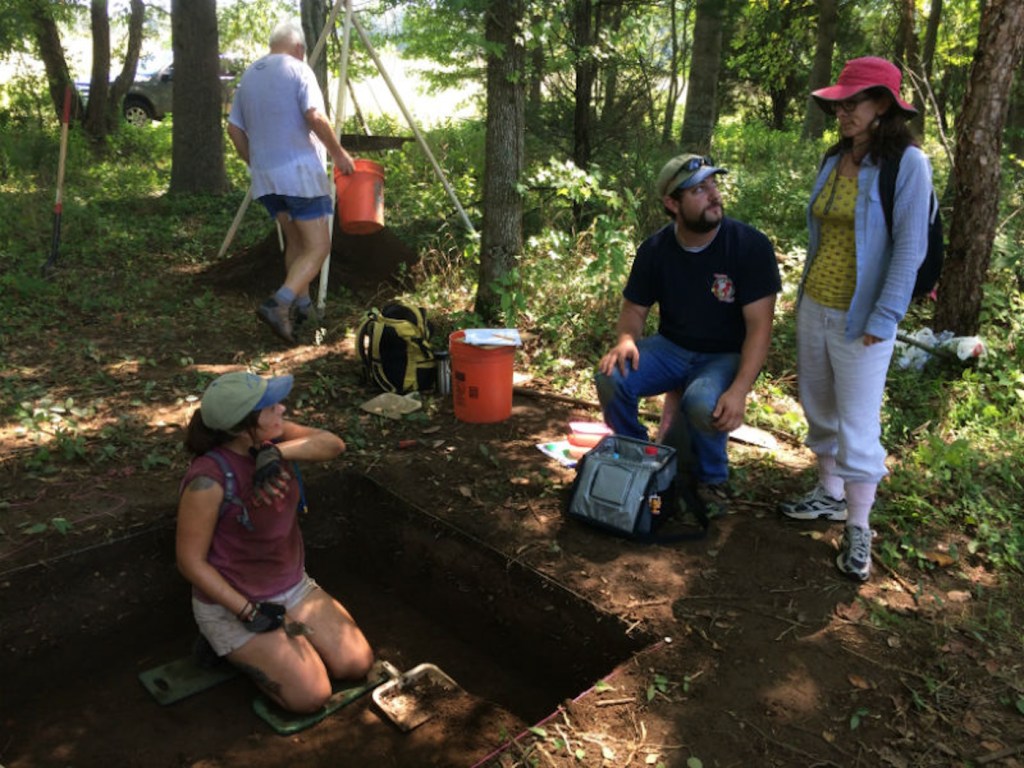
Anne Arundel County, Maryland, requires an archaeological survey before any new construction project begins.
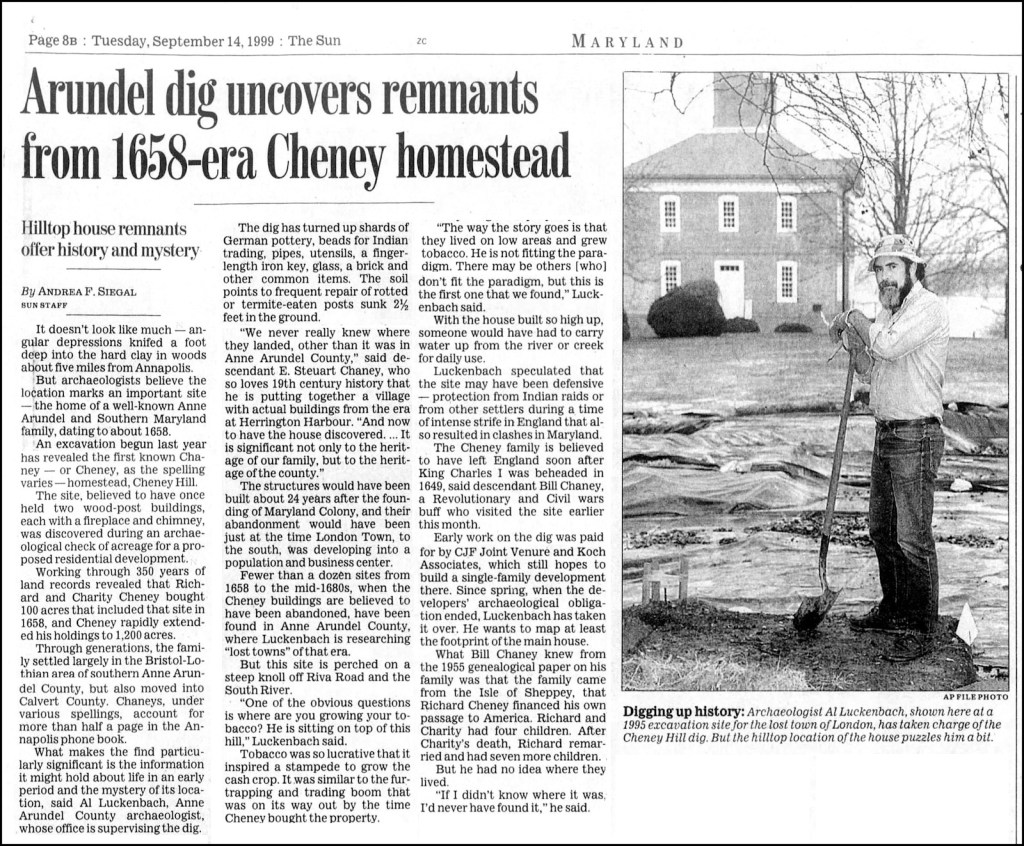
In 1998, a routine survey for a housing subdivision near Riva Road uncovered something extraordinary: the remains of the 1658-era homestead of Richard and Charity Cheney.
What began as a compliance dig quickly evolved into a landmark discovery—Cheney Hill, perched atop a steep knoll overlooking the South River.
The Baltimore Sun – September 14, 1999
Buildings
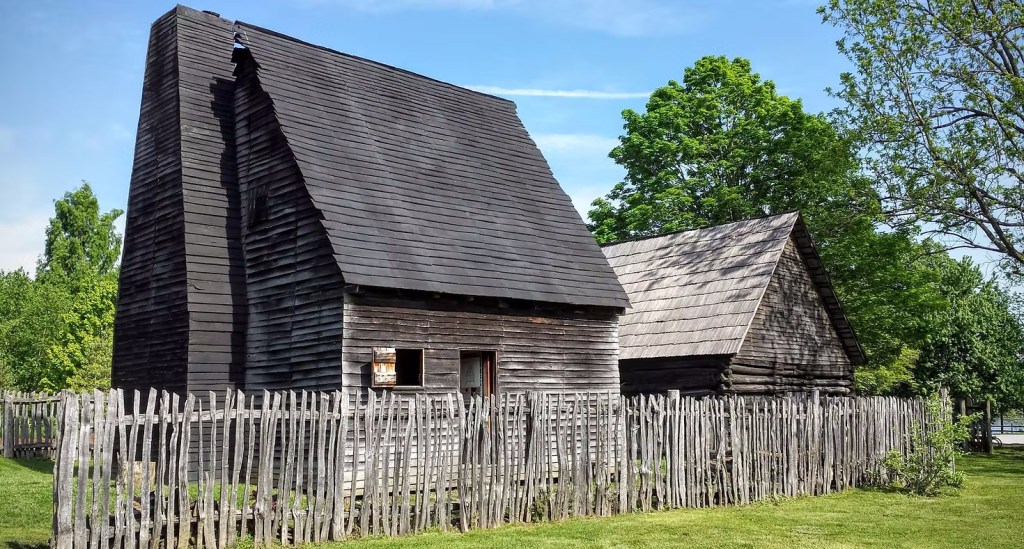
The site originally held two large wood-post “earthfast” buildings.
The wood-post construction was based on wooden foundation posts buried directly in the ground to support the frame and roof of the building. It was used extensively in the 17th century because it was a simple and economical construction. The posts were subject to wood rot and deterioration, so the structures needed ongoing maintenance.
The wood-post construction of the Cheney structures may have looked like these reproduction buildings in Historic London Town nearby.
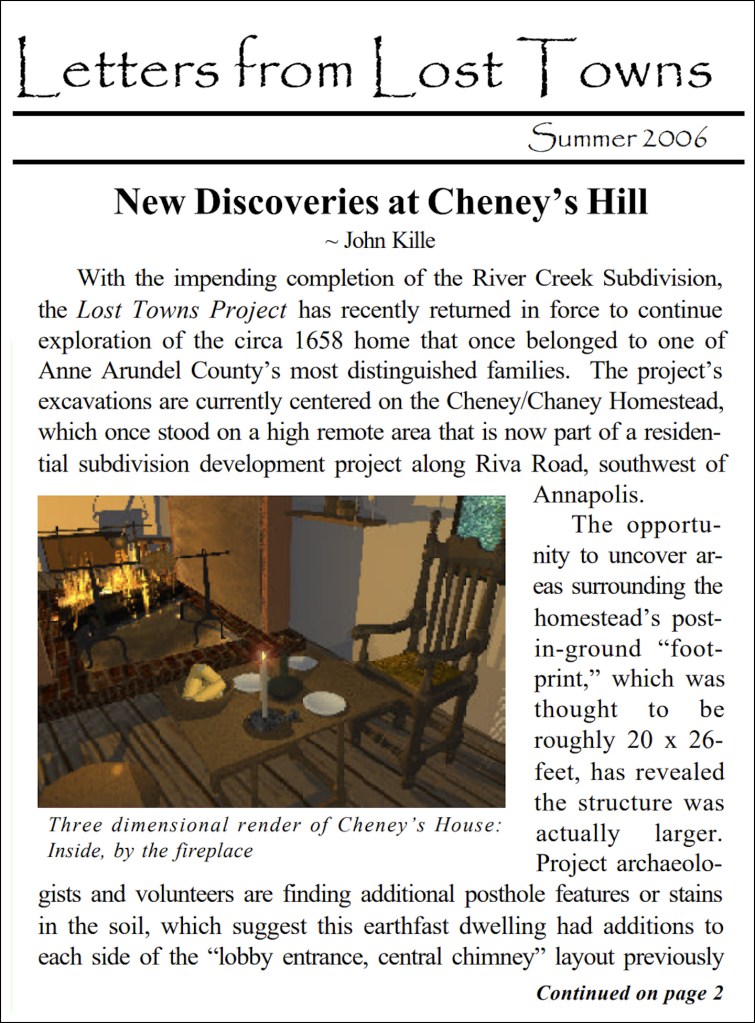
Newsletter – Lost Towns Project
Each of the buildings had a fireplace, central lobby, and several rooms.
Initial surveys suggested a modest footprint of 20 x 26 feet. But further excavation revealed additions and expansions, ultimately stretching the structure to an impressive 62 x 17 feet.
See the rendering of the Cheney House interior, done by the Lost Towns Project.
The Lost Towns Project is the group that oversees the Cheney Hill project.
Artifacts
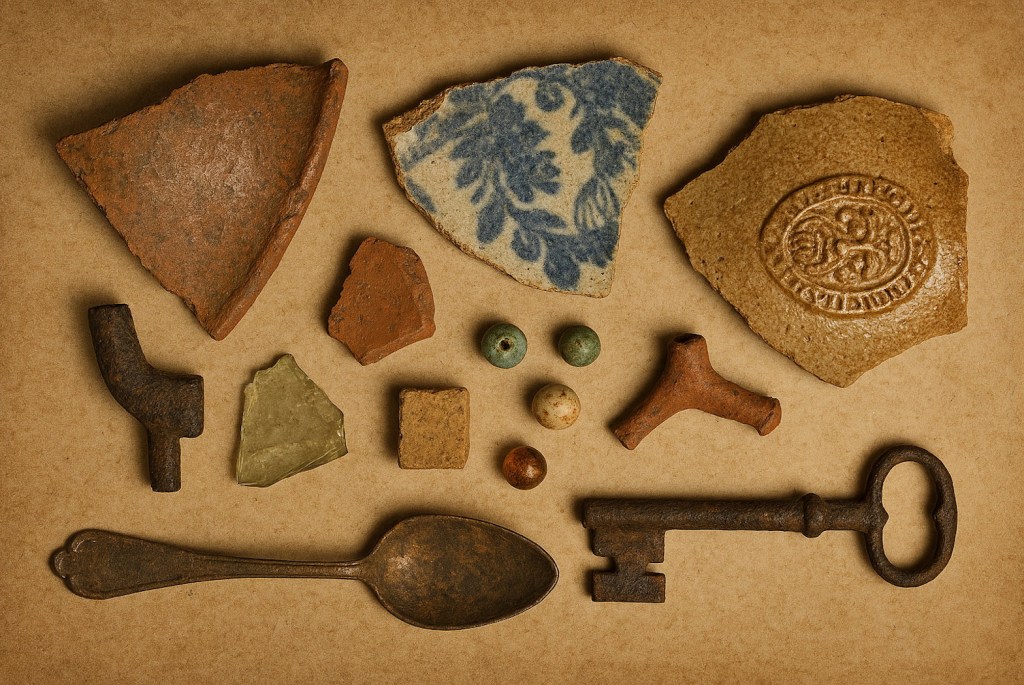
The artifacts from the Cheney Hill digs are wonderful. These are possessions that our Cheney ancestors touched and used 350 years ago.
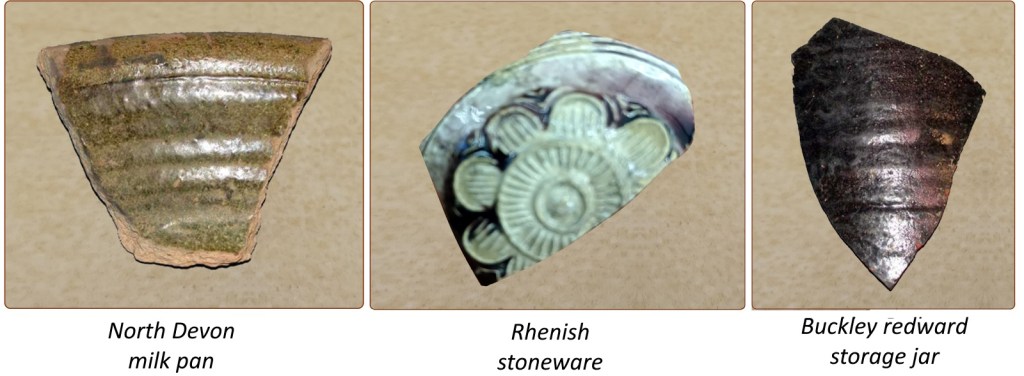
Recovered ceramics include types typically found on sites from the second half of the 17th century in the Chesapeake, including Borderware, North Devon Sgraffito slipware, sprig-molded blue and manganese-decorated Rhenish stoneware, English brown stoneware, and Rhenish brown stoneware. Lead-back tin-glazed Delftware, typical of the first half of the century, was also recovered.
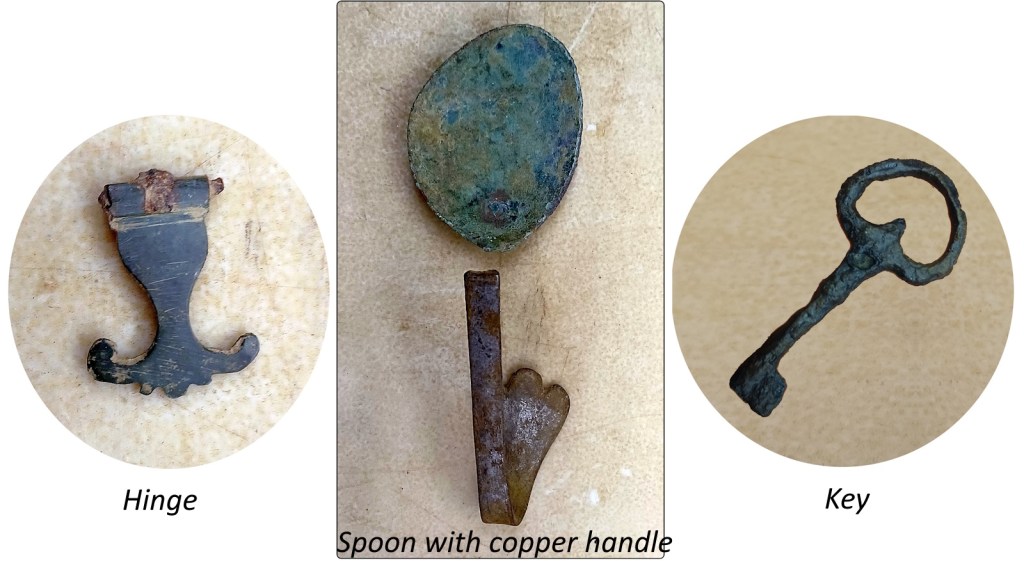
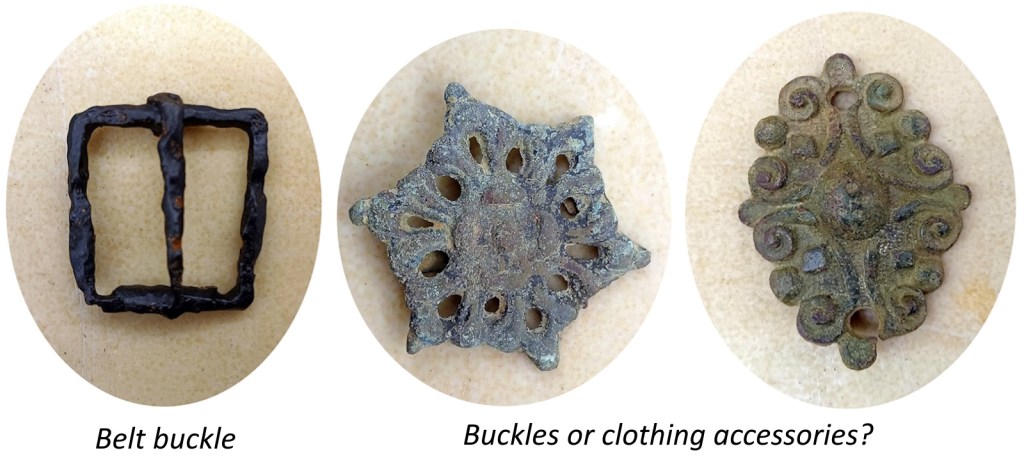
Several stock type keys were recovered, suggesting the Chaneys had items worthy of protection. Also recovered were a copper handled spoon, a scissor fragment, furniture tacks, bale seals, lead shot, possible pistol parts, English flint, leather ornaments and a horse bit, and a possible coin weight.
The glass recovered included round bottles, case bottles, medicinal vials, stemwares, and possibly a few fragments of window glass and a fragment of window lead.
The Digital Archaeological Report – Chaney’s Hills
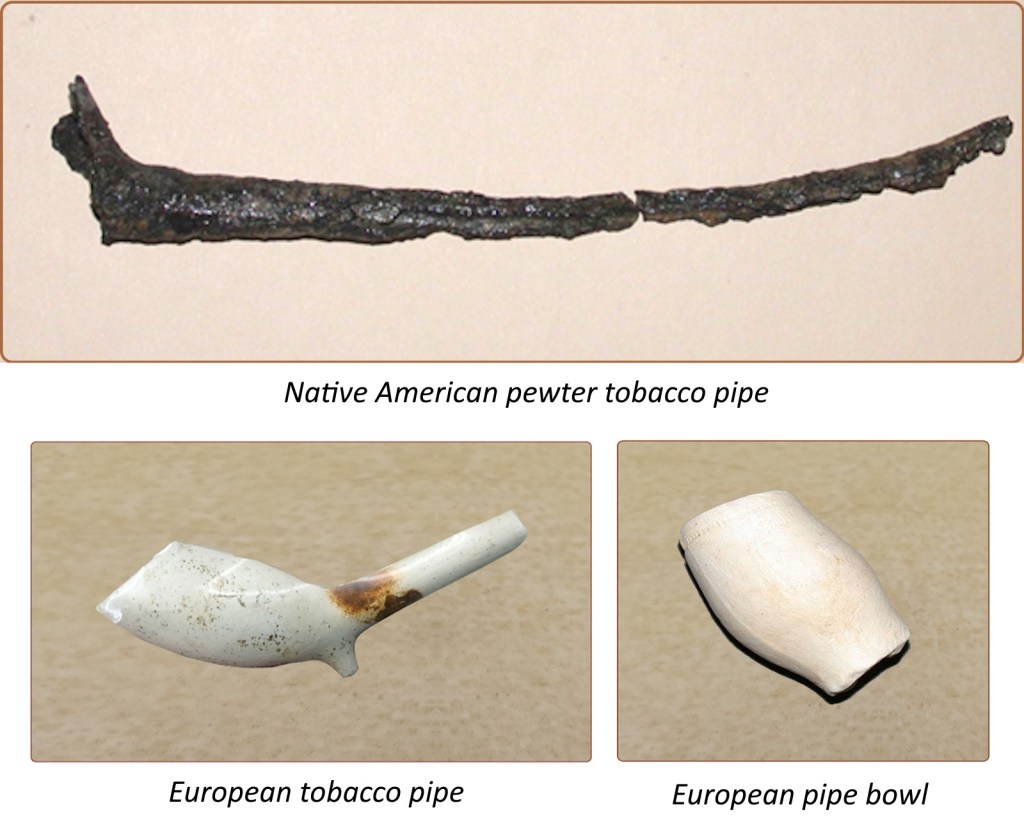
Over 1,600 pipe fragments were found. Seven had maker’s marks.
Editors Note: All the artifact photos are from John Chaney, Facebook Chaney Genealogy group.
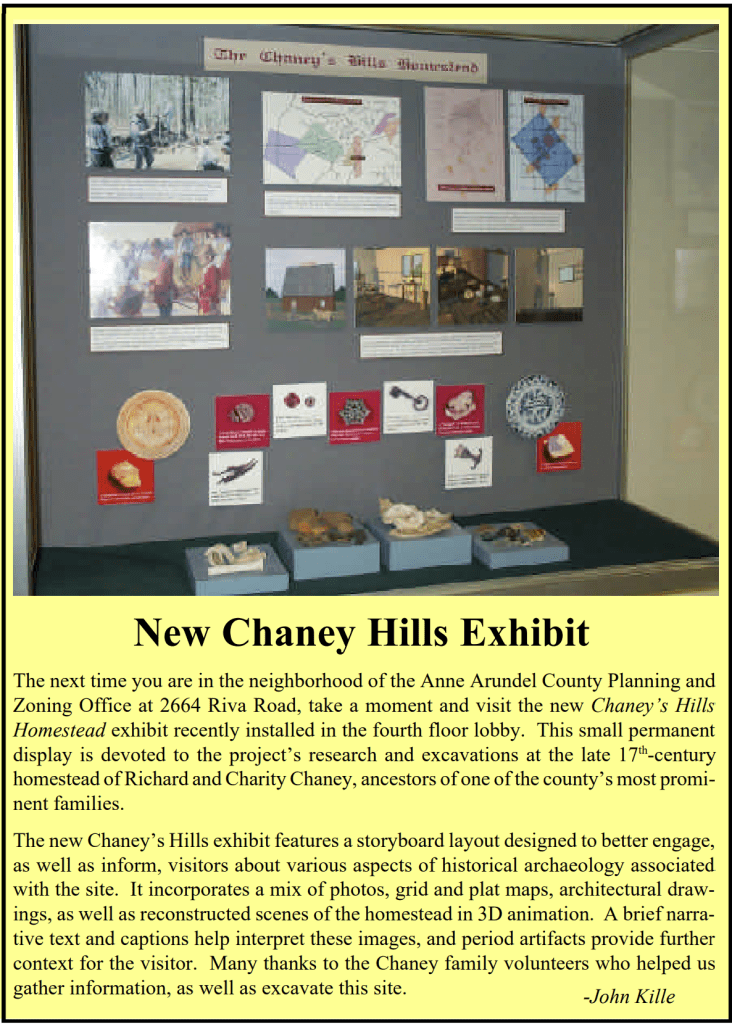
The exhibit
Today, the Chaney’s Hills Homestead Exhibit at the Anne Arundel County Planning and Zoning Office showcases artifacts, maps, and 3D renderings. It’s a tribute to the family’s enduring presence and the county’s colonial roots.
Cheney Hill Exhibit – Lost Towns Project
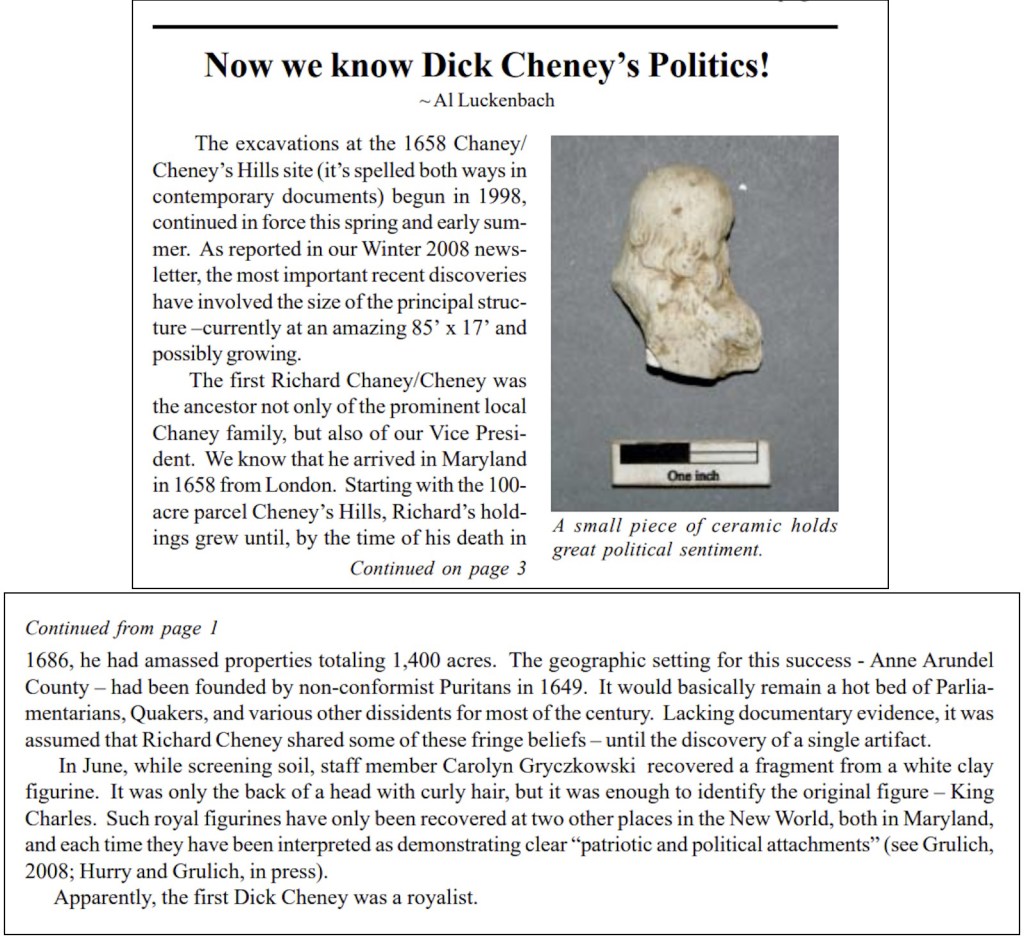
A timely find
Richard “Dick” Cheney passed away yesterday, November 4, 2025. He held many top positions in government, culminating in the office of U.S. Vice President.
This anecdote reminds us that genealogy isn’t just about the past. It can connect the past with the present.
Lost Towns Project – Newsletter – Summer 2008
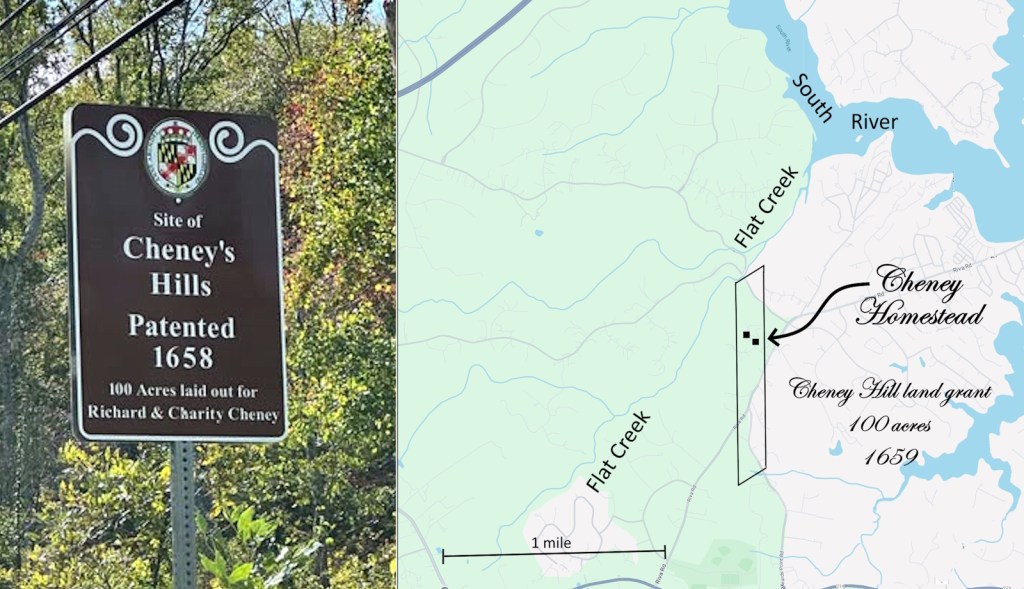
Location
The archaeology find nails down the location of Cheney Hill. Here’s another look at the location on a modern map.
Photo by Christy McCord – Facebook Chaney Genealogy group
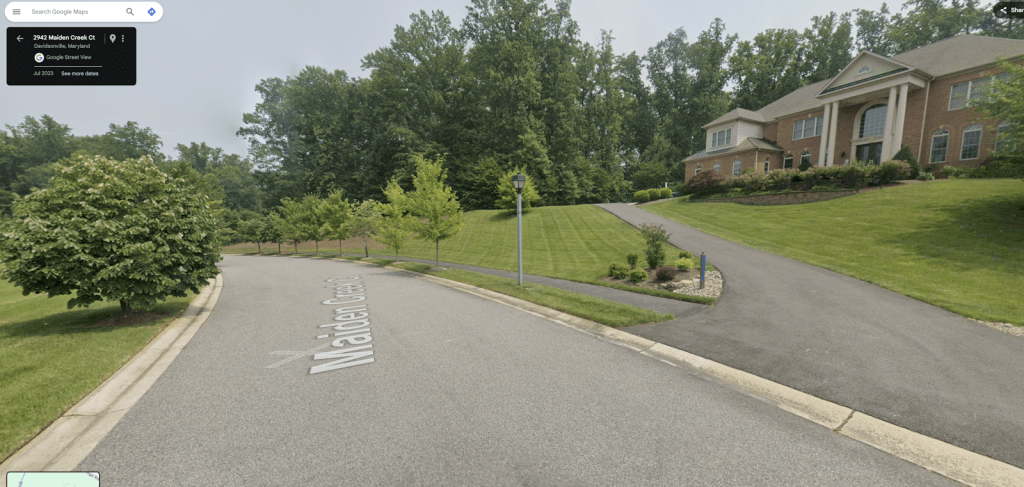
Cheney Hill – near location of Cheney homestead on top of high hill
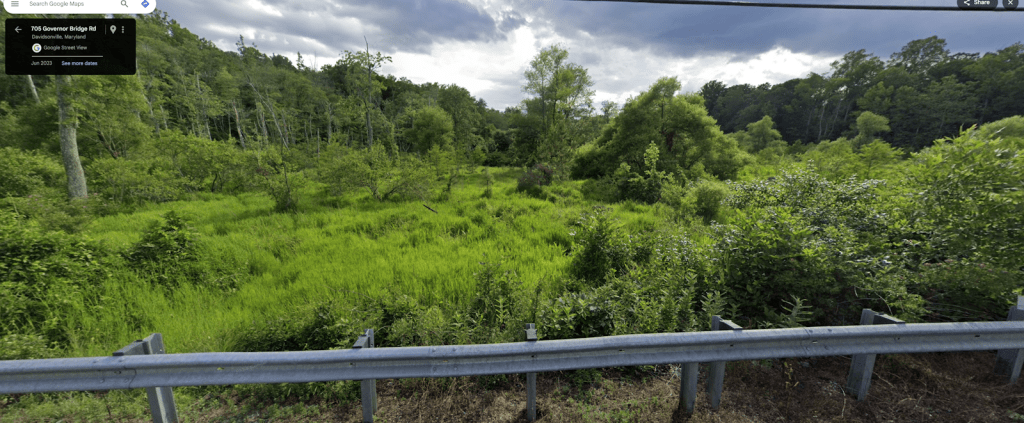
Cheney Hill – Flat Creek area on west side of land
Why build so high above the river? Archaeologist Al Luckenbach speculated the elevation may have offered protection—from raids, rival settlers, or even the volatile politics of the time. Tobacco, the region’s cash crop, was typically grown in lowlands. Cheney’s choice defied convention.
We’ve begun to learn where, when, and how the Cheneys lived. We’ll continue our investigation in the next story.
 Family Nibbles