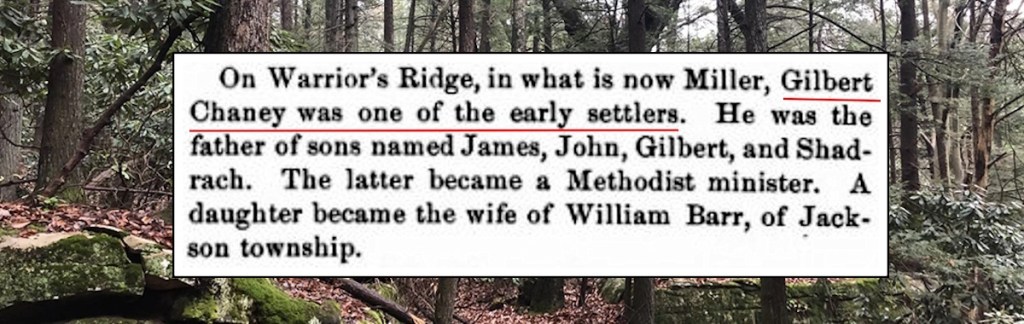
By the mid-1700s, the Appalachian frontier beckoned. Gilbert and Martha Cheney—our fifth great-grandparents—joined the wave of settlers seeking land and opportunity in the remote valleys of central Pennsylvania.
Their story unfolds on Warrior’s Ridge, between Shaver’s Creek and Standing Stone Creek, where wilderness met perseverance.
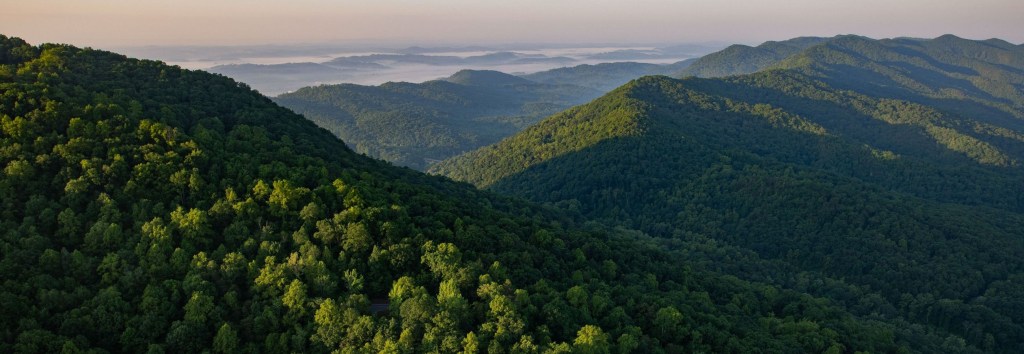
The Appalachian Mountain area of Pennsylvania opened to settlers around 1750. The mountains run in long north-south ridges with valleys between. The area was remote. Settlement was slow to develop.
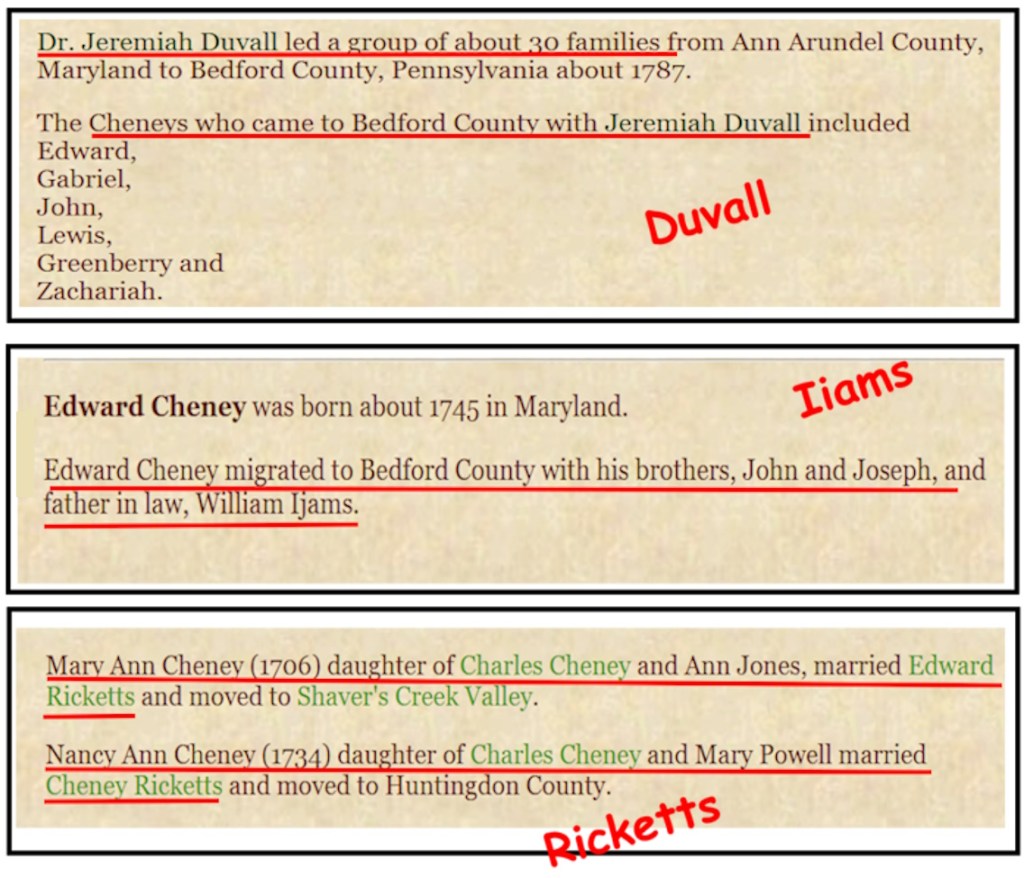
Other Cheney descendant families settled in this area – Iiams, Ricketts, Duvalls, and others. These families were related to the Cheneys of Anne Arundel.
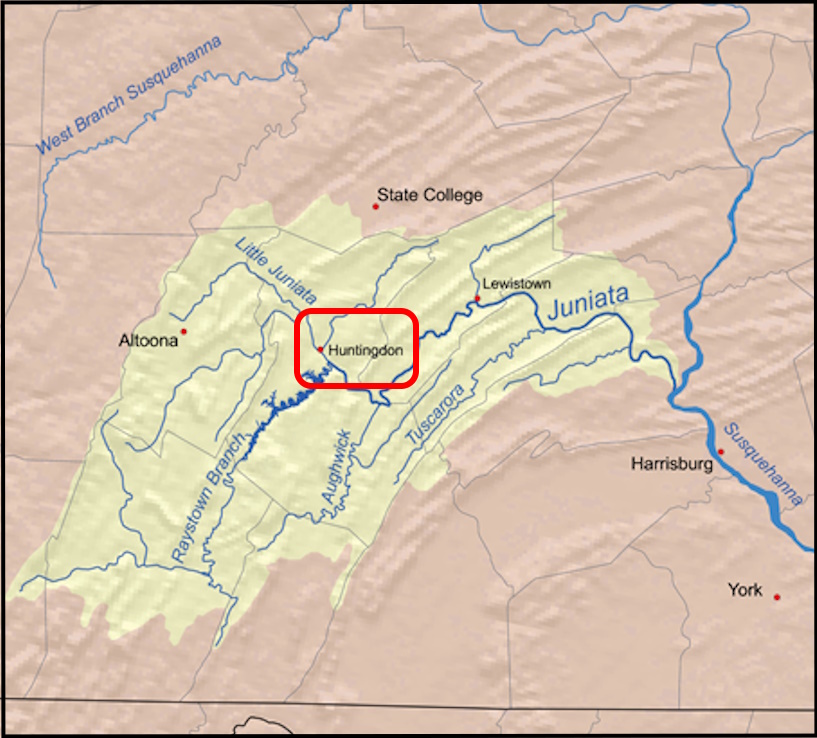
Our families settled near the headwaters area of the Juniata River.
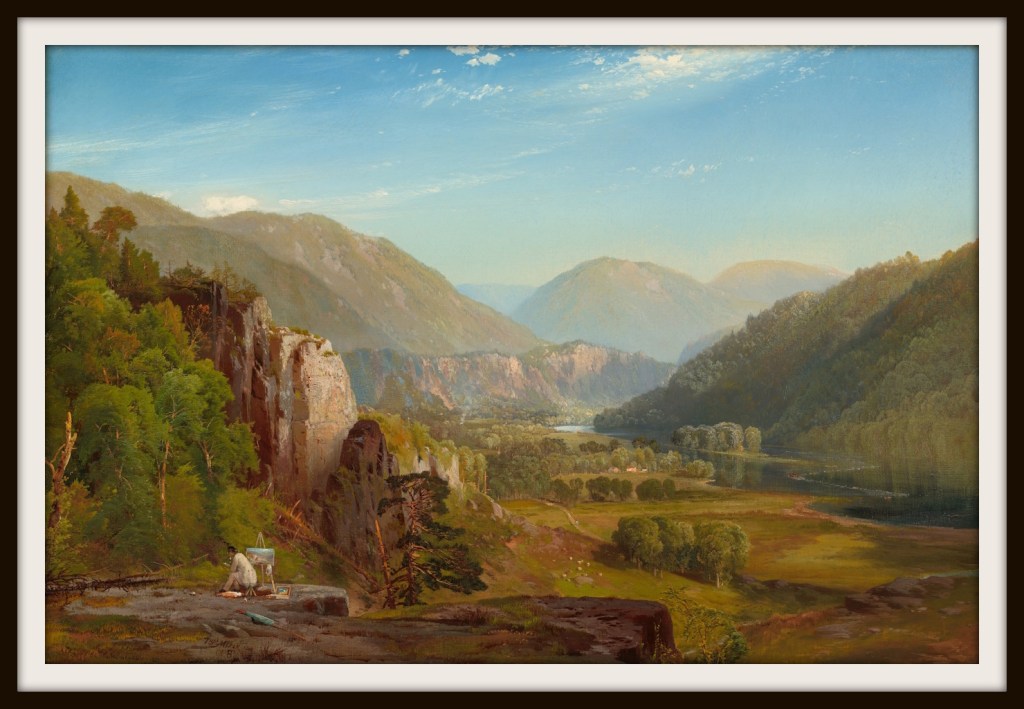
The Juniata River is an approximately 104 mi long tributary of the Susquehanna River in central Pennsylvania. The river has a broad and shallow course passing through several mountain ridges and steeply lined water gaps.
Juniata River – Wikipedia
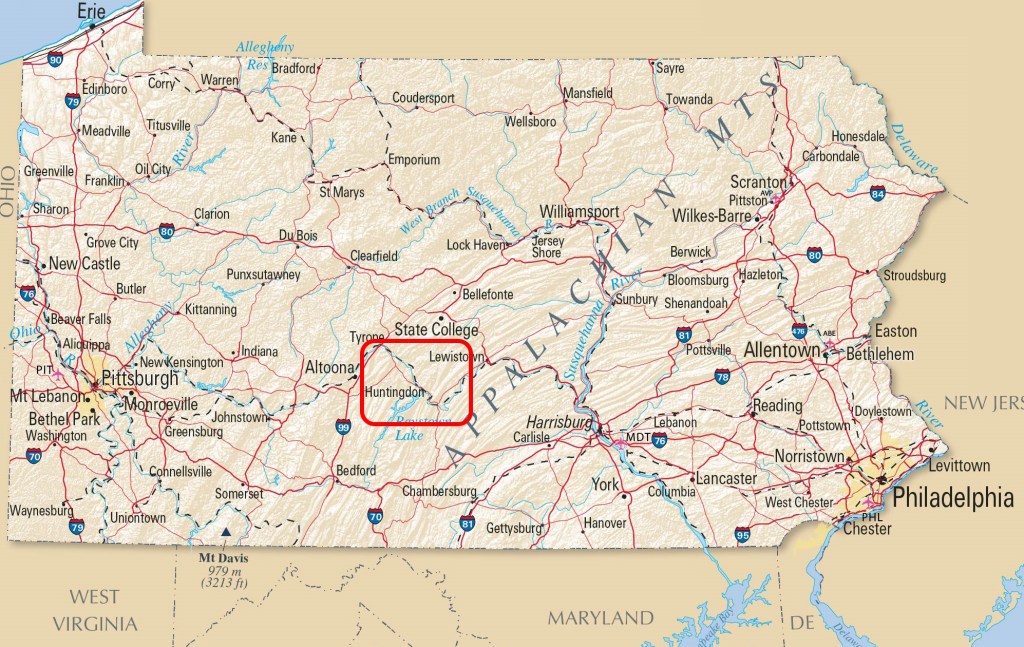
Here’s the area on a present-day Pennsylvania map.
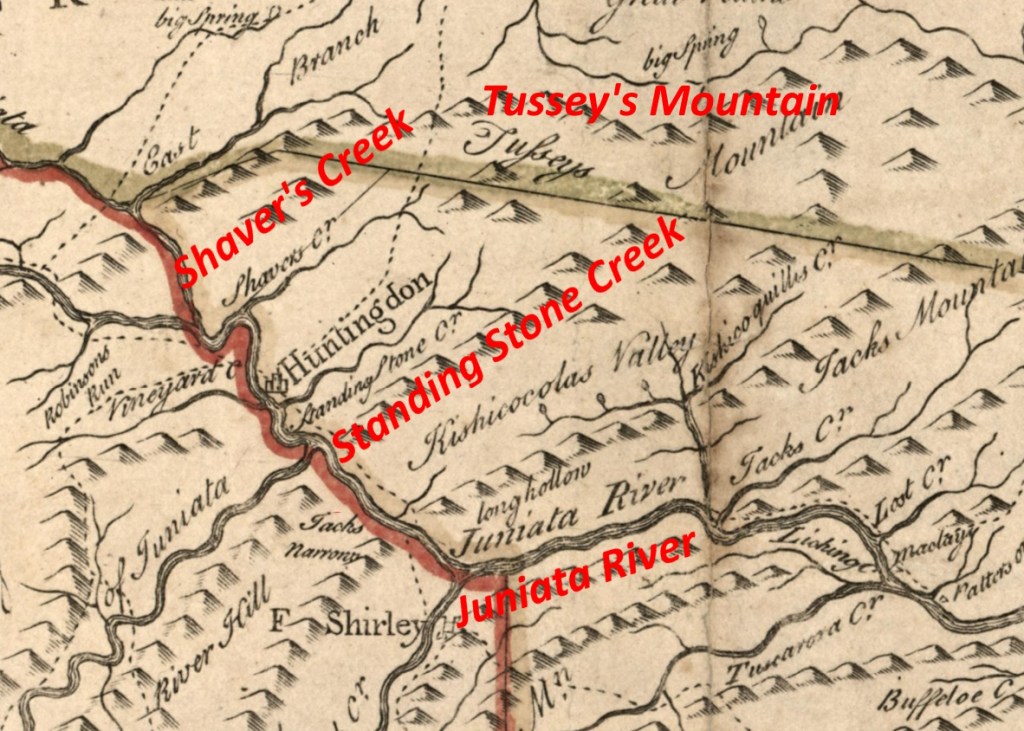
Gilbert and Martha Cheney settled on the south side of Warrior’s Ridge in an area between Shaver’s Creek and Standing Stone Creek. They were living there by the late 1760s or early 1770s.
Gilbert and Martha rented a parcel of land on Shaver’s Creek Manor. So did their relatives Cheney Ricketts and Edward Ricketts.
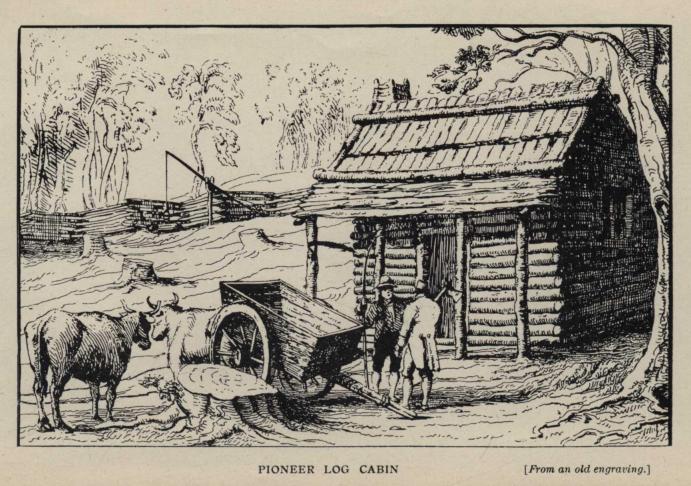
Living conditions were primitive. There were no nearby towns, so most clothing and shelter were homemade. Food was provided by subsistence farming and hunting.
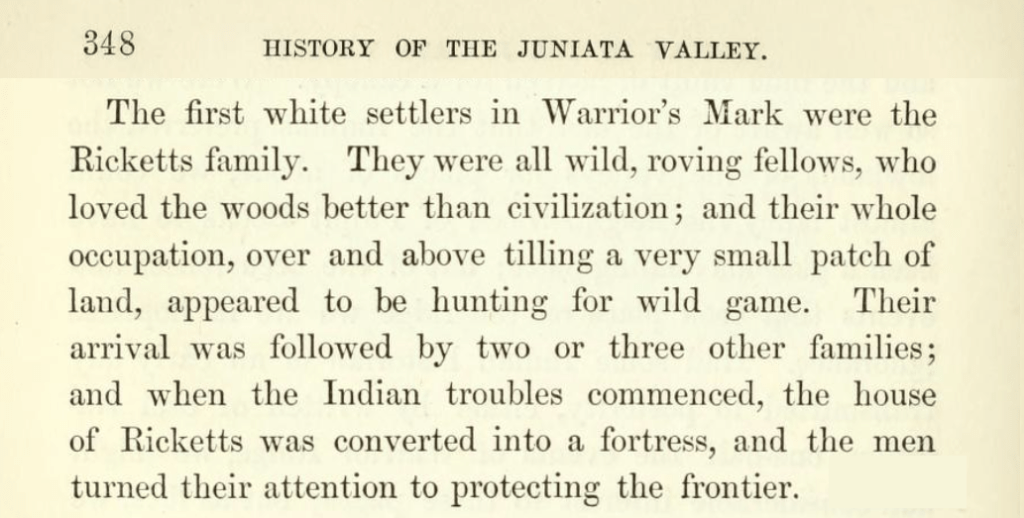
Relationships with the local native tribes were often contentious. The settlers built several forts for protection, one of which was built on the Ricketts’ land near the Cheney homestead.
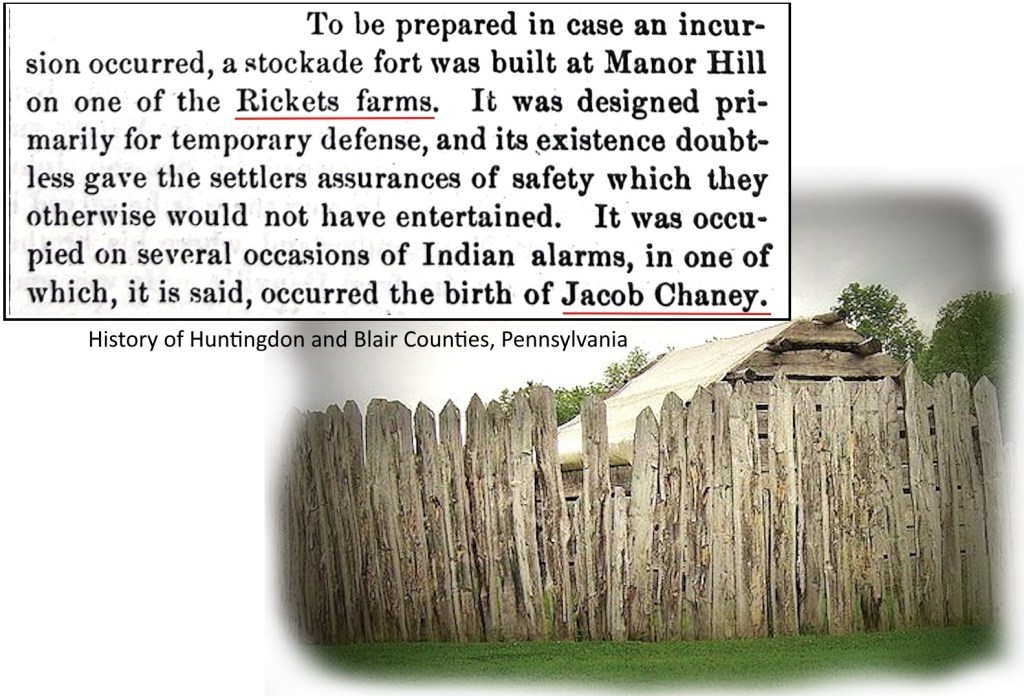
In spite of the hardships, the Cheneys and Ricketts and other families persevered. By the 1770s, there were the trappings of civilization – county organization, courts, censuses, and taxes.
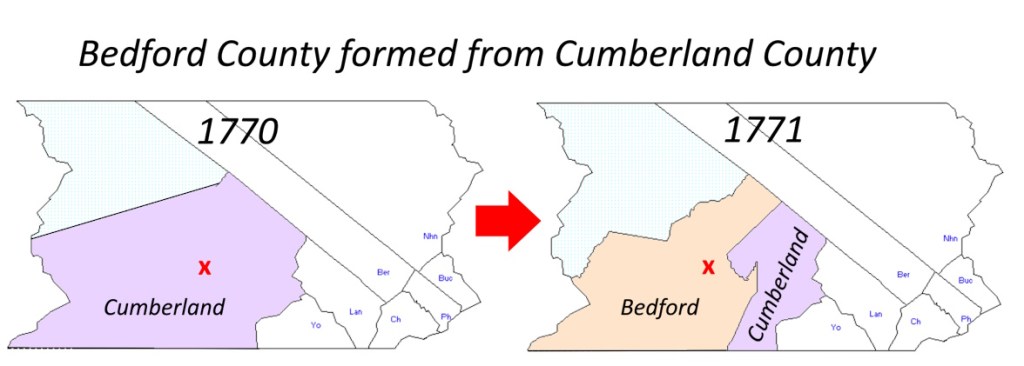
In 1771, Bedford County was formed from Cumberland County. It was named after nearby Fort Bedford. Bedford County covered much of southwest Pennsylvania. It’s nicknamed “Mother Bedford,” because up to twenty present-day counties were once contained within its boundaries.
In 1771, there were only about 350 taxable families in this huge county.
Its mountains are well timbered and rich in minerals, while its valleys are fertile and most productive. The roads, in most places, are over high ground, as they were formerly Indian trails.
Brief History of Bedford County
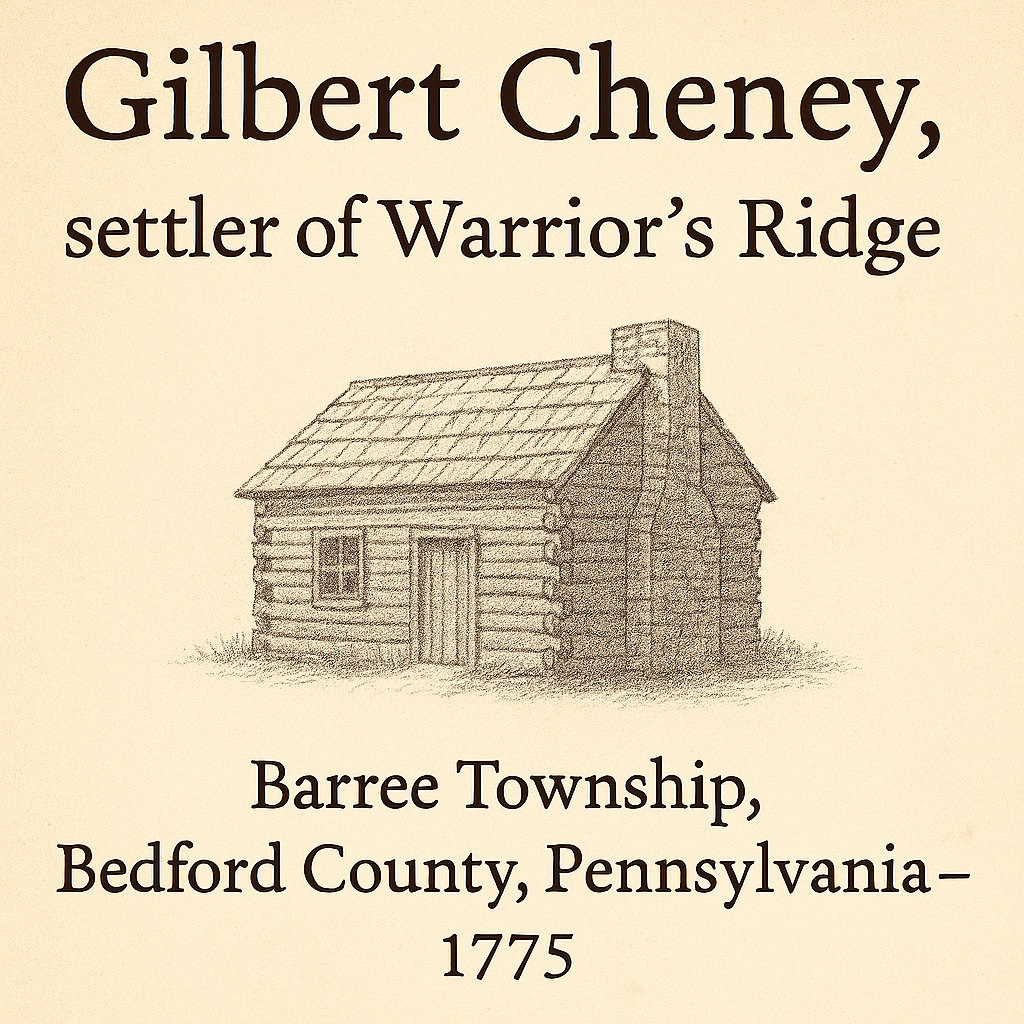
Bedford County was divided into townships, with the Cheneys and Ricketts living in Barree Township.
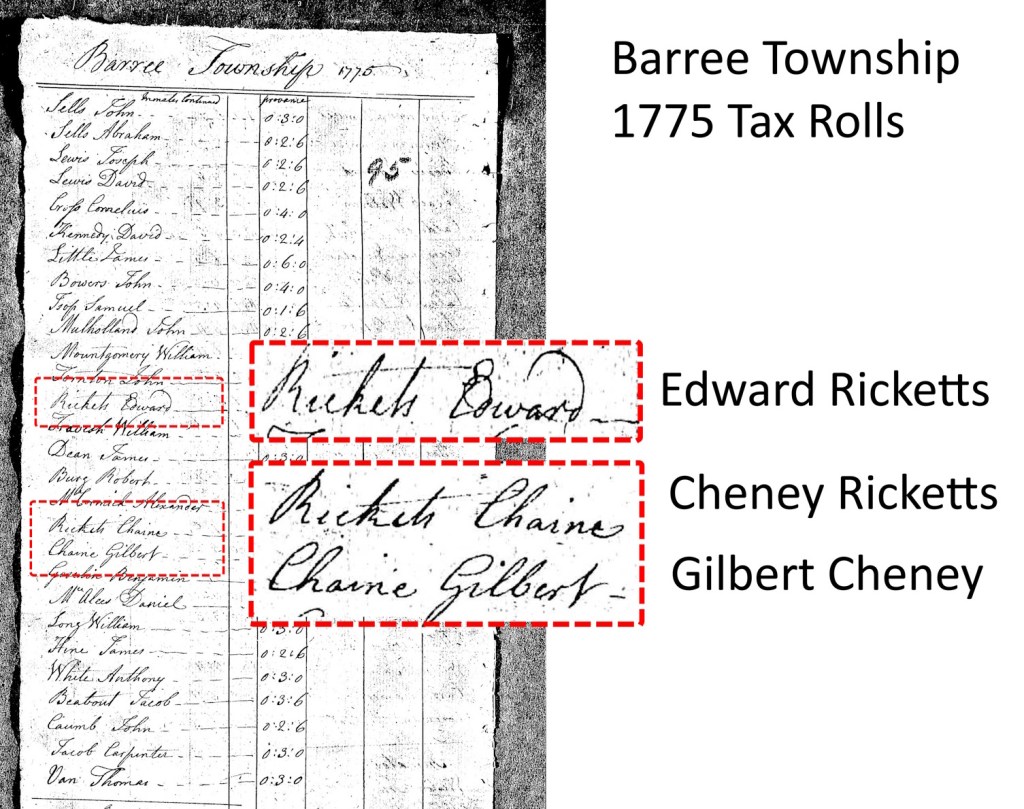
In 1775, Gilbert Cheney appeared on the Barree Township tax rolls alongside neighbors and relatives—still subjects of the British Crown, just months before revolution swept the colonies.
Notice neighbors Cheney Ricketts and Edward Ricketts.
In 1775, the Cheneys were British subjects, owing allegiance to the British Crown.
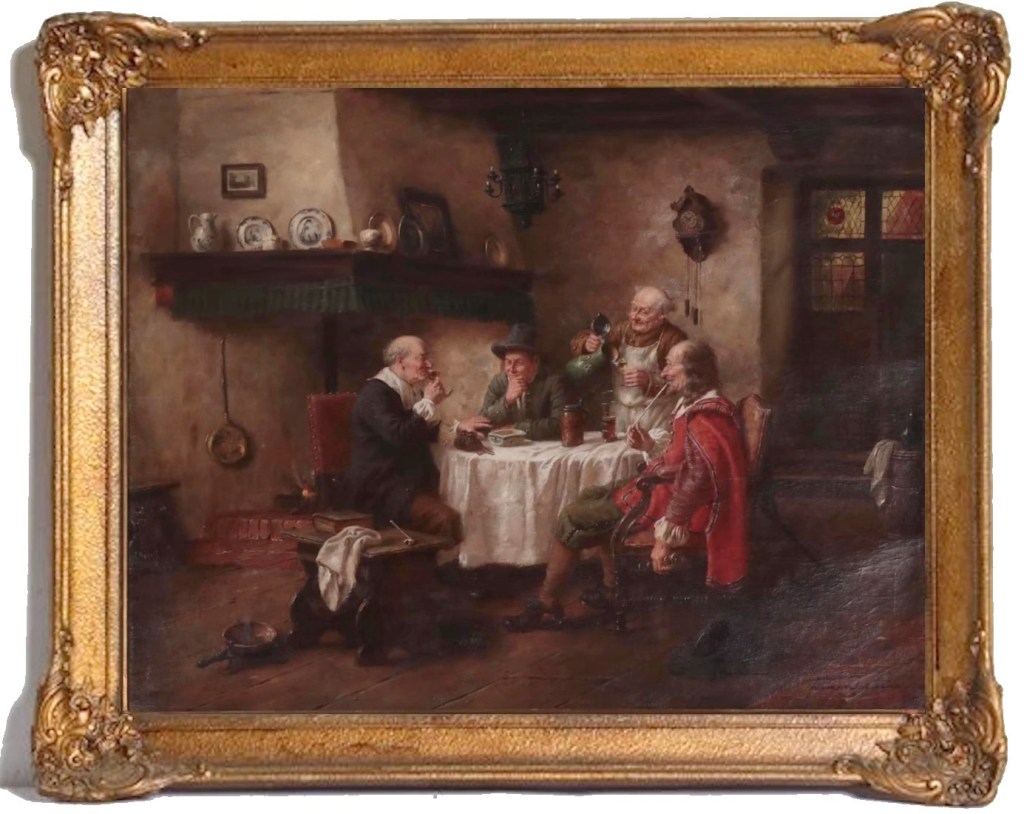
Colonists enjoyed the full wealth and protection of the British government, including the British army and navy. Colonists, who inherited a large amount of English common law and thoughts on rights and liberties, tended to discuss local affairs in the town tavern.
Life in Colonial America Prior to the Revolutionary War
But, as we’ve heard, “all politics is local.” Most colonists viewed themselves as members of whichever town or colony they resided in. They didn’t feel they were an integral part of the thirteen colonies.
That was about to change. The next decade in the American colonies wrought amazing changes.
Nibbles Extra Credit – The Penn Manors
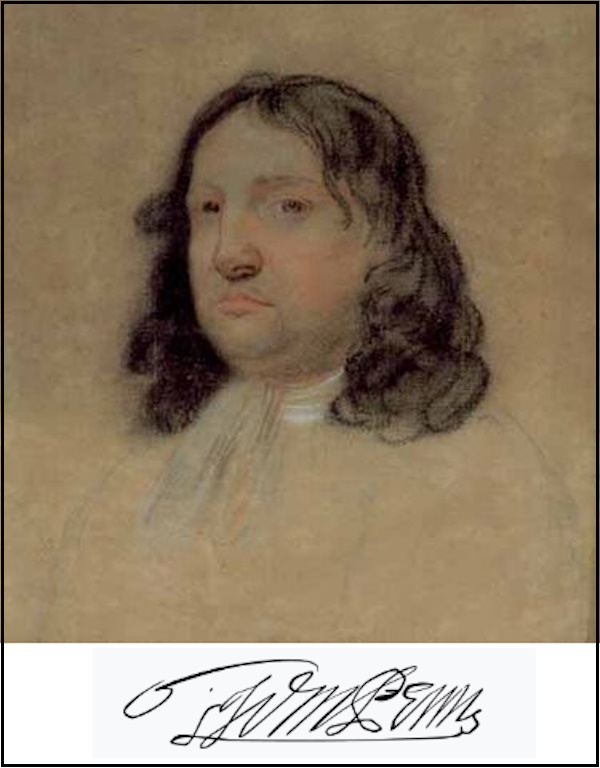
In 1681, King Charles II granted William Penn a large tract of land in North America to settle a debt owed to Penn’s father. This land encompassed what is now Pennsylvania and Delaware. Penn was the proprietor, owner of the land and the governing rights.
Penn encouraged settlers, who could acquire land by purchasing or renting it from the Penn Proprietorship.
The Penn Sons
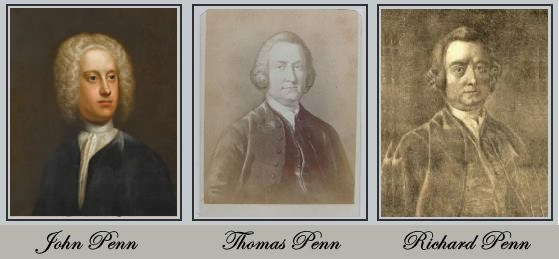
William Penn died in 1718. His sons John, Thomas, and Richard inherited their father’s proprietorship of land holdings in Pennsylvania.
The Penn Manors
Manors were large tracts of land that the Penns reserved for themselves. The manors were a source of revenue and power for the Penn family.
The Penns intended to sell off most of the land in Pennsylvania, but the manors were to remain under their control. That would provide rent income forever, even after the rest of Pennsylvania lands had been sold.
During the proprietorship of Pennsylvania, William Penn and his family established 44 manors, encompassing a total of 421,015 acres.
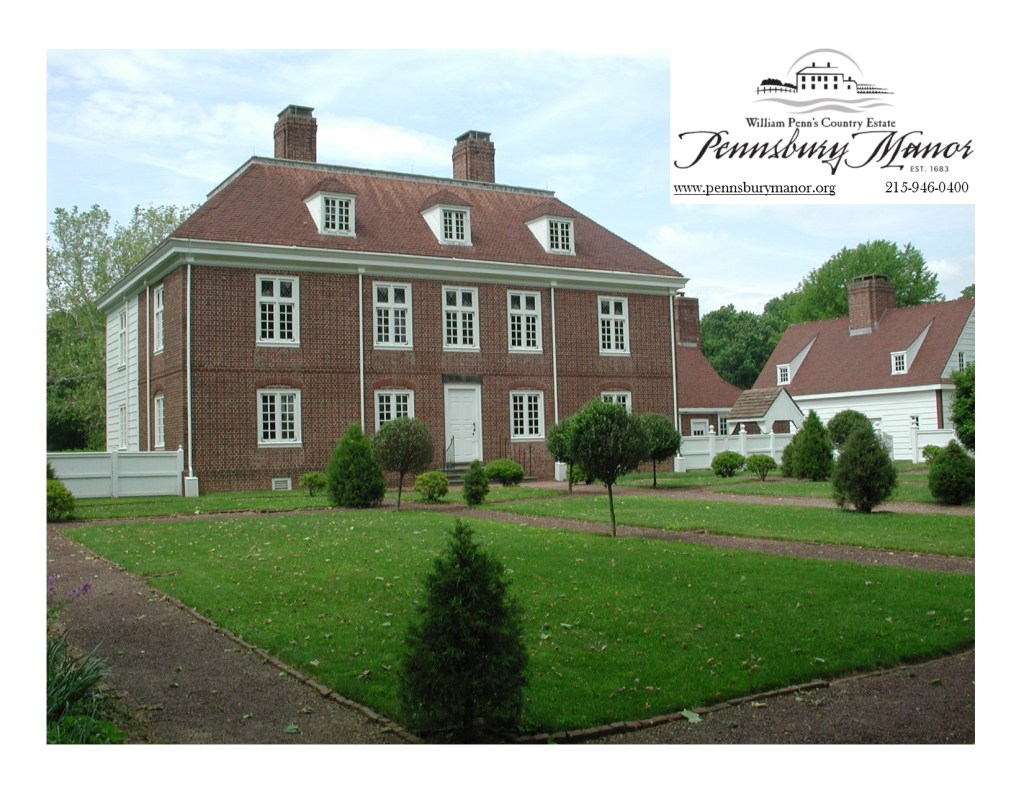
Some manors were quite extensive. Pennsbury Manor, William Penn’s personal estate, covered 8,000 acres.
Shaver’s Creek Manor
In 1760, the Penn Proprietaries set aside 2,608 acres at the headwaters of Shaver’s Creek. They designated it as Shaver’s Creek Manor.
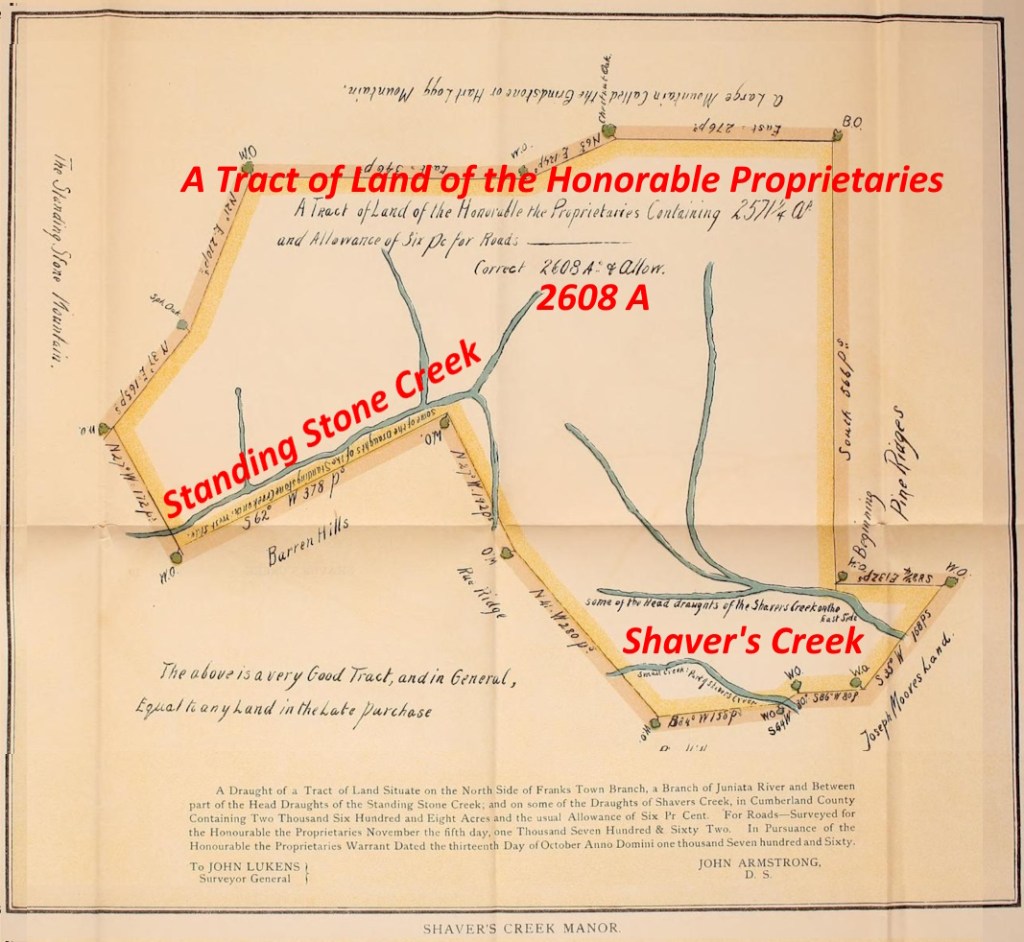
This tract was surveyed for settlers in 1762. The Penn’s would rent the land to settlers, but would retain ownership.
Gilbert and Martha Cheney lived on a parcel of land on Shaver’s Creek Manor. So did several of the Ricketts families.
The Penn Proprietorship Ends
The Revolutionary War brought an end to Penn family control over Pennsylvania.
The manorial system was eventually abolished by the Pennsylvania legislature in 1776, ending Penn’s control of Shaver’s Creek Manor.
The “Divestment Act of Pennsylvania,” passed in 1779, transferred ownership of over 24 million acres of land from the Penn family to the Commonwealth of Pennsylvania. The act also abolished quitrents, the annual rent payments made by landowners to the proprietors.
In exchange for the divested lands, the Penn family received £130,000 in compensation, a fraction of the lands’ value.
The continuing Cheney story
Gilbert and Martha Cheney’s journey into the Pennsylvania wilderness marked a new chapter in the family’s legacy.
From rented land on Shaver’s Creek Manor to the tax rolls of Barree Township, their names became part of the fabric of frontier life.
In the next post, we’ll explore how their children—James, John, Gilbert, Shadrach, and others—carried the Cheney name into the Revolutionary era and beyond.
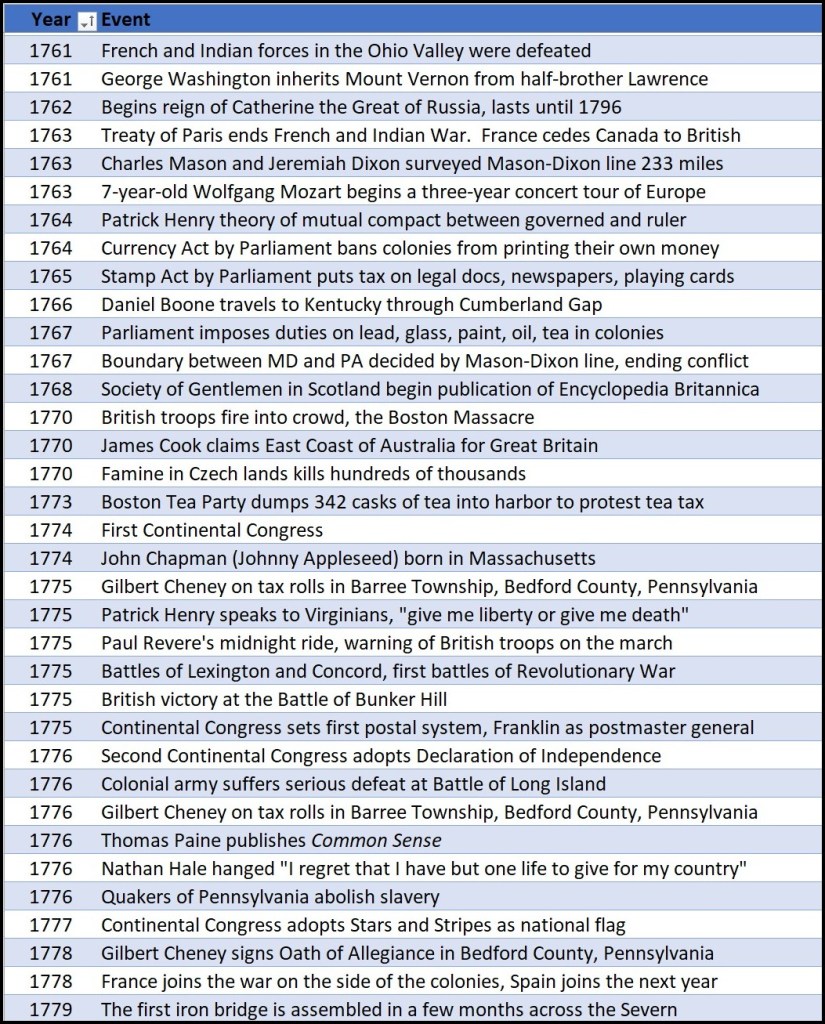
Timeline
Sources:
- Quote – Gilbert Cheney an early settler – History of Huntingdon and Blair Counties, Pennsylvania – J. Simpson Africa – 1883 – https://archive.org/details/historyofhunting00afri/mode/2up
- Image – Appalachian Mountains – The Nature Conservancy – https://www.nature.org/en-us/about-us/where-we-work/priority-landscapes/appalachians/
- Quote and Map – Juniata River – Wikipedia – https://en.wikipedia.org/wiki/Juniata_River
- Image – Painting – The Juniata, Evening – Thomas Moran – 1864 – The National Gallery of Art – https://www.nga.gov/artworks/153202-juniata-evening
- Map – Map of Pennsylvania – contemporary – https://www.nationsonline.org/oneworld/map/USA/pennsylvania_map.htm#google_vignette
- Image – Map enlargement where Cheneys settled – Pennsylvania – To the Honorable Thomas Penn and Richard Penn, Esquires, true and absolute proprietaries and Governors of the Province of Pennsylvania and the territories thereunto – 1770 – Library of Congress – https://www.loc.gov/resource/g3820.ar129500/?r=0.591,0.229,0.079,0.066,0
- Image – Pioneer Log Cabin – Unknown
- Image – Ricketts living in wilderness reference – History of the Early Settlement in the Juniata Valley – U.J. Jones – 1856 – https://archive.org/details/historyofearlyse00jone/page/348/mode/2up?view=theater&q=ricketts
- Quote – Ricketts fort reference – History of Huntingdon and Blair Counties, Pennsylvania – J. Simpson Africa – 1883 – https://archive.org/details/historyofhunting00afri/mode/2up
- Quote – Bedford County topography – Brief History of Bedford County – Inquirer Printing Company – 1924 – http://www.johnstowncafe.com/johnstownarchivebookcountybedford1924.pdf
- Map – Bedford County formed from Cumberland County – Interactive Map of Pennsylvania County Formation History – https://www.mapofus.org/pennsylvania/
- Image – Gilbert Cheney on tax rolls – Pennsylvania, U.S., Tax and Exoneration, 1768-1801 – Ancestry.com – https://www.ancestry.com/imageviewer/collections/2497/images/33020_254639-00203?pId=1414727
- Quote – Colonist views on America – Life in Colonial America Prior to the Revolutionary War – America Battlefield Trust – https://www.battlefields.org/learn/articles/life-colonial-america-prior-revolutionary-war
- Image – Painting of men in a tavern – Fritz Wagner – Mutual Art – https://www.mutualart.com/Artwork/Untitled–tavern-scene-/3685650E2DF4E0FF11A8D8C7D7DD2FDF
- Image – William Penn – Wikipedia – https://en.wikipedia.org/wiki/William_Penn
- Image – John, Thomas, and Richard Penn – Penn Libraries – University of Pennsylvania – Penn People – https://archives.upenn.edu/exhibits/penn-people/biography/john-penn/
- Image – Pennsbury Manor – Visit Bucks County – https://www.visitbuckscounty.com/listing/pennsbury-manor/2621/
- Map – Survey of Shaver’s Creek Manor – 1762 – Library of Congress – Image 157 of Draughts of the proprietary manors in the province of Pennsylvania – https://www.loc.gov/resource/gdcmassbookdig.draughtsofpropri00egle/?sp=157
- Book – Excerpts about Cheney and Ricketts families – A History of the Juniata Valley and its People – John W. Jordon – 1913 – https://ia801300.us.archive.org/31/items/historyofjuniata01jord/historyofjuniata01jord.pdf
- Map – Pennsylvania – To the Honorable Thomas Penn and Richard Penn, Esquires, true and absolute proprietaries and Governors of the Province of Pennsylvania and the territories thereunto – 1770 – Library of Congress – https://www.loc.gov/resource/g3820.ar129500/?r=0.591,0.229,0.079,0.066,0
- Map – Directory map of Huntingdon Co., Pennsylvania : from recent surveys – 1856 – Library of Congress – https://www.loc.gov/resource/g3823h.la000755/?r=0.363,-0.08,0.64,0.536,0
- Audio – The Lark in the Clear Air – Shake That Little Foot – Free Music Archive – https://freemusicarchive.org/music/Shake_That_Little_Foot/Shake_That_Little_Foot/Mississippi_Sawyer_vbrmp3/
 Family Nibbles