In the years following independence, Gilbert and Martha Cheney transitioned from renters on Penn Proprietorship land to landowners in the new American republic.
Their names appear in oaths of allegiance, tax rolls, and land warrants—each record a step toward permanence in the Pennsylvania frontier.
Oath of Allegiance
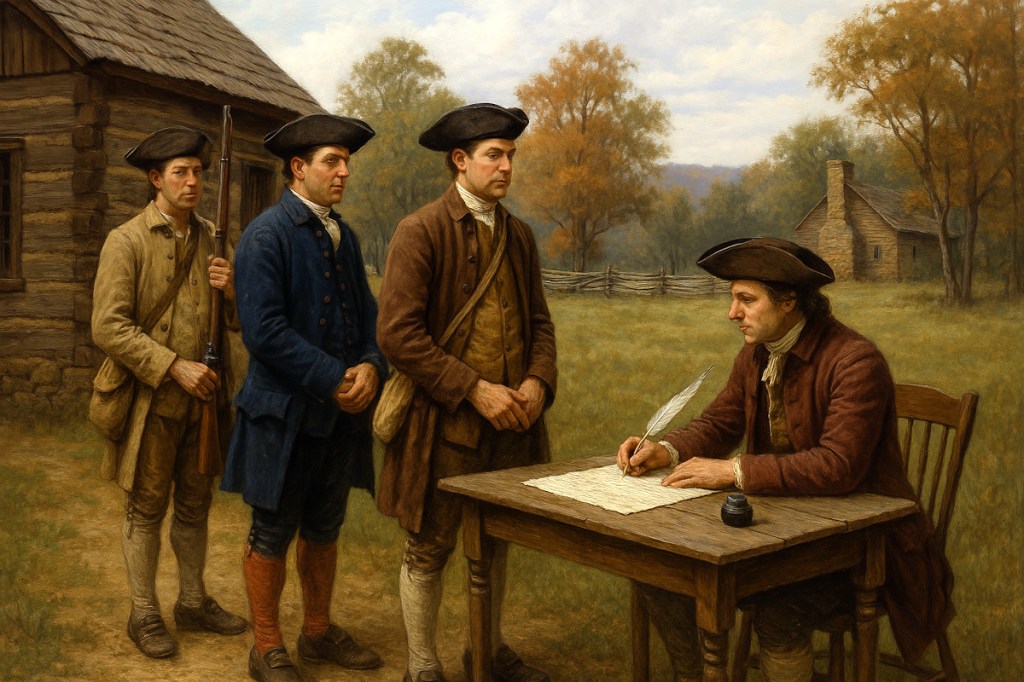
In 1776, Gilbert Cheney and almost every man in Bedford County signed the Oath of Allegiance.
That oath disavowed fidelity to the King of Great Britain.
Signing the oath was more than symbolic—it marked a break from the Crown and a commitment to the new republic. Those who refused faced suspicion, fines, or worse.
Gilbert and other Cheneys signed the Oath. Cheney Ricketts and other Ricketts signed too.

Bedford County Militia
Bedford County was on the western frontier, making it vulnerable to attacks from British-allied Native American tribes, primarily Seneca warriors. Fort Bedford, garrisoned by the local militia, served as a key defense point.
While Bedford County experienced frequent skirmishes and raids, it was not the site of major battles like those in the eastern part of the state. The focus was on defending the frontier and supporting the broader war effort.
The militia men were commonly called ‘Rangers on the Frontier.’ The militia was divided into classes, and only a few of the classes were called out at any time. That practice ensured that the farmsteads located in the many valleys of the county would be guarded by the men in the classes not called out. Those men who were called out served for tours of duty that varied from a couple weeks to a couple months.
Bedford County’s Role in the Wars
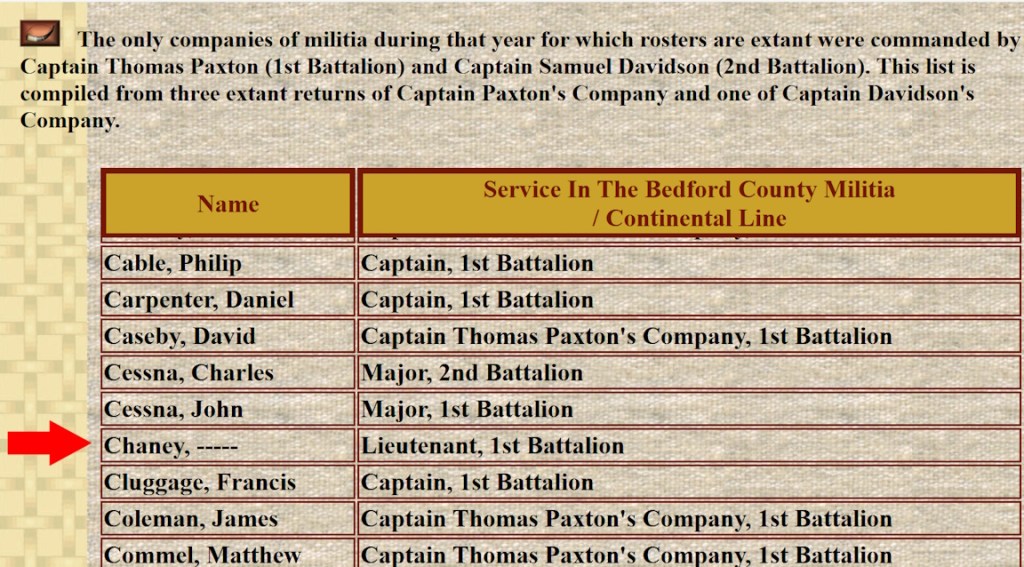
The records for the Bedford County Militia aren’t complete. I can’t find a record for Gilbert Cheney being in the militia. There’s a Lt. Chaney listed, but no first name.
After the war
American independence from Great Britain had a direct impact on Gilbert and Martha Cheney. They had been renters on Shaver’s Creek Manor, owned by the Penn Proprietorship. After the war, Pennsylvania confiscated the Penn’s land holdings. That enabled the Cheneys to apply for a patent to become owners of the land that their farm was on.
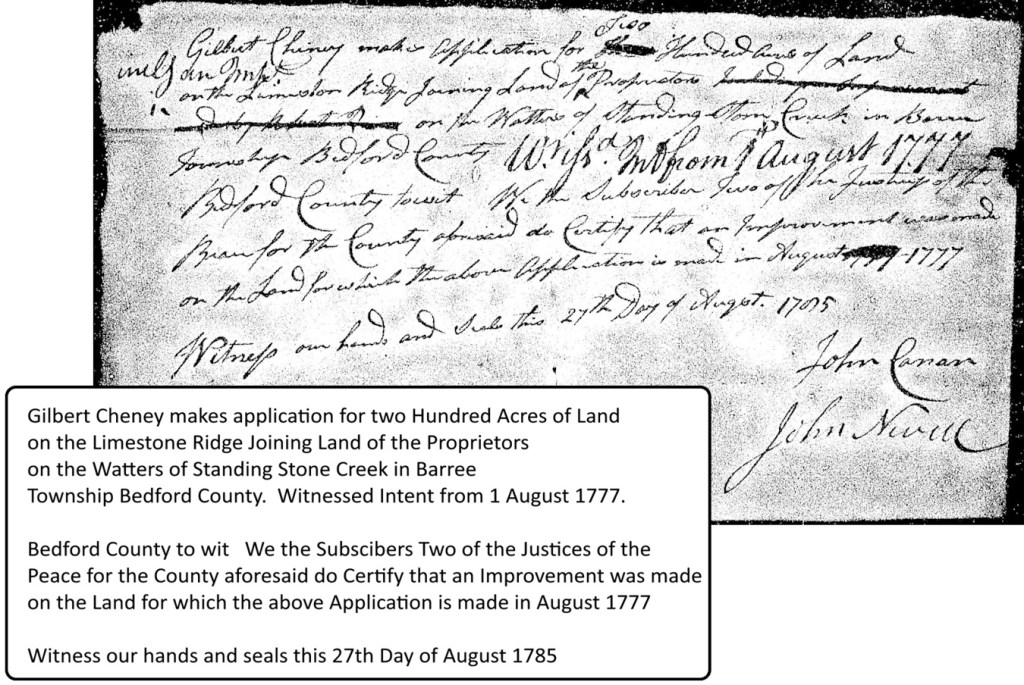
Here is Gilbert Cheney’s 1785 warrant application to apply for a survey and a patent for 200 acres of land. Gilbert stated that he had made improvements starting in 1777.
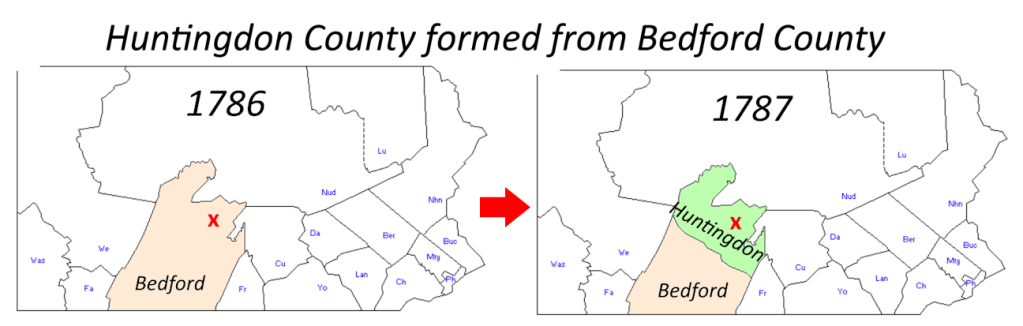
In 1787, Huntingdon County was formed from Bedford County. Gilbert Cheney had applied for a land warrant for his land in Bedford County, but the survey was now being done on his land in Huntingdon County. The Cheneys were now residents of Huntingdon County.
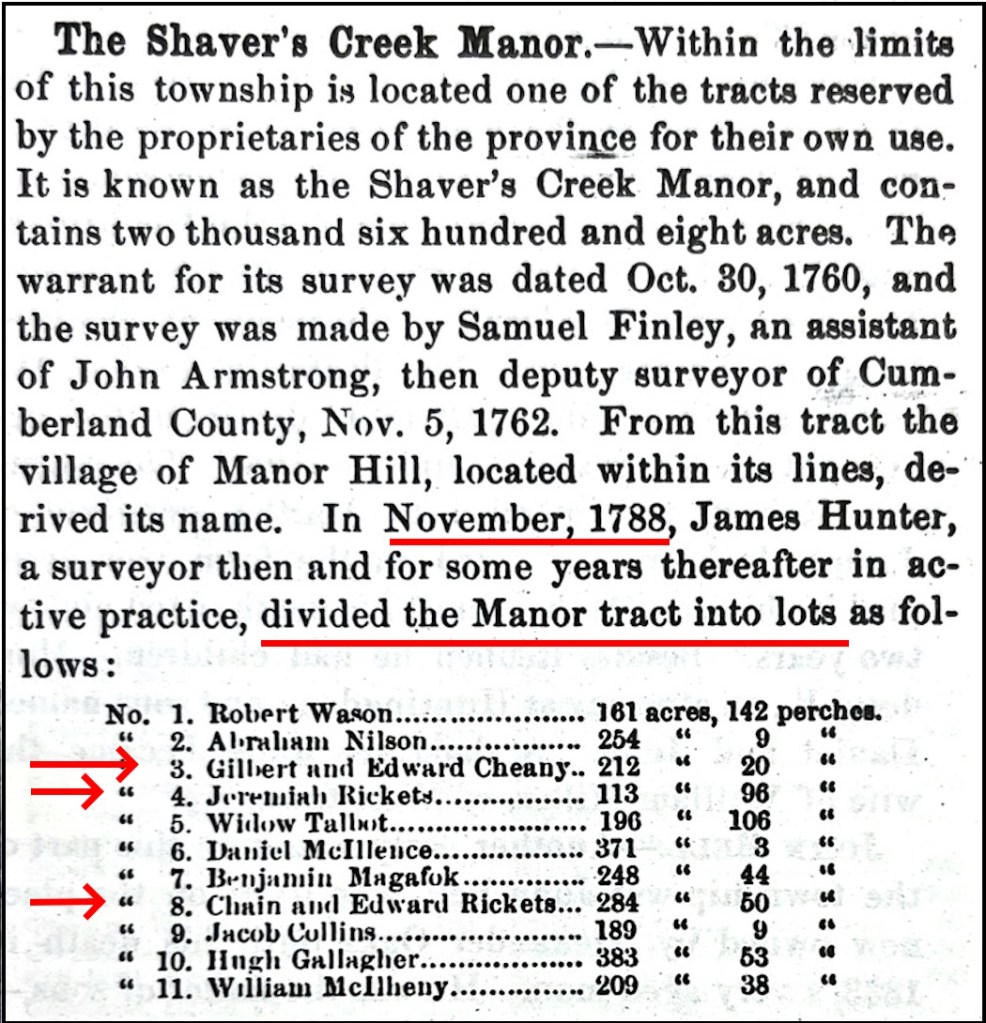
The survey for Gilbert Cheney’s land was part of an overall survey of Shaver’s Creek Manor. Those who had rented there now obtained warrants and surveys for the land. They could complete the process to obtain the land patent.
Lot 3 was assigned to Gilbert and Edward Cheney.
Jeremiah Ricketts had Lot 4.
Cheney and Edward Ricketts had Lot 8.
Notice the reference to Edward Cheney. Other citations mention Isaiah Cheney. I think Edward and Isaiah Cheney are brothers of Gilbert. They are shown in various tax lists as living next to Gilbert and Martha.
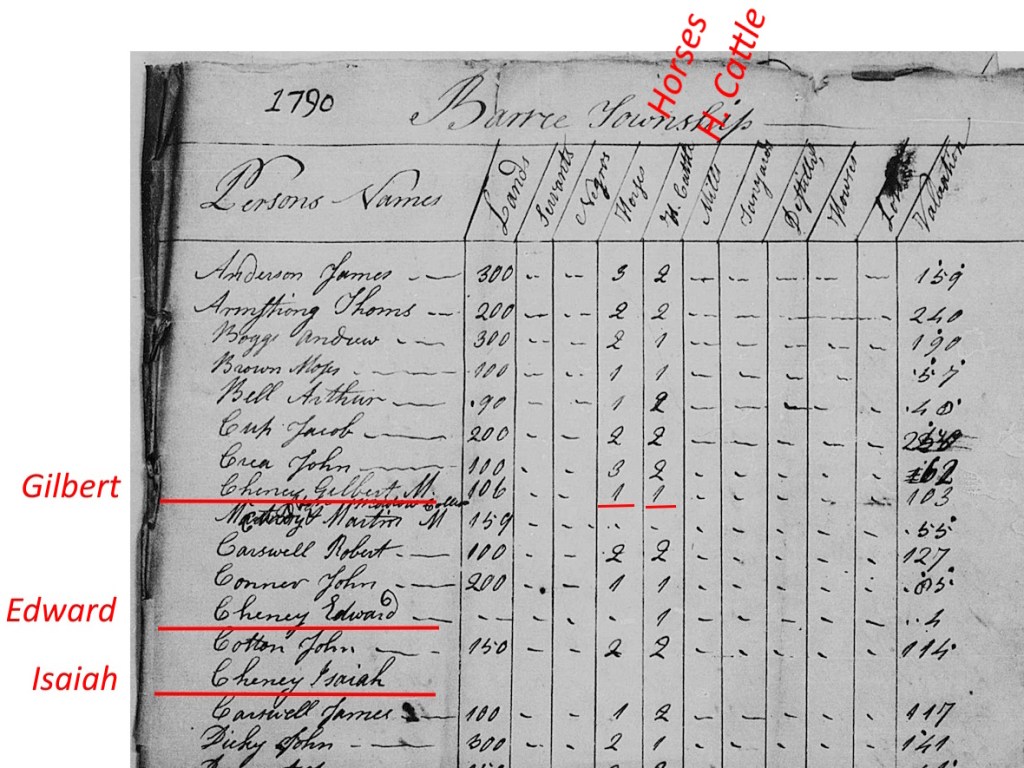
The census reports that Gilbert has one horse and one cow (horned cattle). Edward Cheney has one horse, and Isaiah has none.
Gilbert and Martha Cheney had 10 children
Their first child, James, was born in 1780. John was born in 1784. Elizabeth, Martha, Nancy, and Eleanor from 1785 to 1790. Gilbert was born in 1791, Dorcas in 1793, Shadrach in 1796, and Abraham in 1798.
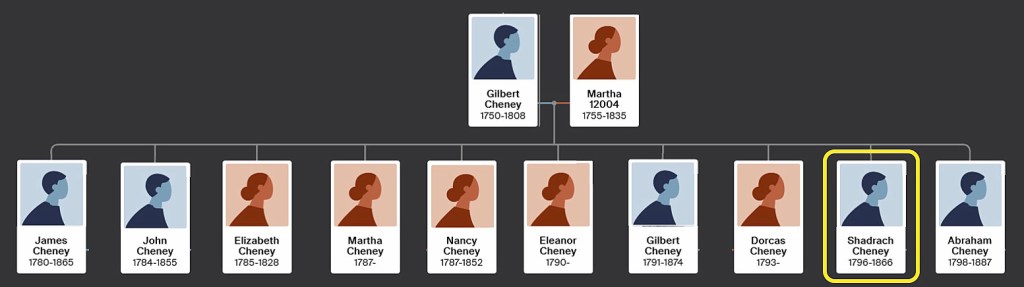
Shadrach Cheney, born October 9, 1793, is our 4th great-grandparent.
The family compound
We know from the 1798 tax list that the Cheney farm had 120 acres.
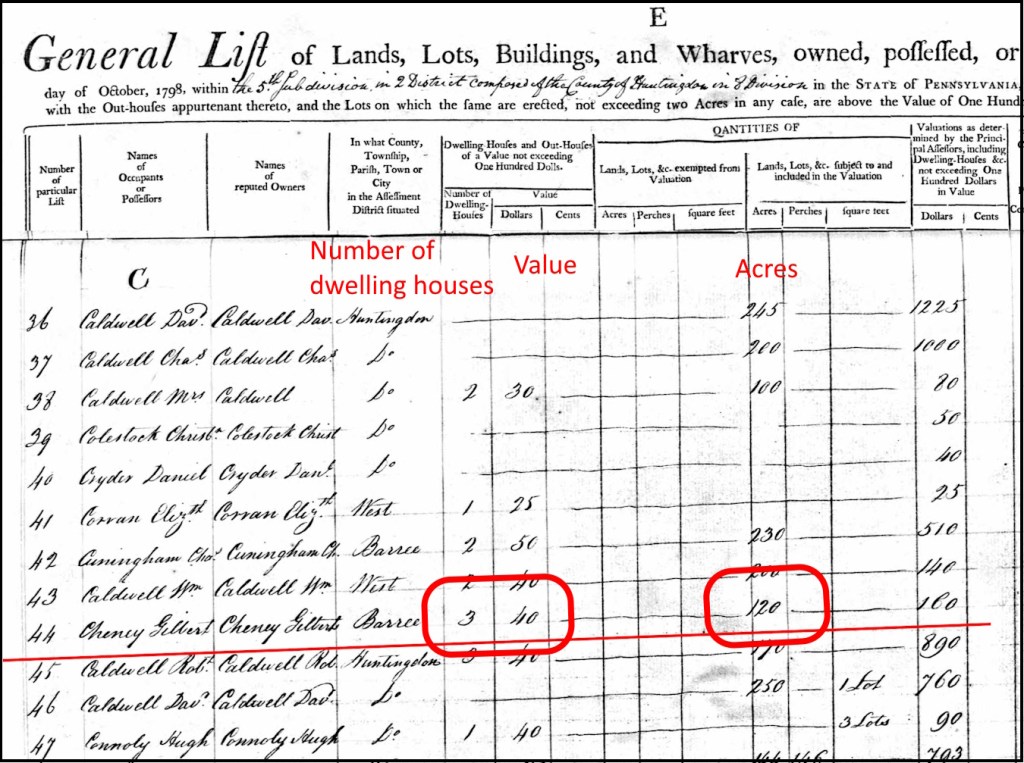

There were 3 dwelling houses valued at 40 dollars. The houses were likely constructed of logs instead of dimension lumber.
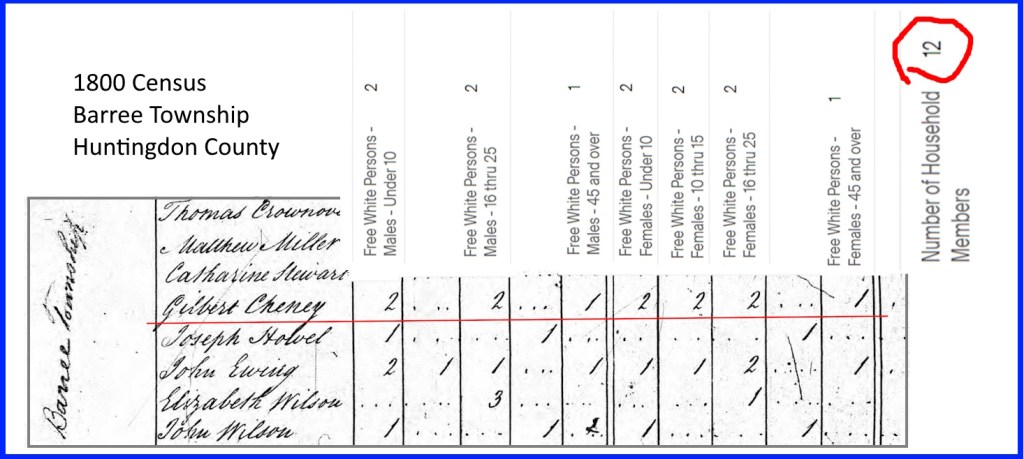
The 1800 census lists 12 people living in the Cheney houses. That’s Gilbert and Martha and all 10 children.
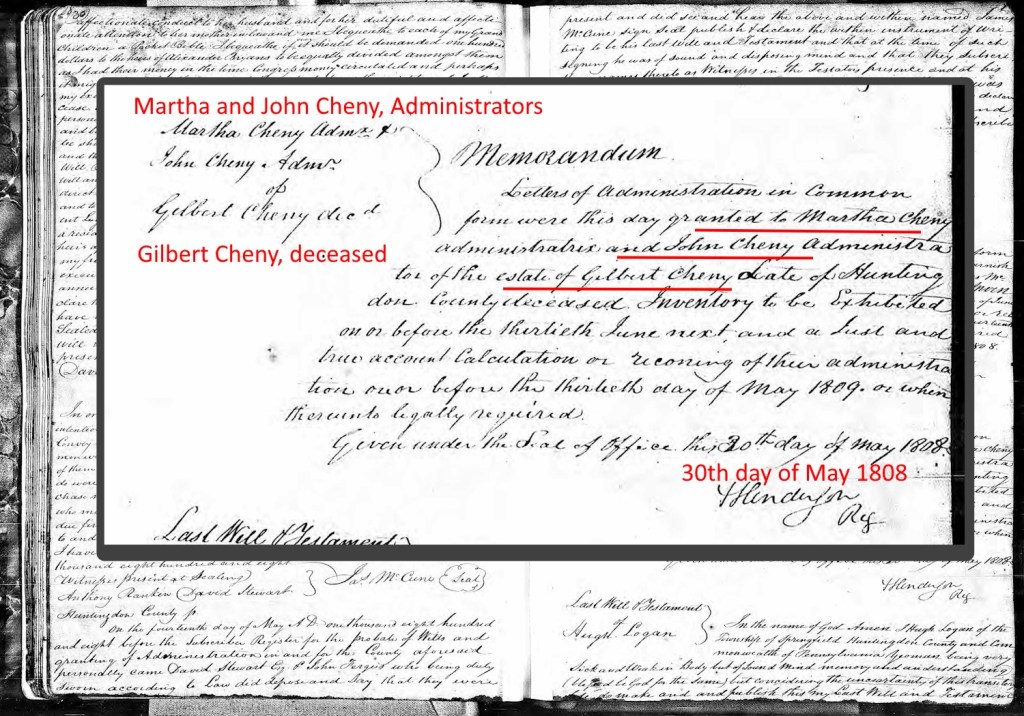
Gilbert died
Gilbert Cheney died in spring 1808. He was about age 58. Martha Cheney and son John were appointed administrators of Gilbert’s estate.
When Gilbert died in 1808, most of the children were living at home. James, the eldest, was age 28, John was 24. Of the youngest children, Dorcas was 15, Shadrach 12, and Abraham 10.
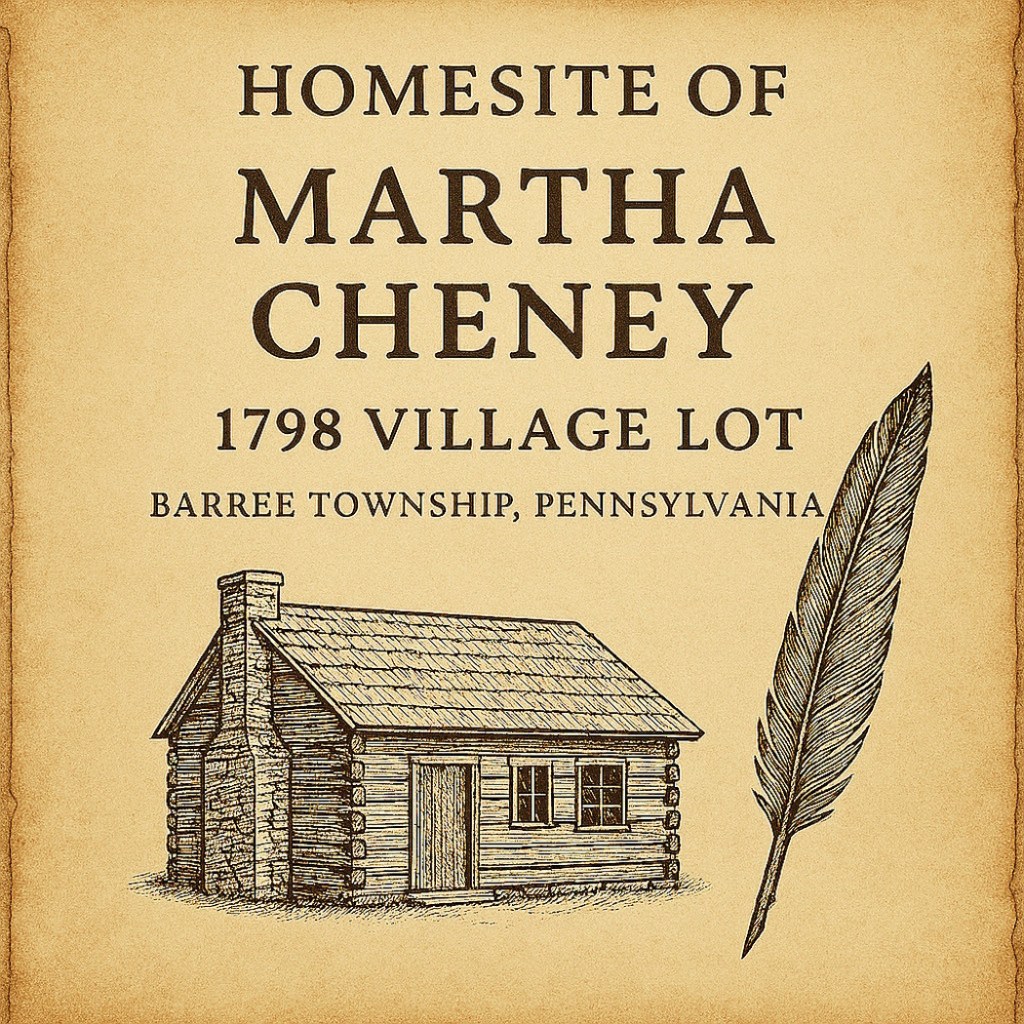
By 1810, the census shows four people living in Martha Cheney’s household. Martha had moved to a village lot in the tiny settlement of Manor Hill, just a short distance from the farm.
Sons James and John, not yet married, were living on the farm and doing the farm work.
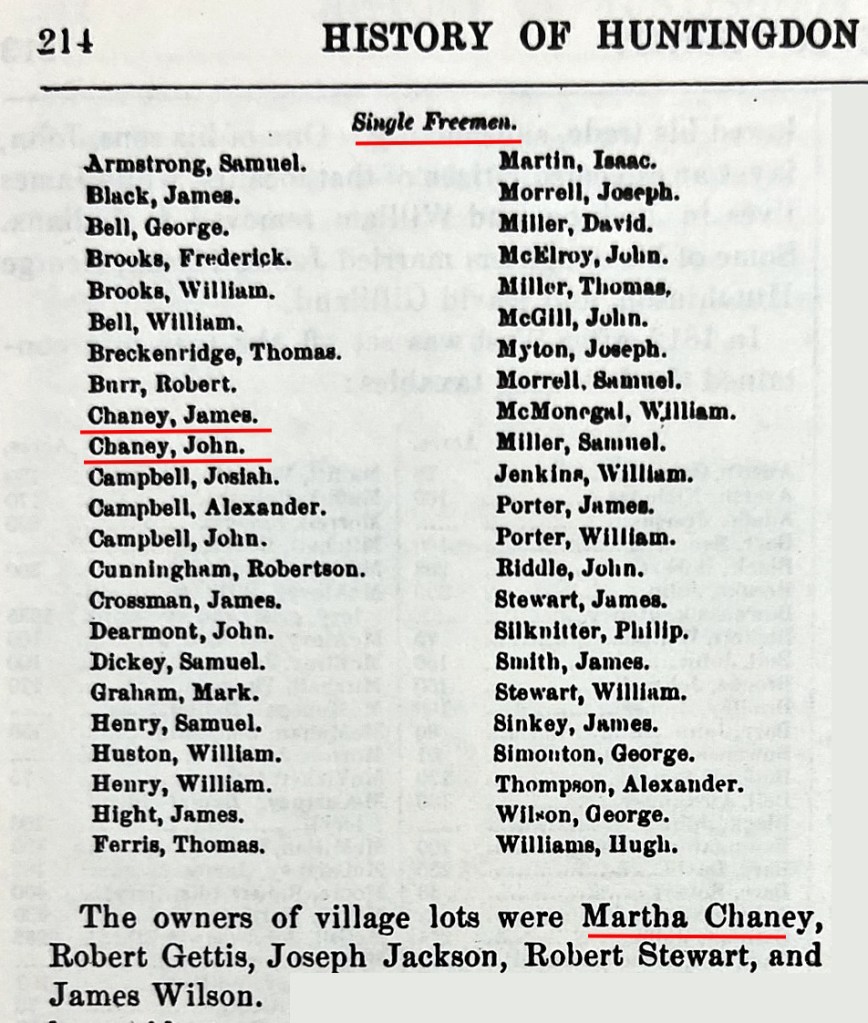
By 1820, the census shows Martha living in the household of her eldest son James. She was about age 65. James had married in 1819 and had two children.
In the 1830 census, Martha is still living with James’ family. The U.S. Census didn’t list individual names until 1850, but we can see the household includes a female aged 70-79. That’s Martha.
Martha died
Martha Cheney died around 1835. She was nearly age 80. We don’t have any documentation of her death.
Cheney children
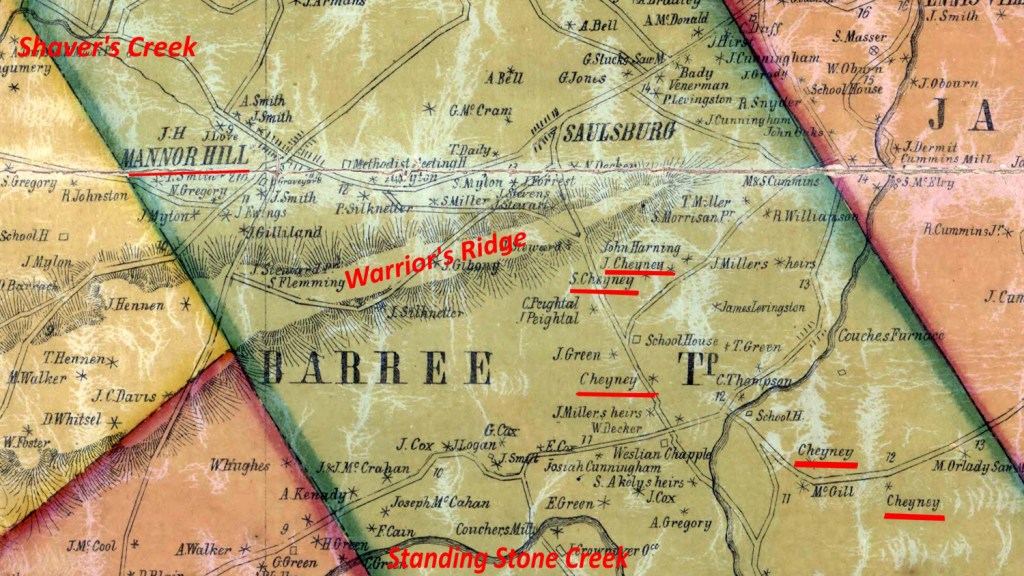
Most of the Cheney children stayed around the area for the next few generations. Sons James and John farmed. Younger son Gilbert Jr farmed and had a large family. The Cheney girls married neighbors and lived nearby.
You can view their presence in this map of Barree Township. This map was published in 1856, twenty years after Martha’s death and forty years after Gilbert’s passing. There are numerous Cheney households.
By 1800, Gilbert and Martha Cheney had built a home, raised ten children, and secured their place in the new nation.
Their story—etched into land records, census rolls, and family memory—marks the beginning of a legacy that would stretch across generations.
In the next post, we’ll follow Shadrach Cheney, our 4th great-grandfather, as he steps into a new role: circuit-riding Methodist minister on the expanding American frontier.
Timeline

Sources:
- Image – Men waiting to sign Oath of Allegiance – AI generated – Microsoft Co-Pilot
- Image – Signers of the Oath of Allegiance, Bedford County, Pennsylvania – Rosters, Oath of Allegiance – MotherBedford.com – https://www.motherbedford.com/Roster14.htm
- Image – Bedford County’s Role in the Wars – MotherBedford.com – https://www.bedford250.com/History250WarsII.htm#:~:text=The%20Amerindians%2C%20goaded%20on%20by,Smith.
- Image – Toy Militia Men soldiers – AI generated – Microsoft Co-Pilot
- Image – Rosters – The Bedford County Militia – 1776 – MotherBedford.com – https://www.motherbedford.com/Roster03.htm
- Image – Warrant application – Gilbert Cheney – 1785 – Pennsylvania, Land Warrants and Applications, 1733-1952 – Ancestry.com – https://www.ancestry.com/search/collections/2350/records/222682?tid=4491114&pid=-257124079&ssrc=pt
- Map – Huntingdon County formed from Bedford County – Interactive Map of Pennsylvania County Formation History – https://www.mapofus.org/pennsylvania/
- Book excerpt – Shaver’s Creek Manor surveyed Cheney Lot 3 – A History of Huntingdon and Blair Counties, Pennsylvania – J. Simpson Africa – 1883 – https://archive.org/details/historyofhunting00afri/page/n1/mode/2up
- Image – Tax rolls – Barree Township – Huntingdon County, Pennsylvania – 1790 – Ancestry.com
- Family tree diagrams – Ancestry.com
- Image – Pennsylvania, U.S., U.S. Direct Tax Lists, 1798 for Gilbert Cheney – Ancestry.com – https://www.ancestry.com/search/collections/2060/records/335652?tid=4491114&pid=-257124079&ssrc=pt
- Census – 1800 United States Federal Census for Gilbert Cheney – Ancestry.com – https://www.ancestry.com/search/collections/7590/records/421608?tid=4491114&pid=-257124079&ssrc=pt
- Image – Letter of Administration granted to Martha and John Cheney in the estate of Gilbert Cheney – Pennsylvania, Land Warrants and Applications, 1733-1952 – Ancestry.com – https://www.ancestry.com/search/collections/2350/records/222682?tid=4491114&pid=-257124079&ssrc=pt
- Book excerpt – Martha Cheney has village lot – A History of Huntingdon and Blair Counties, Pennsylvania – J. Simpson Africa – 1883 – https://archive.org/details/historyofhunting00afri/page/n1/mode/2up
- Map – Directory map of Huntingdon Co., Pennsylvania – 1856 – Library of Congress – https://www.loc.gov/resource/g3823h.la000755/?r=0.93,0.873,0.14,0.118,0
- Audio – The United States Army Old Guard Fife and Drum Corps – Paddy on the Handcar from the Minstrel Boy Show – Free Music Archive – https://freemusicarchive.org/music/The_United_States_Army_Old_Guard_Fife_and_Drum_Corps/Celebrating_50_Years
 Family Nibbles