Family Nibbles – Volume 10 is here! This book is about the lives of our Gallagher ancestors from 1915 to 1941.
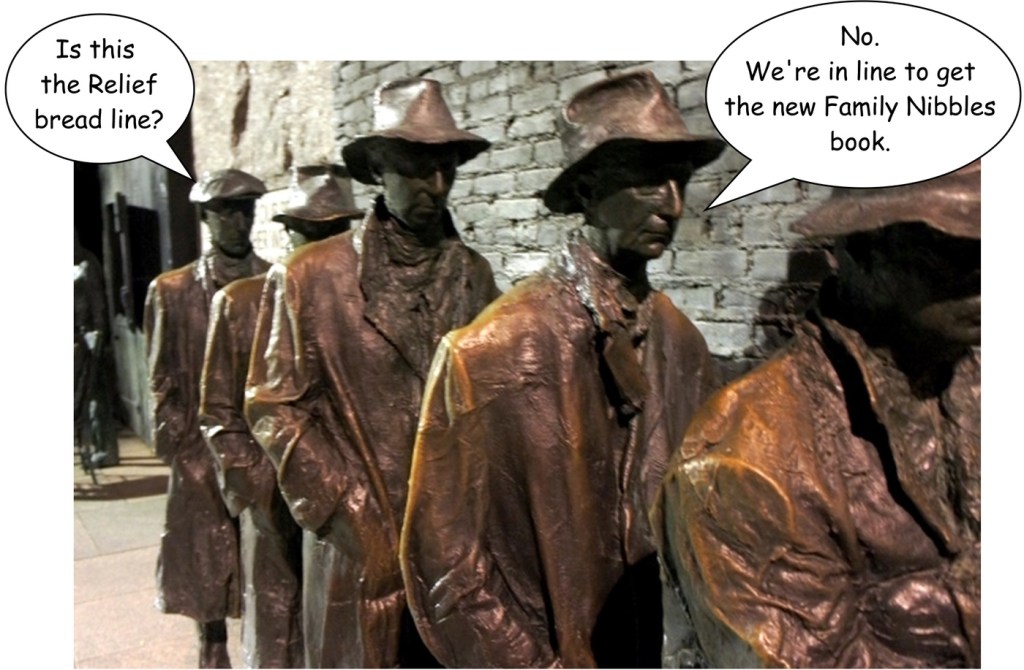
Family Nibbles – Volume 10 is here! This book is about the lives of our Gallagher ancestors from 1915 to 1941.
1941 was a watershed year. The end of the Great Depression. The beginning of World War II. It had profound effects on our family.
The Federal budget increased by an astounding 50 percent between 1940 and 1941. Virtually all of the increase was for military spending.
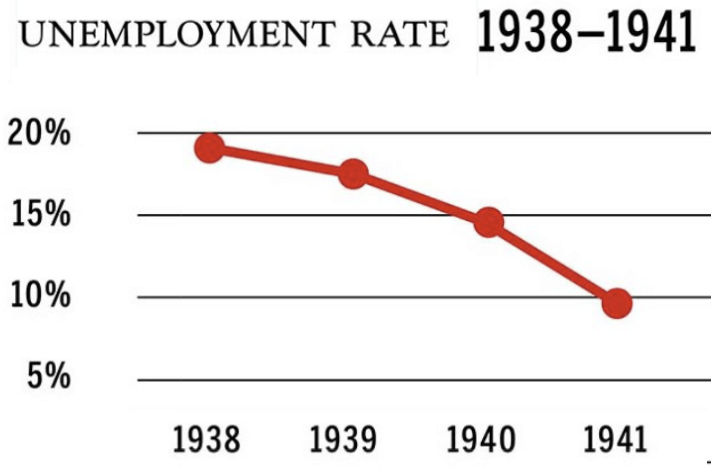
In 1941 unemployment would drop below 10 percent for the first time since 1930.
Unemployment Rate 1938-1941 – Franklin D. Roosevelt Presidential Library
Continue readingIn February 1941 fully one percent of the American labor force was at work building army training camps for 1.4 million new draftees.
The End of the Great Depression – National Bureau of Economic Research

In April 1940 Germany attacked Denmark and Norway. In May, Germany took Belgium and the Netherlands. In June, France fell to the conquering Germans. Japan had overrun China. In September, Italy joined Germany and Japan in an Axis treaty.
Continue readingIn 1940, unemployment was 14%, but people increasingly felt the Great Depression was in the rear view mirror. The war in Europe and Asia threatened to draw in the Americans, and the war department was spending huge amounts to increase military preparedness.
Many say 1940 was the year that ended the Depression.

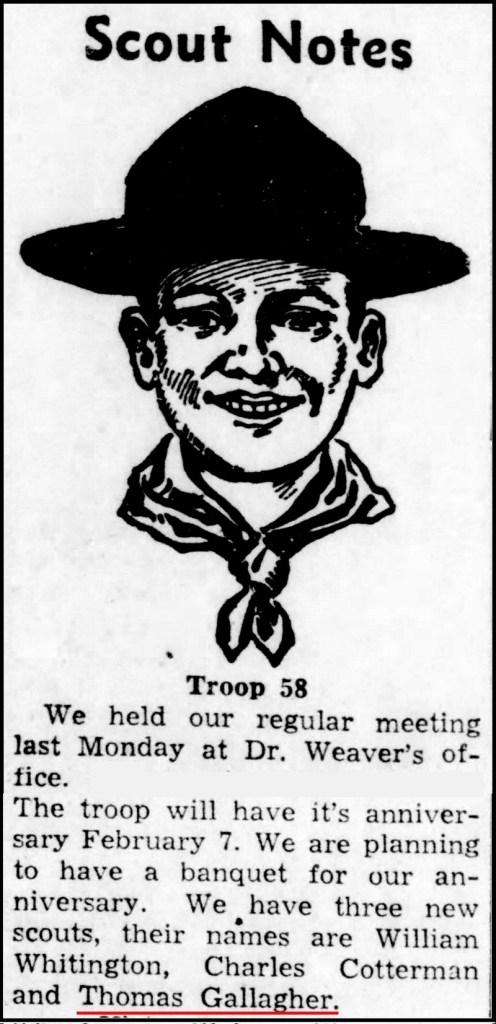
In January 1938, Tom “Buddy” Gallagher was initiated into Sedalia’s Boy Scout Troop 58.
It’s interesting, because it’s one of the last events we know about the Gallagher family in Sedalia, Missouri.

Franklin D. Roosevelt’s New Deal platform created an incredible number of different federal agencies to carry out new policies and regulations. Almost all of these agencies had an acronym like the CCC, TVA, or HOLC. Therefore, these collectively came to be known as FDR’s “Alphabet Soup Agencies.”
Alphabet Soup Agencies – Students of History

The Alphabet Soup Agencies weren’t some abstract far-away concept. They directly touched people in their everyday lives. Tom Gallagher had jobs with several of the agencies. Mary Agnes and children worked with and benefited from these agencies.
Continue readingBy 1936, measures of the economy were back to their 1928 pre-Depression levels, except for unemployment.
Unemployment crept downward below 22% by year-end 1934, and still lower to 20% by December 1935. In 1936, it continued the downward trend to 17%. The New Deal programs were helping, and some segments of the economy were recovering.

Continue readingI saw and approached the hungry and desperate mother, as if drawn by a magnet. I do not remember how I explained my presence or my camera to her, but I do remember she asked me no questions. I made five exposures, working closer and closer from the same direction. I did not ask her name or her history. She told me her age, that she was thirty-two. She said that they had been living on frozen vegetables from the surrounding fields, and birds that the children killed. She had just sold the tires from her car to buy food. There she sat in that lean- to tent with her children huddled around her, and seemed to know that my pictures might help her, and so she helped me. There was a sort of equality about it. (From: Lange’s “The Assignment I’ll Never Forget: Migrant Mother,” Popular Photography, Feb. 1960).
Dorothea Lange, Photographer
As 1934 began, 25% of workers in the United States were unemployed. That was true in Kansas, and there were additional problems:
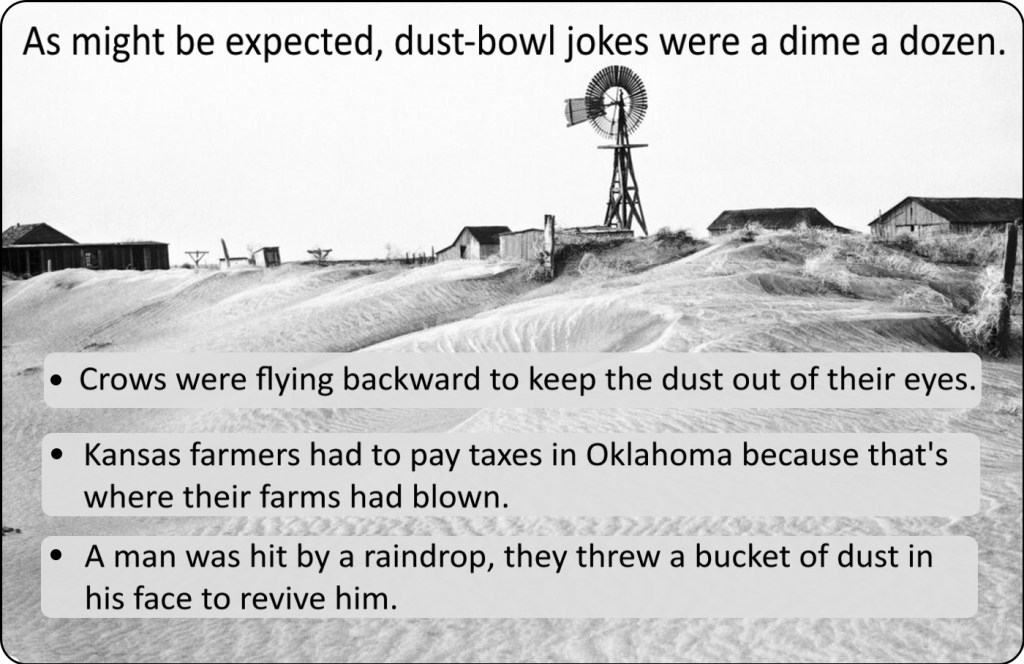
It’s hard for us to imagine the impact of the Great Depression on our ancestors’ communities. In Sedalia, Missouri, the Depression caused job losses, which caused housing and food emergencies.
Things were made worse by a multi-year drought that affected farmers and the food supply.
It’s just as hard to imagine the scope of the New Deal relief efforts in those communities. “Relief” wasn’t some abstract concept in faraway cities. It included food, money, and jobs for people in Sedalia and Pettis County.
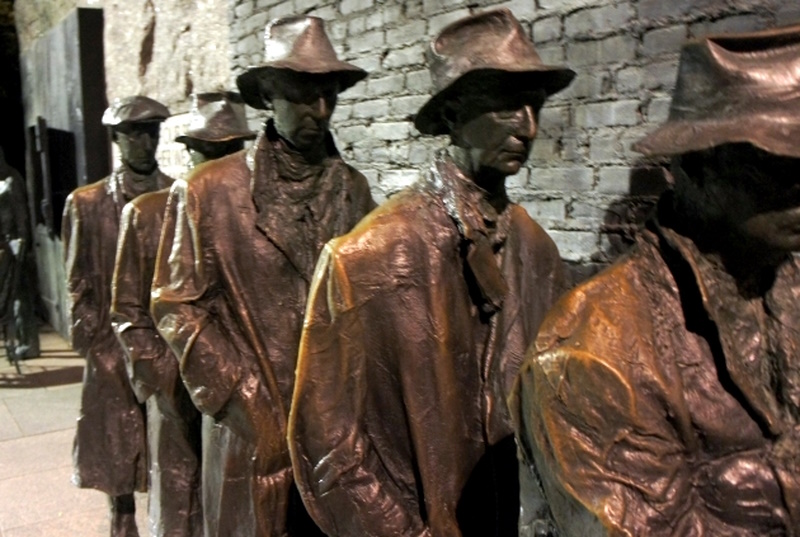
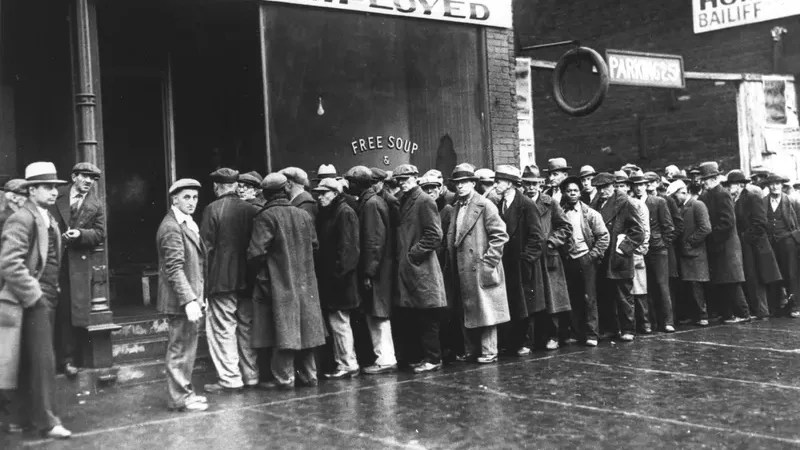
Things were still terrible, but there were glimmers of hope in 1933. The inflation rate turned positive at 1%, and GDP growth turned slightly positive by summer. But 2 million Americans were homeless. Industrial production was half of its 1929 high.
Unemployment was at its highest yet – 25%.
 Family Nibbles