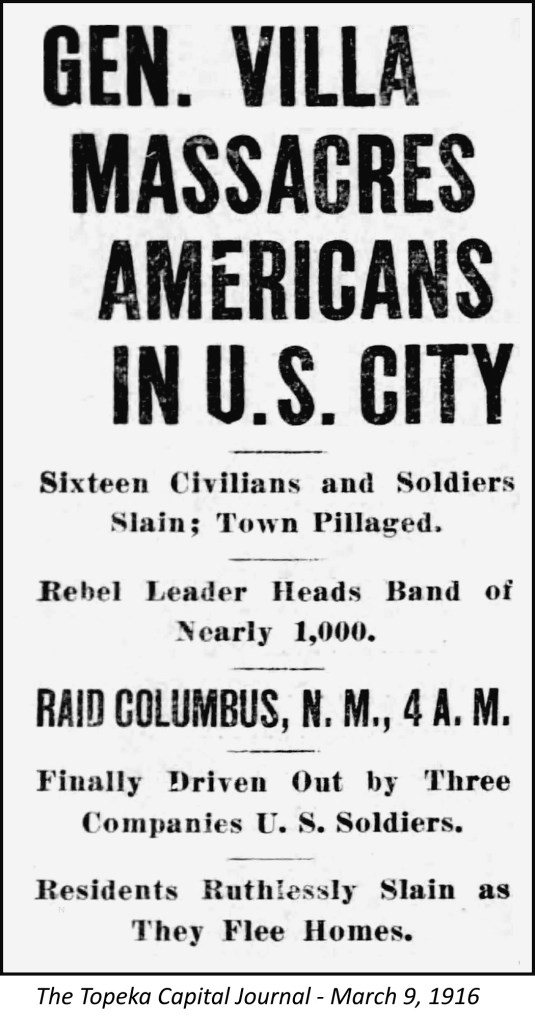
On March 9, 1916, Pancho Villa and his troops attacked the town of Columbus, New Mexico, killing sixteen townspeople and burning the town.
250 troops of the U.S. Thirteenth Cavalry eventually drove Villa’s forces back across the border.
The Cavalry pursued Villa deep into Mexico, but were badly outnumbered by Villa’s 3,000 troops.
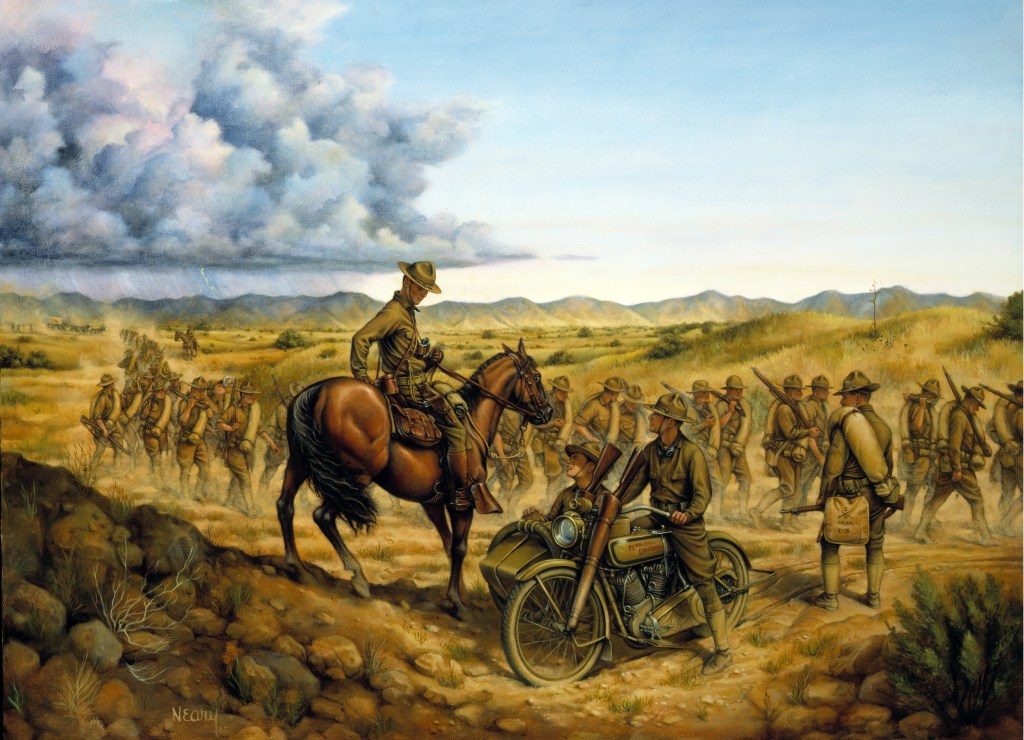
In early May 1916, other Mexican raiders hit the Texas towns of Glen Springs and Boquillas. Because of these attacks, President Woodrow Wilson decided that the only way to maintain security on the border was to activate National Guard units from Texas, Arizona, and New Mexico.
On the border: The National Guard mobilizes for war in 1916
Those three states could only muster five thousand troops, woefully insufficient to patrol over a thousand mile border. In May 1916, President Wilson called up the National Guard from every state, a force of 110,000 men.
Mobilization
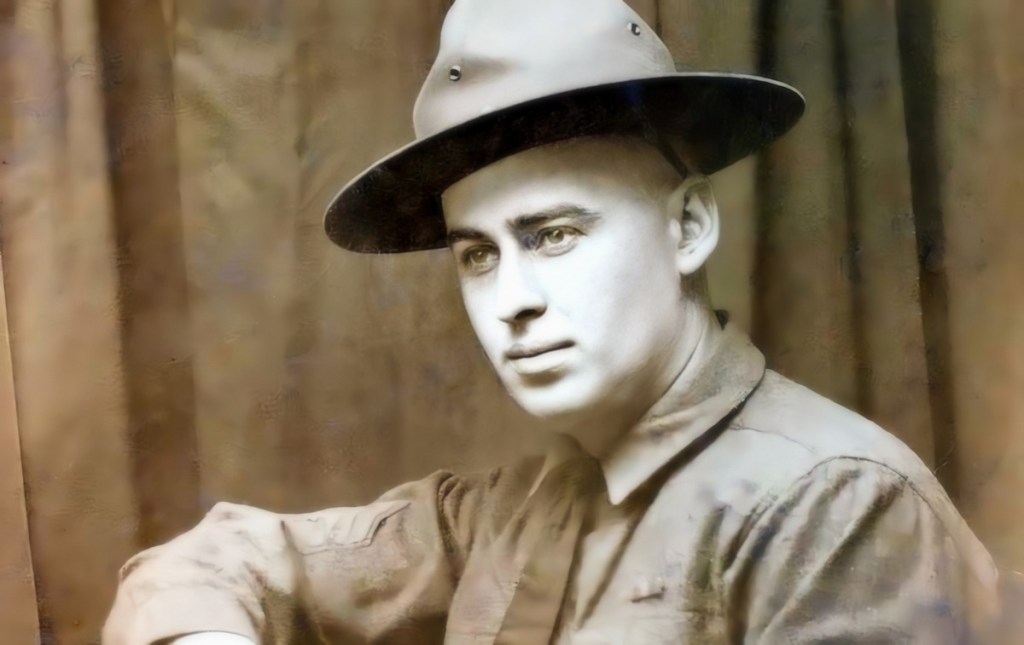
The Kansas National Guard put out a call for all troops to report.
Ned Cheney and members of the 1st and 2nd Kansas Regiments mobilized at Fort Riley, Kansas.

The mobilization was a fiasco.
There was no plan to transport 110,000 troops from all over the country to the Mexican border.
Many state National Guard units didn’t require physical exams at enlistment, instead postponing exams until deployment. Now, to provide exams of thousands of people took weeks. From 10% to 25% of troops didn’t pass the physical exams because of defective vision, hernias, bad teeth, obesity, overall poor physique (underweight or under height), amputations, or deformities.
Supply logistics were woefully inadequate. There was no plan to house and feed 110,000 troops along the Mexican border.
A New York National Guard staff officer pointed out that the horses and mules of the command required no less than 320,000 gallons of water a day during mobilization.
According to a June 20, 1916, article from “The New York Times,” the New York Guard put in a requisition for “150,000 pounds of beef (75 tons), 200,000 pounds of flour (100 tons), 150,000 pounds of potatoes (75 tons), 35,000 pounds of sugar (17-1/2 tons), 20,000 dozen eggs, 40,000 pounds of bacon (20 tons), 30,000 pounds of mutton (15 tons), 12,000 pounds of butter (6 tons), 12,000 pounds of beans (6 tons), 10,000 pounds of dried fish (5 tons), and 25,000 pounds of onions.”
It was noted that this would feed the New York Soldiers for just two weeks, after which time the entire order would have to be repeated.
On the border: The National Guard mobilizes for war in 1916
Eagle Pass, Texas
The Kansas troops were deployed to Eagle Pass, Texas.
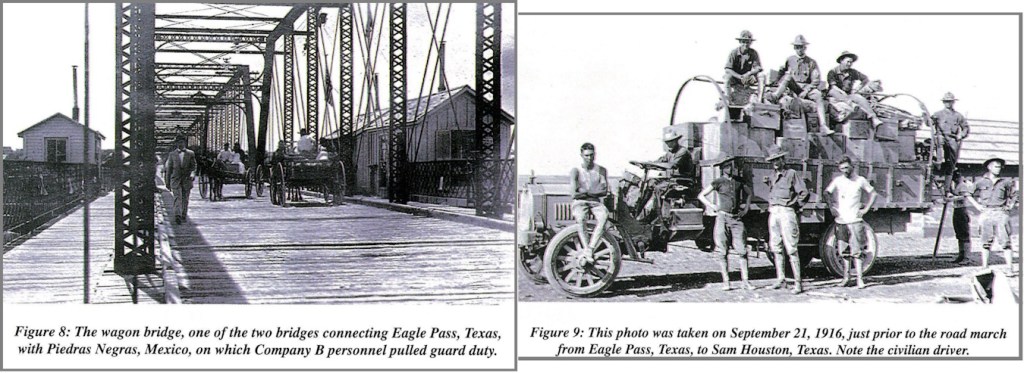
Troops from other states were assigned duty stations all along the Mexican border.
For better or for worse, the National Guard was now alert and mobilized, all the while believing they were headed for a war. Ultimately, the war with Mexico never came about. Instead of fighting their way to Mexico City as their forefathers had in the 1850s, the National Guard units settled into a cycle of border guard duty and rigorous training. The desert proved a tough environment and, with the Soldiers adapting as best they could, most units were rounding into shape by December 1916.
On the border: The National Guard mobilizes for war in 1916
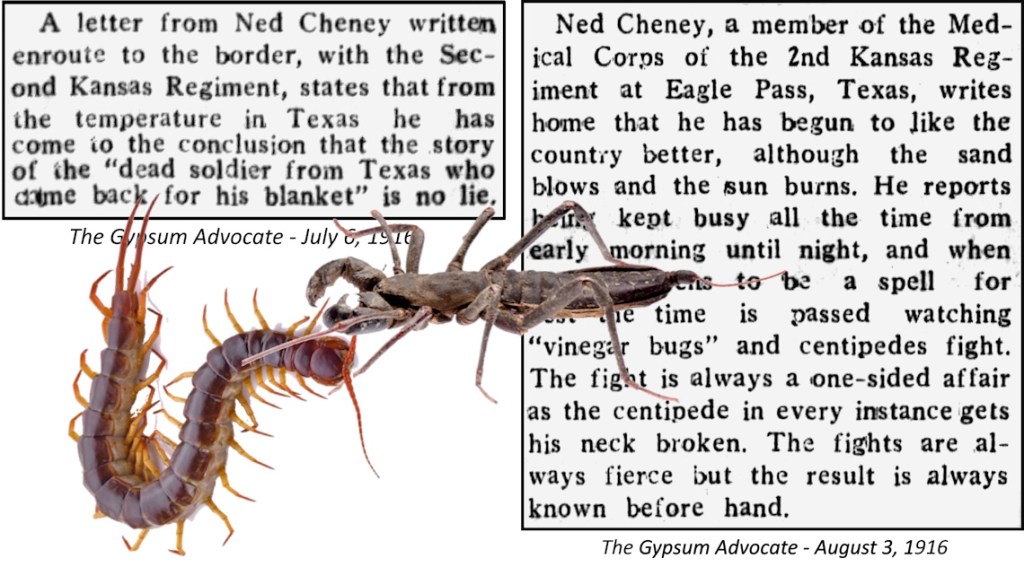
As 1916 wore on, the Kansas newspapers began to lose interest in the Pancho Villa raid. The papers still covered news of the American army involvement in Mexico, but it began to appear in the middle section of the papers and the European Crisis was beginning to claim possession of the front page coverage. The expeditionary force sent down to capture Pancho Villa, “dead or alive‟ remained in Mexico for eleven months. When the army was ordered out of Mexico in February 1917, it returned to the United States soil without reaching its objective, which was to capture Pancho Villa.
Kansas Press Coverage to the Pancho Villa Raid on Columbus, New Mexico March 9, 1916
Ned comes home
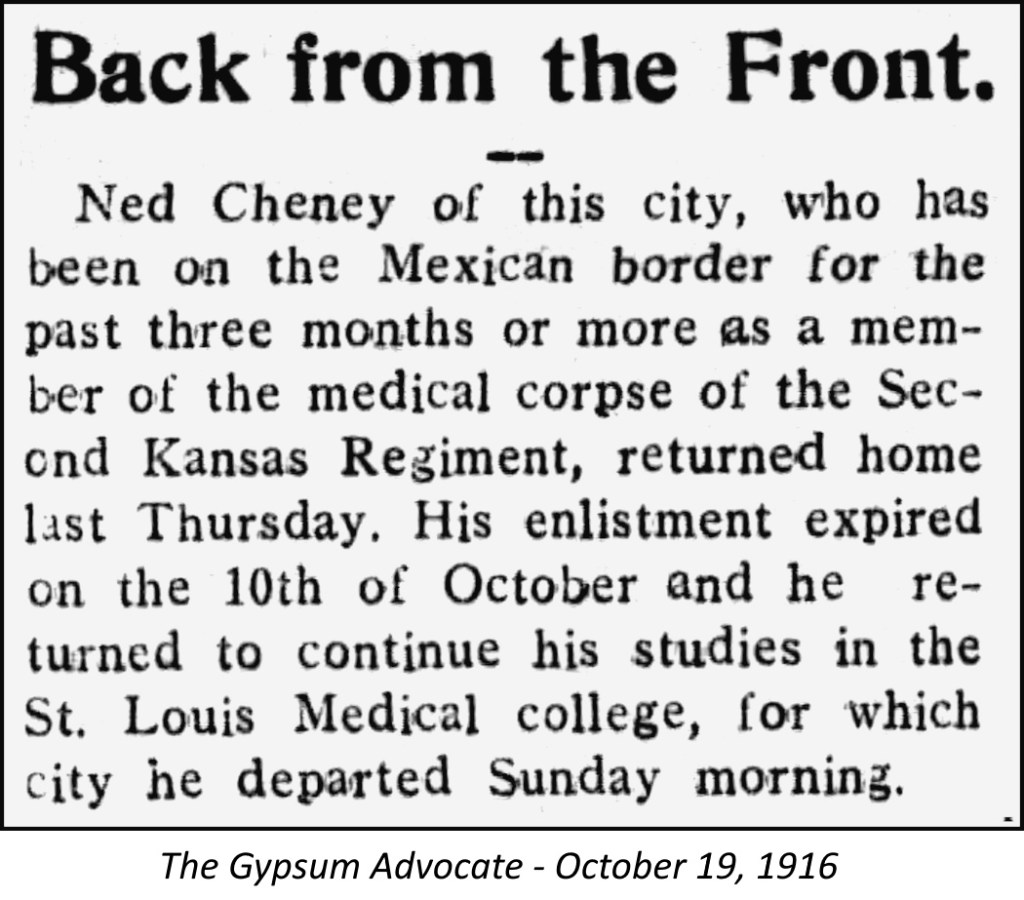
Ned Cheney’s enlistment term expired on October 10, 1916. He returned home, and soon left for St. Louis to continue his medical studies.
Lessons learned
An unforeseen byproduct of Pancho Villa’s raid was the creation of a well-trained National Guard force just in time for the United States to enter into World War I. The 150,000 Guardsmen that served on the border received more valuable training during their time there than would have been possible in years of normal home-armory training.
On the border: The National Guard mobilizes for war in 1916
A waning problem
With the American troops leaving Mexico, Villa had to be dejected. It must be remembered that Villa’s ultimate goal was to have the Americans intervene in Mexican affairs so he could regain his lost control.
Pancho Villa continued to roam the Mexican countryside until 1923. When Villa was assassinated in 1923, the horror of March 9, 1916 was terminated.
On the border: The National Guard mobilizes for war in 1916
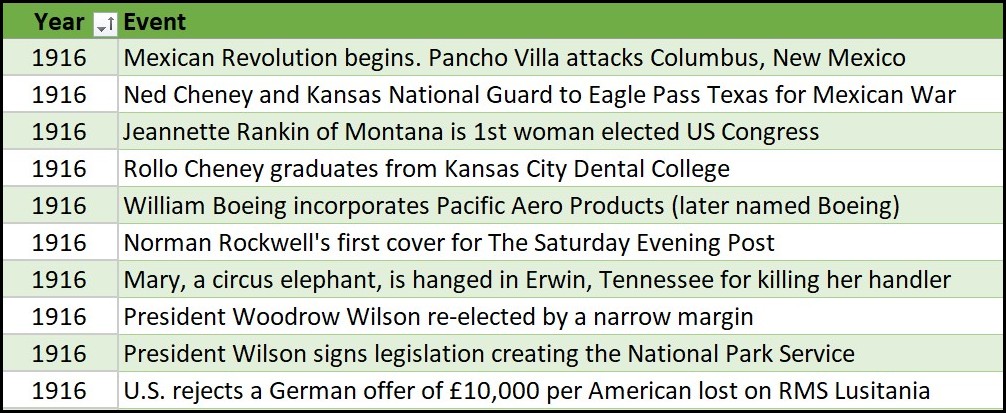
Timeline
Sources:
- Family trees – Ancestry.com
- Images – Cheney family photo – Cheney/Jarvis photograph collection
- Newspapers – each article footnoted with newspaper name and date – Newspapers.com
- Image – Painting – On The Border – a National Guard Heritage Painting by Donna Neary, courtesy the National Guard Bureau – https://www.nationalguard.mil/Resources/Image-Gallery/Historical-Paintings/Heritage-Series/On-The-Border/#:~:text=On%20June%2020%2C%201916%2C%20the,is%20authorized%20without%20prior%20approval.
- Quotes – Pancho Villa attack, mobilization problems, lessons learned – Andrew Barnes – 2016 – On the border: The National Guard mobilizes for war in 1916 – https://www.army.mil/article/162413/on_the_border_the_national_guard_mobilizes_for_war_in_1916#:~:text=Later%2C%20as%20the%20divisions%20were,will%20do%20it%20over%20again.%22&text=_____________________________________________________________________________________________________-,Alexander%20F.,of%20New%20York%20at%20Binghamton.&text=This%20article%20was%20published%20in,issue%20of%20Army%20Sustainment%20magazine.
- Quote – Kansas press coverage of Mexican War – Kansas Press Coverage to the Pancho Villa Raid on Columbus, New Mexico March 9, 1916 – Doug Boardman – Sterling College – https://ijhssnet.com/journals/Vol_1_No_17_Special_Issue_November_2011/22.pdf
- Audio – Fanfare_Montezuma_March of War – The United States Army Old Guard Fife and Drum Corps – Free Music Archive – https://freemusicarchive.org/music/The_United_States_Army_Old_Guard_Fife_and_Drum_Corps/Celebrating_50_Years/07_1250/

