Family Nibbles – Volume 11 is here! This book is about the lives of our Maninger ancestors from 1700 to 1920.
These stories begin around 1700 in the village of Dittwar. It’s in the southwest of present day Germany. Our Maninger ancestors sustained their families working small farms and vineyards.

Most of central Europe was a kaleidoscope of territories ruled by bishops and minor royalty, all under the rule of the Holy Roman Empire for over a thousand years.
From the 13th century onwards, a small group of prince-electors had the privilege of electing the Holy Roman Emperor.
Villagers and farmers had to pay taxes and tithes to these rulers.
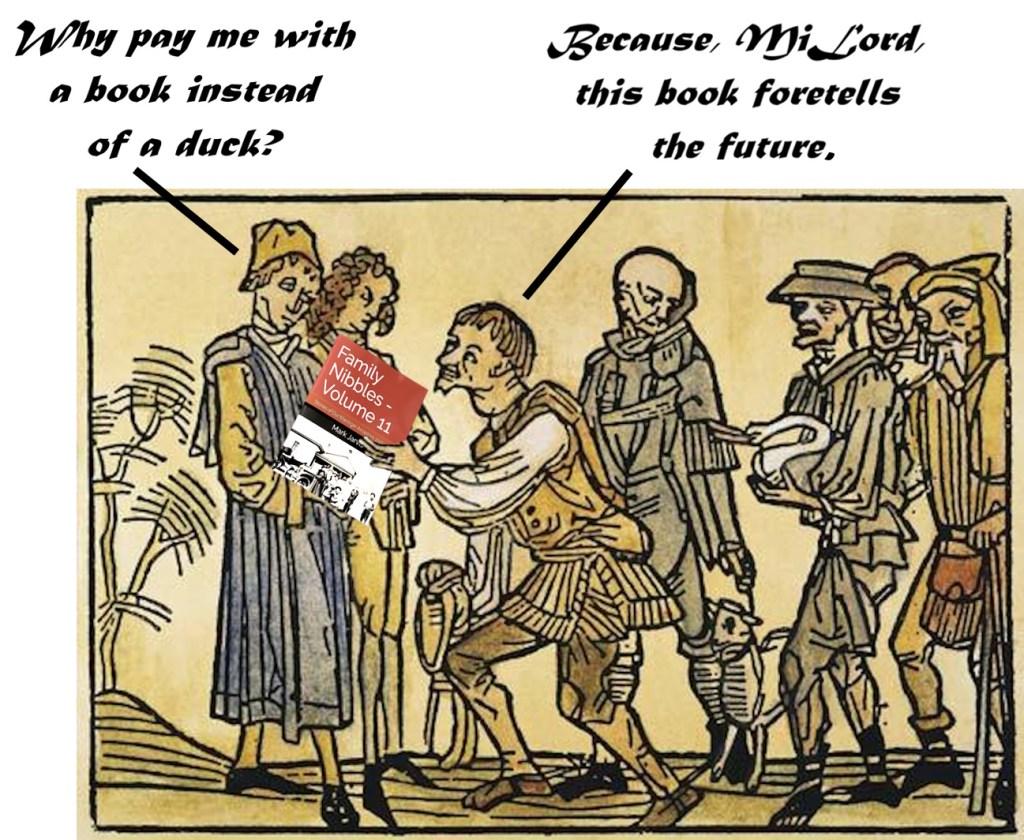

Religion was central to village life. The Catholic Church was the center of spiritual life, village culture, and education.
Generations of Maningers were baptized and married in the Dittwar church.

Valentine Maninger grew up in Dittwar in the 1830s and 1840s, decades of economic and political troubles. Facing a difficult economic future, Val made the decision to emigrate.
With a few clothes and important belongings, Val left Dittwar in March, 1854, bound for America.
On the transatlantic voyage, he met a group of Amish families destined for central Illinois. Having no plan himself, Val set Illinois as his destination.
Val located in Montgomery County, Illinois, in the small village of Farnisville. There he plied his trade as a shoemaker.

On a nearby farm lived the family of Christian and Magdalena Smith. They were a devout Amish family. Their daughter Magdalena Smith would one day marry Val Maninger.
Many settlers to central Illinois were Amish or Mennonite. Read about these religions and their origins in Europe.
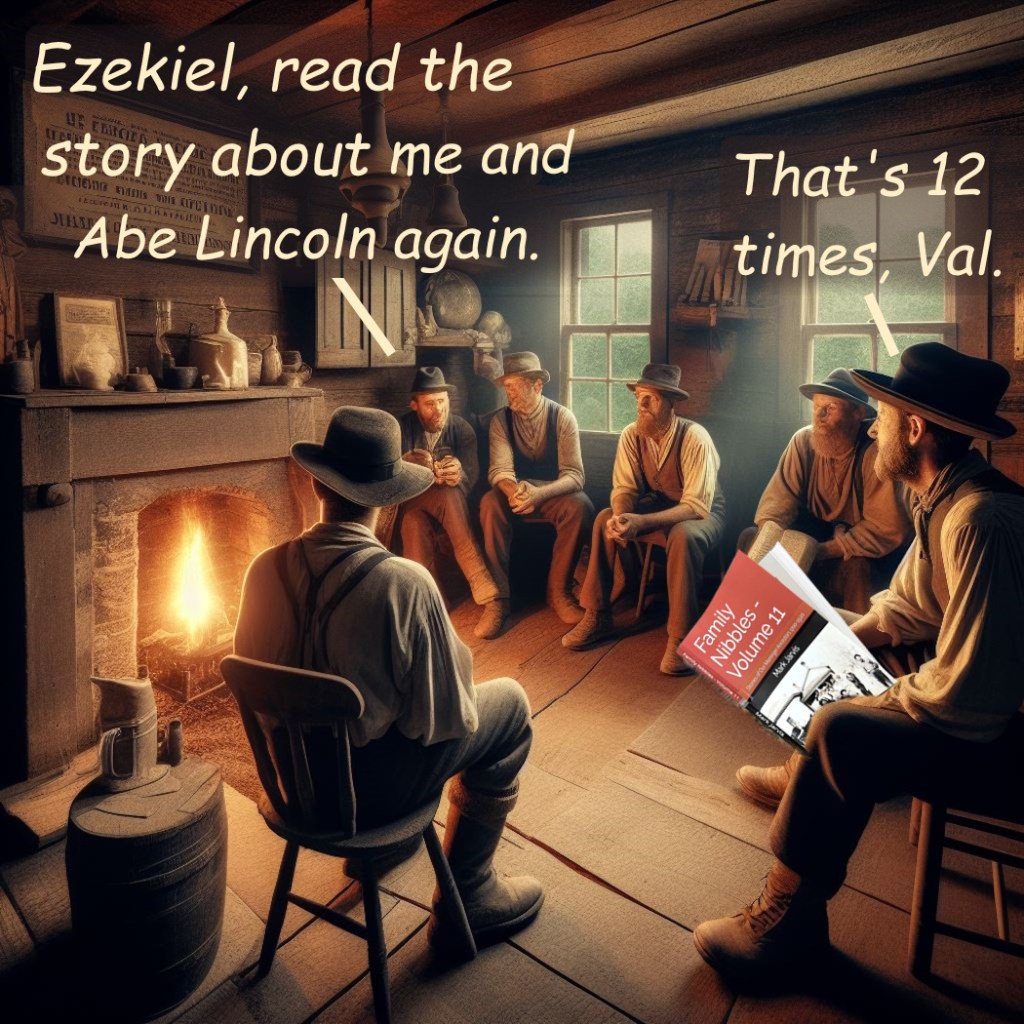
Abraham Lincoln rode the circuit courts in central Illinois, including Montgomery County where Val Maninger lived.
Learn about a family story that claims Val knew Abe Lincoln.
When the Civil War began, Val enlisted in the 17th Missouri Infantry, and all-volunteer German regiment. He was severely wounded at the Battle of Whitney’s Lane in central Arkansas. His recovery was slow, and he was later assigned to hospital duty in Illinois.
After the war, Val returned home, but soon moved to Gridley, Illinois in the adjacent county of McLean. He set up his boot and shoe business, as he had done before the war.
In 1861, Magdalena Smith had married Peter Neuhauser and had three children. Peter died by 1864, as did two of the children. Val and Lena struck up their old friendship, and were soon married.
Val and Lena Maninger began to have children, John being the first born in 1867. They would eventually have seven sons and one daughter.

Many of the Amish in central Illinois were joining a new religious group, the Apostolic Christian Church. It held similar beliefs and practices as the Amish, but was more zealous and enthusiastic. The church was German speaking.
Val and Lena Maninger joined, and would remain members throughout their life.
In 1871, the Maningers bought a farm in Livingston County, a few miles east of Gridley. They still ran the boot and shoe business, but now added farm responsibilities.
The 1880s brought on “Kansas Fever.” The lands in Kansas were plentiful and cheap. Many of the families that attended the Apostolic Christian Church with the Maningers decided to go together to Harper County, Kansas. The Maningers would join them.
The Maningers arrived in Harper County, Kansas in 1885, and established a farm one mile south of the town of Harper.

Throughout the 1880s and 1890s, they acquired more farms. The Maningers were industrious, and eventually acquired eight quarter sections. As their sons came of age, each would be provided a quarter section farm and a house and barn.
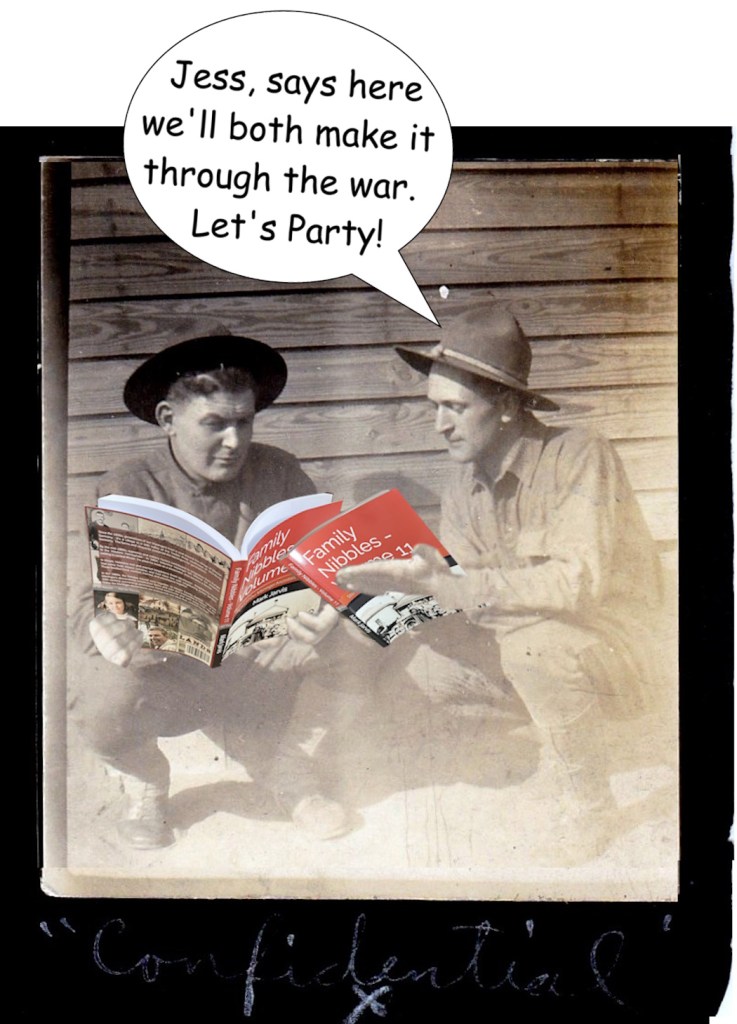
Jess and Charles and Earl Maninger and Curly Minger joined thousands of young men who served in the military in World War I.
After training at Camp Funston, Kansas, they shipped out for France.
In 1917, Emily Maninger entered Wichita School for Nurses. She hoped to go to the war front to care for soldiers, but the war ended. Emily graduated in 1920.

While in nursing school, Emily met Ned Cheney. They would marry in 1921. But let’s save that story for the next Family Nibbles series. In that series, we’ll learn about the history of the Cheney family.
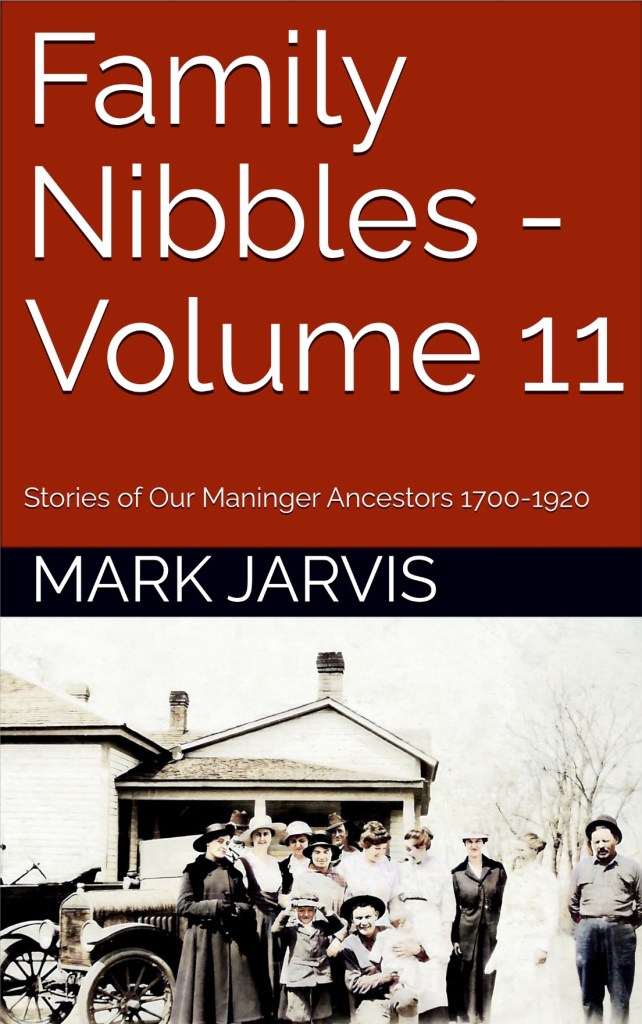
Family Nibbles Books
- Family Nibbles – Volume 1 Stories of Our Teply Ancestors 1600-1865
- Family Nibbles – Volume 2 Stories of Our Teply Ancestors 1865-1925
- Family Nibbles – Volume 3 Stories of Our Jarvis English Heritage
- Family Nibbles – Volume 4 Stories of Our Jarvis Ancestors 1680-1800
- Family Nibbles – Volume 5 Stories of Our Jarvis Ancestors 1800-1865
- Family Nibbles – Volume 6 Stories of Our Jarvis Ancestors 1865-1920
- Family Nibbles – Volume 7 Stories of Our Jarvis Ancestors 1920-1938
- Family Nibbles – Volume 8 Stories of Our Pensa and Riley Ancestors
- Family Nibbles – Volume 9 Stories of Our Large and Gallagher Ancestors
- Family Nibbles – Volume 10 Stories of Our Gallagher Ancestors 1915-1941
- Family Nibbles – Volume 11 Stories of Our Maninger Ancestors 1700-1920
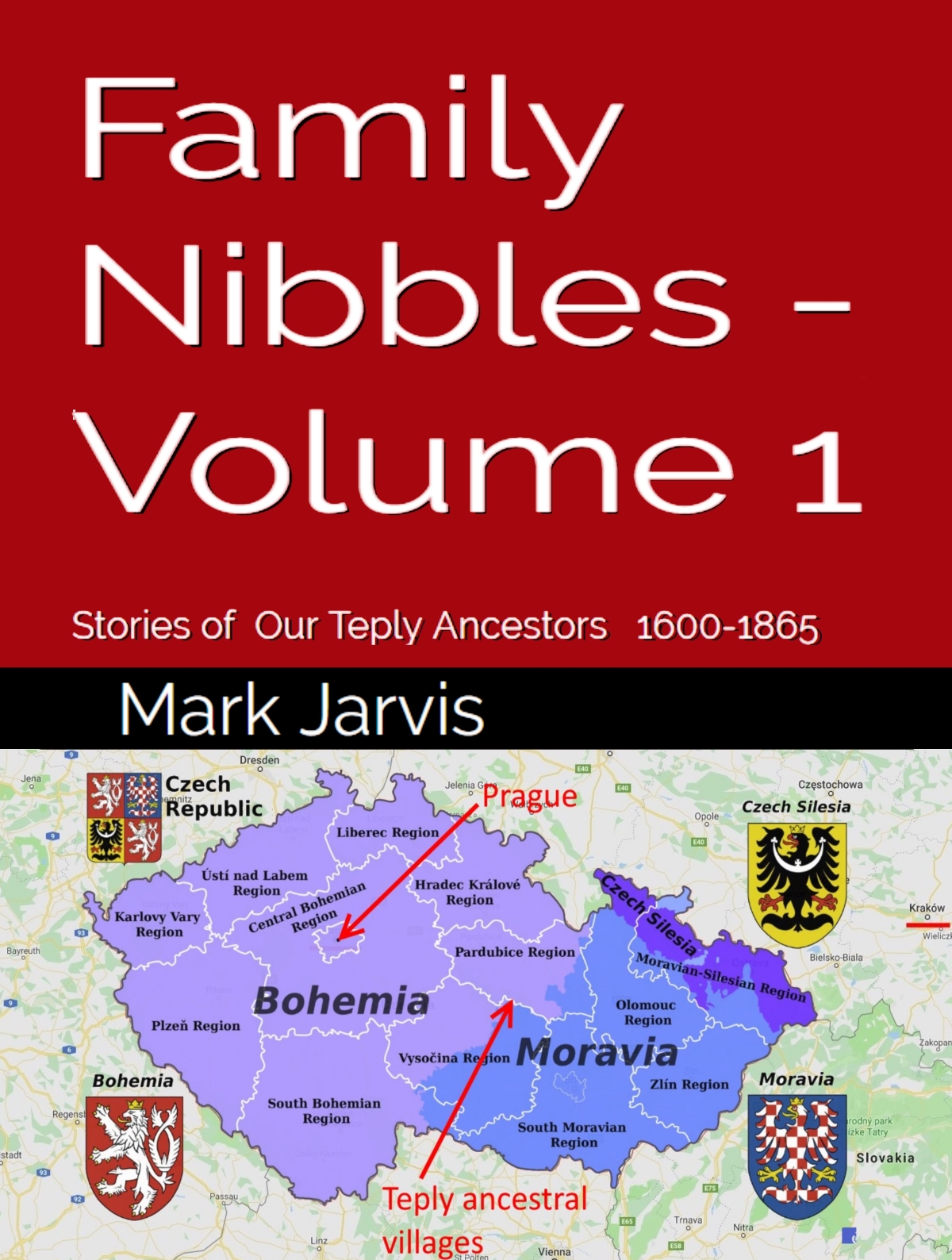
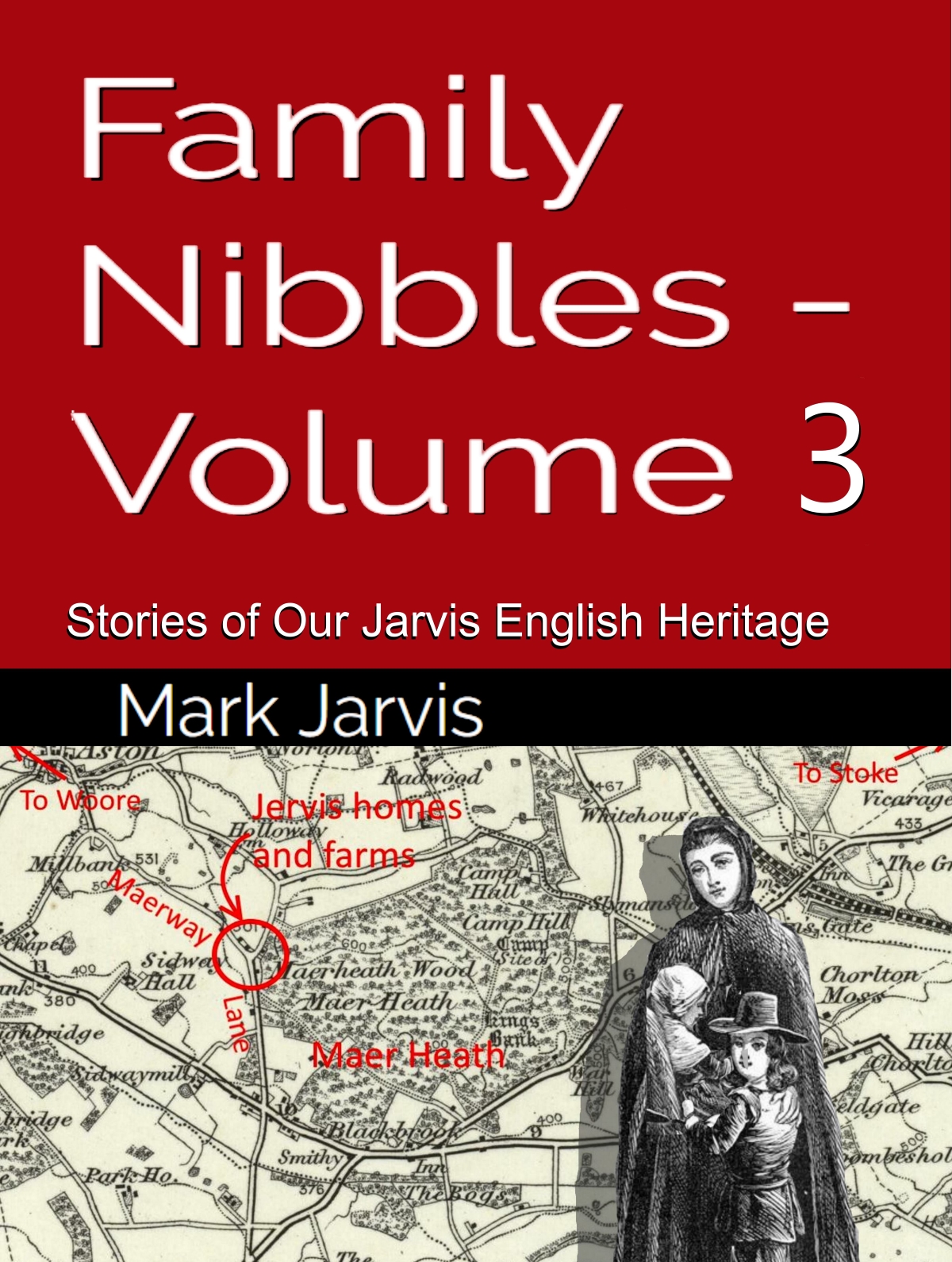
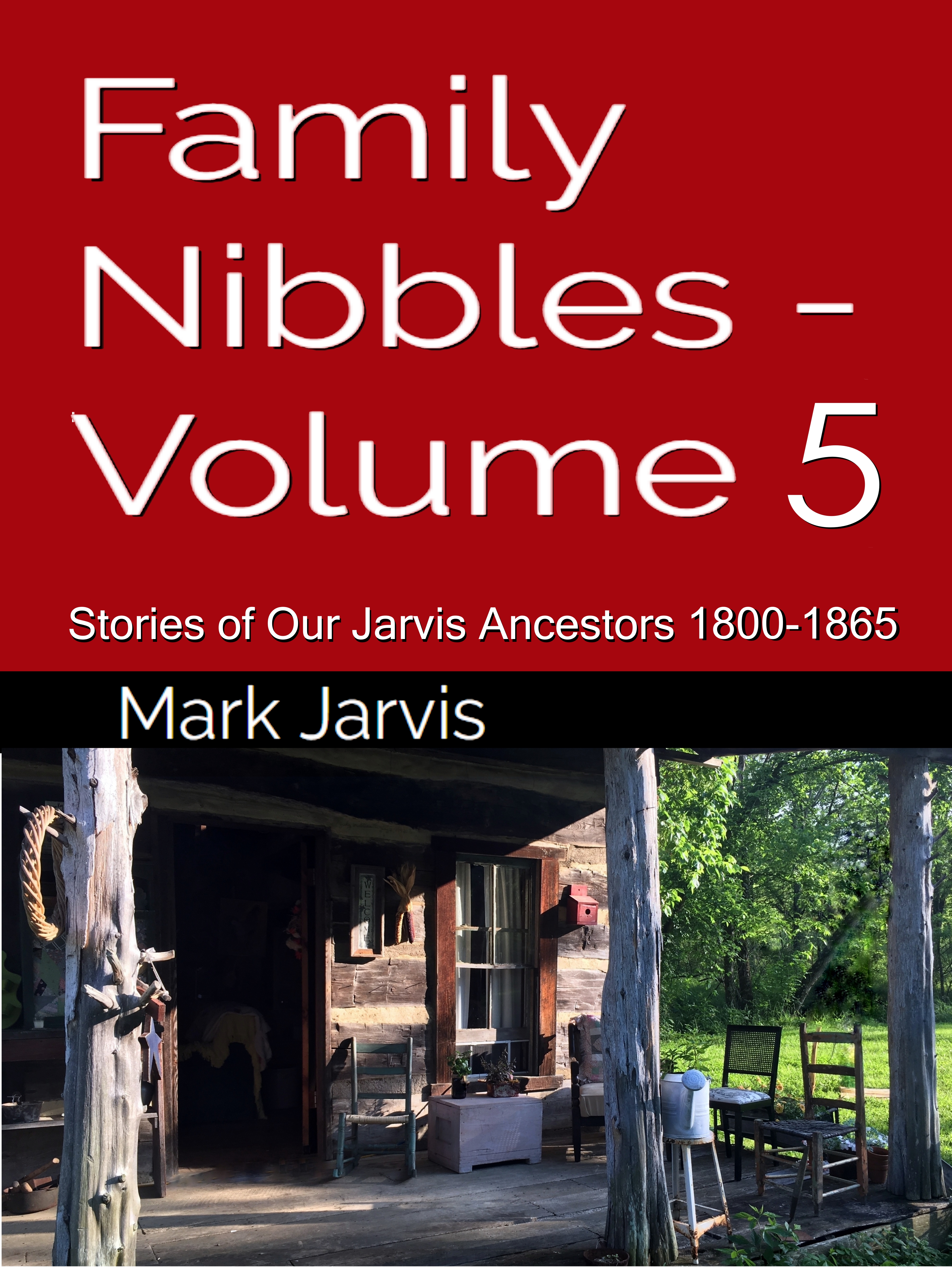
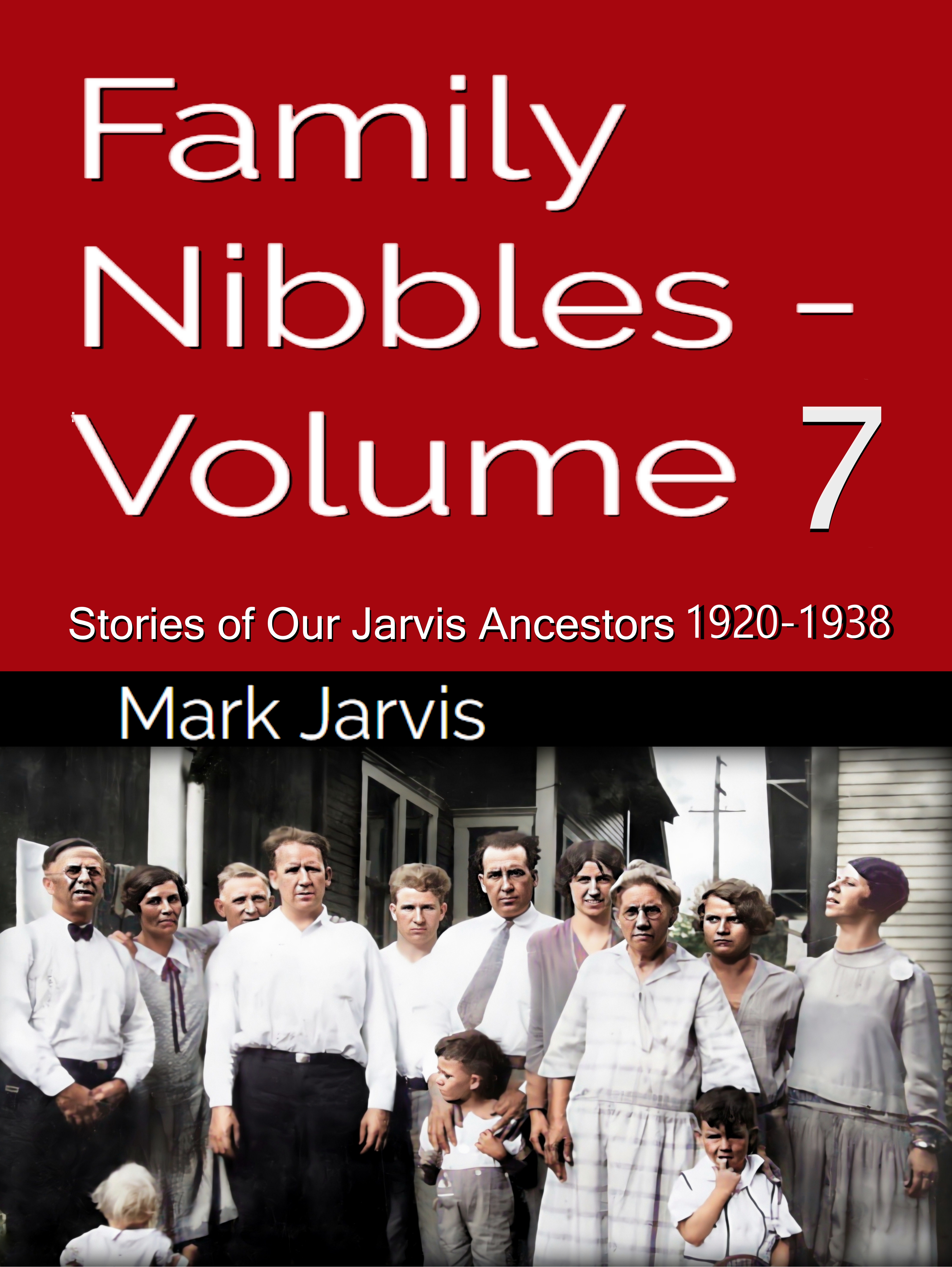
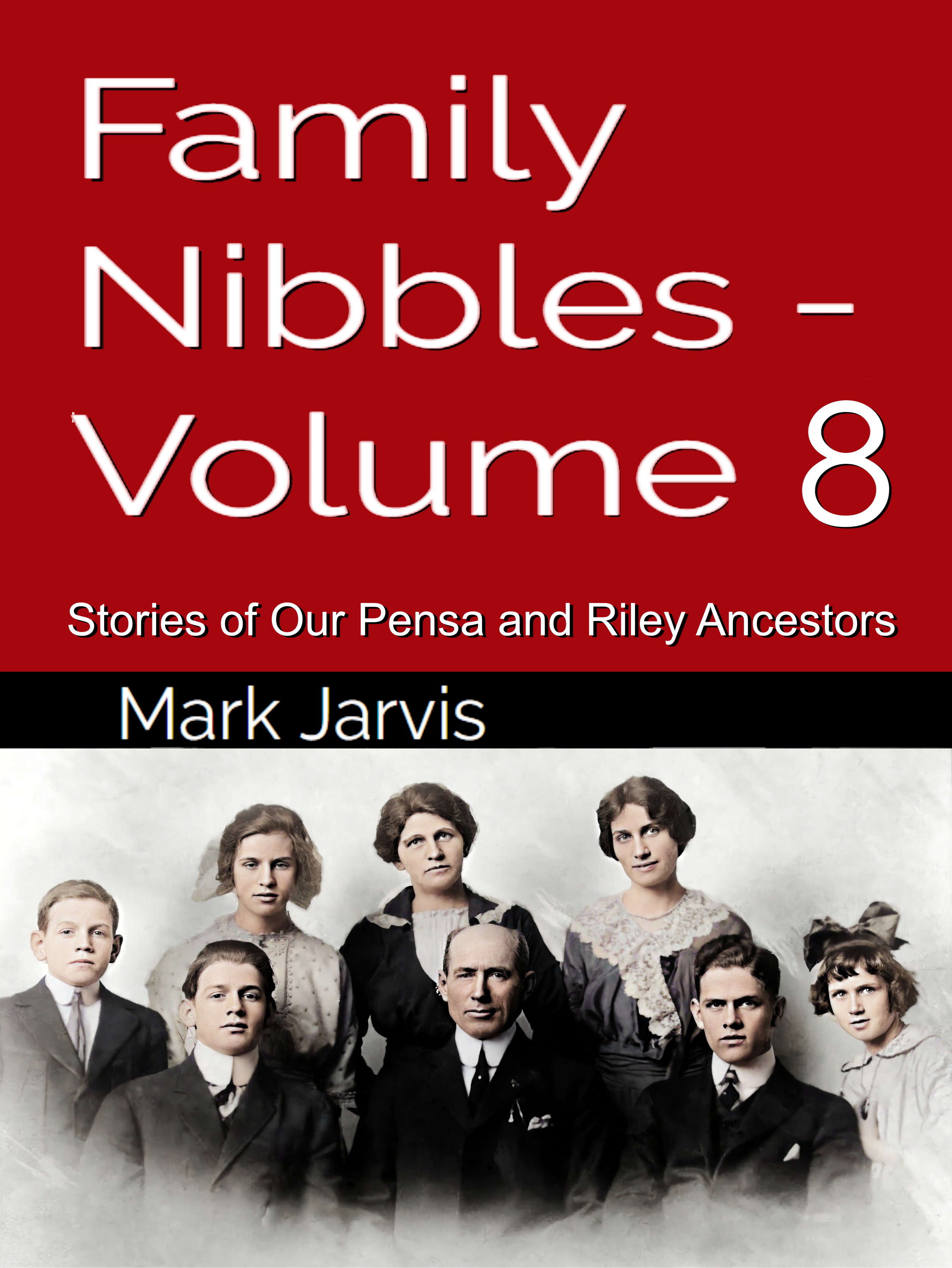

You can get the books any of three ways: Amazon paperback, Google eBook, or Kindle eBook.
Amazon Books Paperback
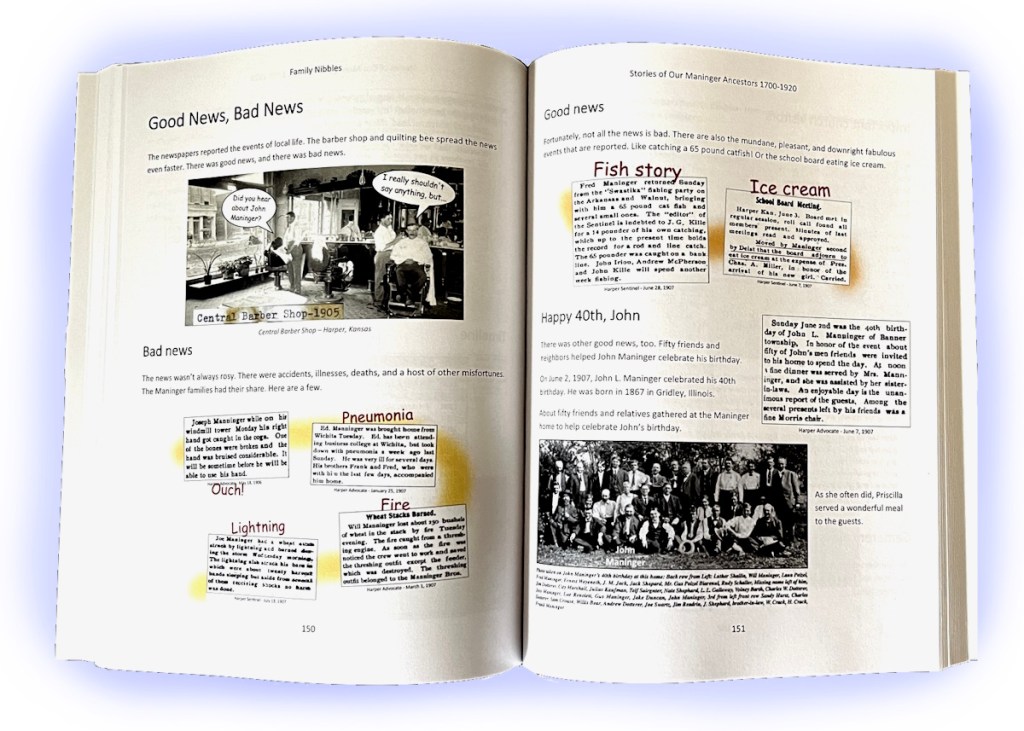
You can get the paperback books at Amazon. Search for ‘Family Nibbles’ or ‘Family Nibbles book.’
The price for each volume is $40. They’re worth every penny!
Google eBook
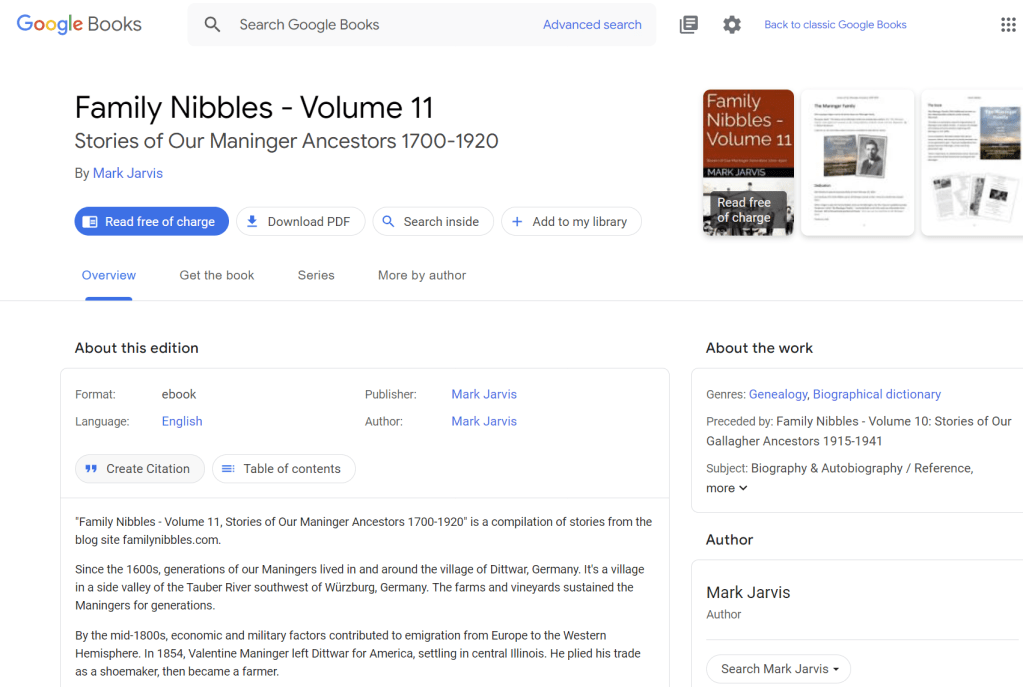
You can find the eBooks on Google Books or Google Play. They’re free!
They’re best read on your iPad or tablet using Google Play Reader app. And you can read in Firefox on your Macbook.
Kindle eBook
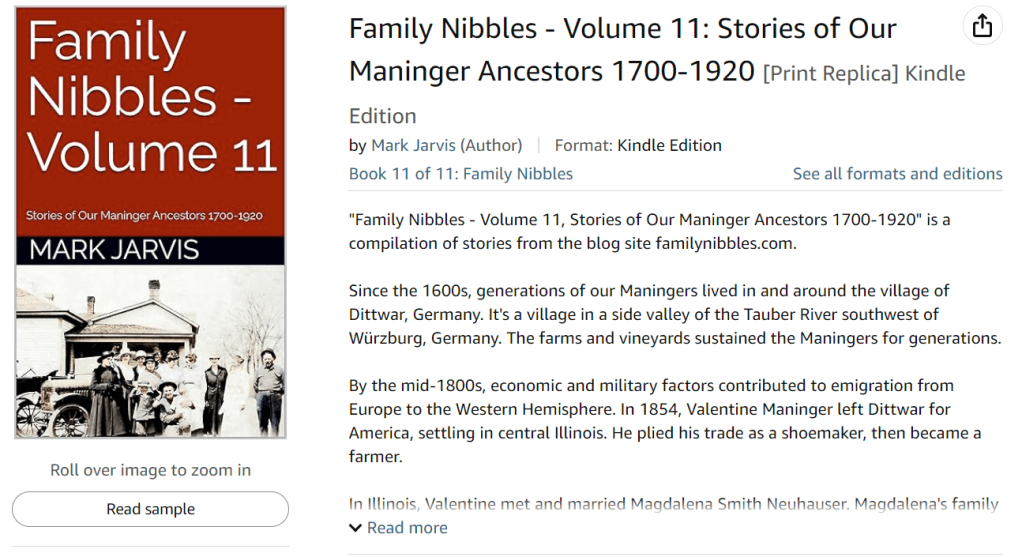
You can find the ebooks on Amazon or Kindle Store. The price is $2.99 per book.
You can read this version on any Kindle reader or Kindle app on your iPad.
Thanks
Thanks to all you readers.
It’s rewarding to collect Family Nibbles stories into this book, but the part I most enjoy is the research and discovery and sharing of our family stories.
We’ve discovered stories about three of our four grandparent pairs – Teply/Kloppenberg, Gallagher/Riley, and Jarvis/Webb. We’ve brought those family histories up to about 1940, just before World War II.
Our fourth grandparent pair is Cheney/Maninger. This volume contained Maninger stories. Our next series will discover stories about our Cheney ancestors. The Cheneys were early immigrants to the American colonies. Generations of Cheneys moved from Maryland to Pennsylvania to Illinois, and finally to Kansas.

Sources
- Video – Emily Maninger book introduction – My Heritage – https://www.myheritage.com/deepstories
- Image composite – Prince-electors of the Holy Roman Empire – Wikipedia – https://en.wikipedia.org/wiki/Prince-elector
- Image composite – Peasants paying their tithes – Feudalism – Hegodis – 2016 – Wikimedia Commons – https://commons.wikimedia.org/wiki/File:Feudalismo-en-edad-media.jpg
- Image composite – marriage in St. Laurentius Church – Microsoft Image Creator from Designer
- Image composite – man walking with suitcase – Microsoft Image Creator from Designer
- Image composite – Menno Simons – Wikipedia – https://commons.wikimedia.org/wiki/File:Menno_Simons.jpg
- Image composite – Men in tavern – Copilot Designer Image Creator – Microsoft
- Image composite – Sunday meeting in a barn – Copilot Designer Image Creator – Microsoft
- Photo composite – Emma, John, and Priscilla Maninger and maybe Leah Eggli – Maninger Family Documents – Emily Maninger Cheney collection
- Photos composite – Jess Maninger at Camp Funston – Eunice Maninger photo – Maninger Family Documents – Emily Maninger Cheney collection
- Photos composite – Graduate nurses 1920 – Maninger Family Documents – Emily Maninger Cheney collection
- Music – THE VILLAGE BAND (Dorfmusik) by SULA MUSETTE ORCHESTRA; Fryberg – Continental C-1126-B) – Internet Archive – https://archive.org/details/78_the-village-band-dorfmusik_sula-musette-orchestra-fryberg_gbia0432331b
- Music – Roundup on the Prairie – Aaron Kenny – https://www.youtube.com/watch?v=8Fj-aqD3MHY
- Music – Me Too Ho Ho Ha Ha – Paul Whiteman 1920-1935 Complete Collection – Internet Archive – https://archive.org/details/PaulWhiteman1920-1935CompleteCollection
 Family Nibbles

