Val Maninger lay wounded in a cornfield by Whitney’s Lane. Around him lay the dead and wounded of Company H.
On the morning of May 19th, 1862, the 12th Texas Cavalry had annihilated Company H of the 17th Missouri Infantry in a rural lane near Searcy, Arkansas.
In April 1861, Fort Sumpter in Charleston Harbor was attacked, starting the Civil War. At that time, the United States Army consisted of 16,000 troops, most posted in small forts west of the Mississippi River.
Bombardment of Fort Sumpter, Charleston Harbor, Currier and Ives, 1861
In April 1940 Germany attacked Denmark and Norway. In May, Germany took Belgium and the Netherlands. In June, France fell to the conquering Germans. Japan had overrun China. In September, Italy joined Germany and Japan in an Axis treaty.
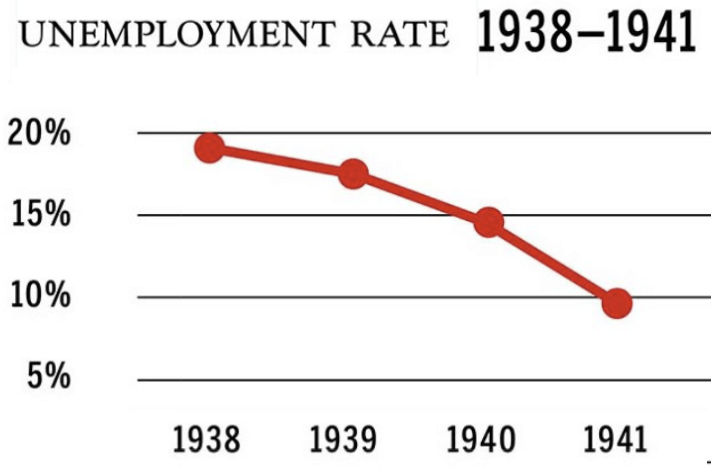
In 1940, unemployment was 14%, but people increasingly felt the Great Depression was in the rear view mirror. The war in Europe and Asia threatened to draw in the Americans, and the war department was spending huge amounts to increase military preparedness.
Many say 1940 was the year that ended the Depression.
Franklin D. Roosevelt’s New Deal platform created an incredible number of different federal agencies to carry out new policies and regulations. Almost all of these agencies had an acronym like the CCC, TVA, or HOLC. Therefore, these collectively came to be known as FDR’s “Alphabet Soup Agencies.”
Alphabet Soup Agencies – Students of History
The Alphabet Soup Agencies weren’t some abstract far-away concept. They directly touched people in their everyday lives. Tom Gallagher had jobs with several of the agencies. Mary Agnes and children worked with and benefited from these agencies.
By 1936, measures of the economy were back to their 1928 pre-Depression levels, except for unemployment.
Unemployment crept downward below 22% by year-end 1934, and still lower to 20% by December 1935. In 1936, it continued the downward trend to 17%. The New Deal programs were helping, and some segments of the economy were recovering.
Destitute pea pickers in California. Mother of seven children. Age thirty-two. Nipomo, California – 1936 – Dorothea Lange, photographer.
I saw and approached the hungry and desperate mother, as if drawn by a magnet. I do not remember how I explained my presence or my camera to her, but I do remember she asked me no questions. I made five exposures, working closer and closer from the same direction. I did not ask her name or her history. She told me her age, that she was thirty-two. She said that they had been living on frozen vegetables from the surrounding fields, and birds that the children killed. She had just sold the tires from her car to buy food. There she sat in that lean- to tent with her children huddled around her, and seemed to know that my pictures might help her, and so she helped me. There was a sort of equality about it. (From: Lange’s “The Assignment I’ll Never Forget: Migrant Mother,” Popular Photography, Feb. 1960).








 Family Nibbles